Retro Explore — Discover classic retro games
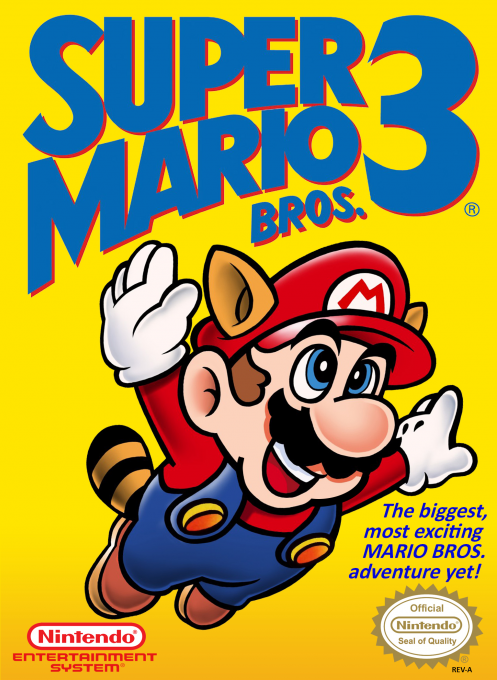
Super Mario Bros. 3
Super Mario Bros. 3 is Nintendo's lavish 8-bit platform adventure for the Nintendo Entertainment System, starring Mario and Luigi in a quest across the Mushroom World. This is the North American NES release, dated February 12, 1990; the original Japanese Famicom version arrived earlier, on October 23, 1988. Bowser and his seven Koopalings have seized seven neighboring kingdoms, stolen each king's magic wand, and transformed the rulers. With Princess Toadstool later captured as well, Mario and Luigi must reclaim the wands, restore the kings, and press on to Bowser's Dark Land stronghold. At its heart, Super Mario Bros. 3 pairs crisp side-scrolling courses with an overworld map that turns each kingdom into an adventure route. Players choose paths between stages, fortresses, enemy encounters, mushroom houses, and other stops, sometimes finding alternate routes or using special items to clear obstacles. The journey spans eight visually distinct worlds, from grasslands and deserts to water, giant-sized terrain, clouds, ice, and Dark Land. Every world asks players to read new hazards, preserve lives, and decide when to spend the supplies collected on the map. The map also gives the adventure a welcome sense of place between courses. Some paths are blocked by boulders, locked doors, or roaming Hammer Bros., while fortresses mark important progress through a world. Mushroom Houses and bonus panels can award extra lives and reserve items, making a risky detour feel worthwhile. A stock of items is not merely decorative: a player can call on it before entering a stage, choosing the right moment for a mushroom, flower, leaf, or other aid. It is a simple system that rewards preparation without interrupting the game’s momentum. The controls retain the direct run-and-jump foundation of the first Super Mario Bros. while greatly expanding what Mario can do. He can pick up and throw certain objects, slide down slopes, climb vines, swim through underwater stages, and search for hidden blocks, exits, and bonus rooms. Coins, 1-Up Mushrooms, and carefully placed secrets reward observation as much as reflexes. The game’s courses steadily widen the possibilities, shifting from approachable early challenges to airship assaults, moving platforms, enemy-filled gauntlets, and the tightly paced obstacles of the final world. Its power-ups are a major part of the appeal. The Super Leaf lets Mario build momentum and take to the air with a raccoon tail, while the Tanooki Suit adds flight and a statue transformation that can protect him from many dangers. The Frog Suit makes underwater movement much more nimble, and the Hammer Suit lets Mario throw hammers and resist fire while crouching. Familiar forms such as Super Mario and Fire Mario remain valuable, but the new transformations invite players to reconsider how they explore a course, reach a secret, or handle an enemy. Super Mario Bros. 3 presents its action with a theatrical touch. A curtain rises at the start, many objects seem suspended from the scenery, and Mario exits the stage at the end of a level, giving the whole adventure the flavor of a performance. That playful framing complements precise animation, colorful enemy designs, and the memorable debut of the Koopalings. Their airships serve as the climactic challenge of the first seven worlds, each ending with a boss battle before the rescued king can be returned to normal. Two players can share the adventure in alternating turns, with one player as Mario and the other as Luigi. The overworld can also trigger a competitive battle mode based on Mario Bros., adding a mischievous way to contest cards and turns. Whether played alone or with a friend nearby, the game is built for discovery: inventory items can be saved for difficult moments, map routes can change the order of challenges, and the Warp Whistle can open shortcuts for players who uncover it. It balances accessible movement with an unusually rich range of choices for an NES game. This NES version is the original 8-bit experience associated with Super Mario Bros. 3 in North America, not the later remade editions. Super Mario All-Stars reworked the game for Super NES in 1993 with updated graphics and sound, while Super Mario Advance 4: Super Mario Bros. 3 brought that presentation to Game Boy Advance in 2003 and added e-Reader support. The NES game remains the foundation: an expansive Mario adventure whose world map, flight-focused power-ups, airships, and branching secrets helped establish ideas that would echo through later Super Mario games.
/Takeshi_no_Chousenjou.png)

Dr. Mario
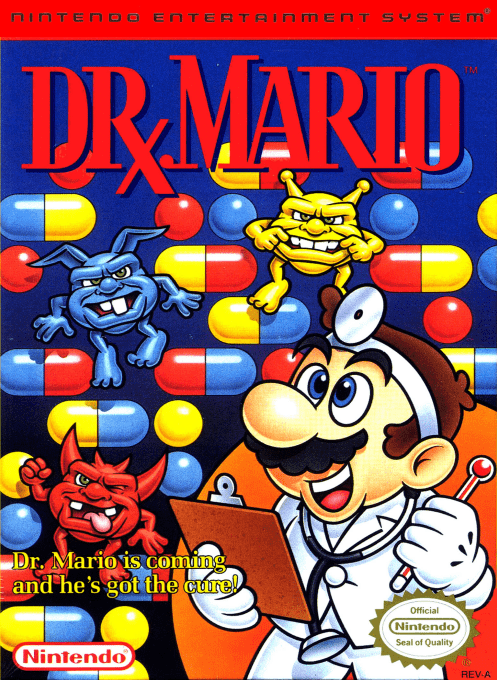
Dr. Mario for the NES is Nintendo's 1990 falling-block puzzle game, starring Mario in his white coat at the Mushroom Kingdom Hospital. Developed and published by Nintendo, it turns the familiar Mario character into a virus researcher with a bottle full of red, yellow, and blue viruses to clear. Rather than simply surviving an endless stream of pieces, each round has a defined goal: remove every virus from the bottle before the pile of capsules clogs its narrow neck. Dr. Mario throws two-part vitamin capsules into the top of the playfield. Each half has one of the three virus colors, and the player steers the falling capsule left or right, rotates it with either action button, and can press down to make it descend faster. A horizontal or vertical line of four matching colors disappears, whether that line is made from capsule halves, viruses, or both. Careful placement matters because the two halves can separate when supporting pieces vanish, allowing them to fall into new positions and set off further clears. The central challenge is to use the falling capsules to reach viruses already scattered through the bottle. Clearing a line of capsules without eliminating a virus may open space, but it does not finish the level; every virus must be removed to advance. A round ends in failure when the accumulating capsules block the bottle's neck. This balance of immediate line-making and planning for the pieces that will drop afterward gives the NES game its distinctive puzzle rhythm. Before beginning, players choose a virus level, capsule speed, and music selection. Higher virus levels begin with more targets in the bottle, while the Low, Medium, and High speed settings alter the pace at which capsules descend. The game can be played alone or with two players. In the competitive mode, each person works in a separate bottle, and strong clears can send extra capsule material to the other player's field; winning a match requires taking three individual games. The NES presentation frames the action around Dr. Mario and the three animated viruses, with the Fever and Chill tunes accompanying the color-matching play. Its simple inputs make the rules quick to understand, while the changing layouts, falling fragments, and increasing speed keep later stages demanding. The game was produced by Gunpei Yokoi, programmed by Takahiro Harada, and features music by Hirokazu Tanaka. Released for both the Family Computer and Nintendo Entertainment System in 1990, Dr. Mario is an early Mario-series spin-off built around puzzle play instead of platforming. The NES original later appeared in forms such as arcade adaptations and Nintendo rereleases, and its capsule-and-virus formula became the basis for later Dr. Mario games. For players exploring the NES library, it remains a self-contained color-matching game with single-player progression and direct head-to-head competition.
/Super_Blob_Bros.png)
/Sanrio_Cup_Pon_Pon_Volley.png)

/Urusei_Yatsura_Lum_no_Wedding_Bell.png)
Tiny Toon Adventures
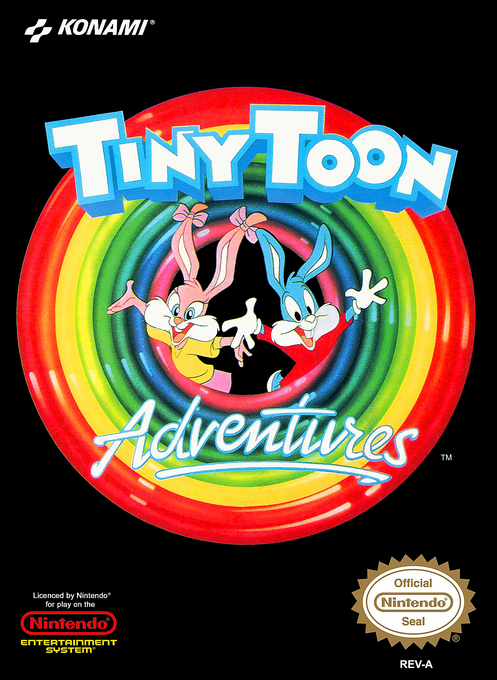
These Tiny Toons have big problems. That's right. The arch enemy of Acme Acres, Montana Max, has kidnapped the ever-so-popular Babs Bunny. Now the furry female's fate rests in the paws of Buster Bunny and his crime fighting pals - Dizzy Devil, Furrball and Plucky Duck. Four kooky buddies with their own special talent. Buster can bounce over bad guys with the best of them. Furrball uses his feline claws to climb walls. Dizzy Devil prefers to spin through them. And Plucky can glide through the air and swim like a fish. Choose which partner you want at the beginning of each level before you face-off against time and goofballs gone bad in 6 zany wonderlands. So you better get jumping or it will be curtains for our playful pals!