About
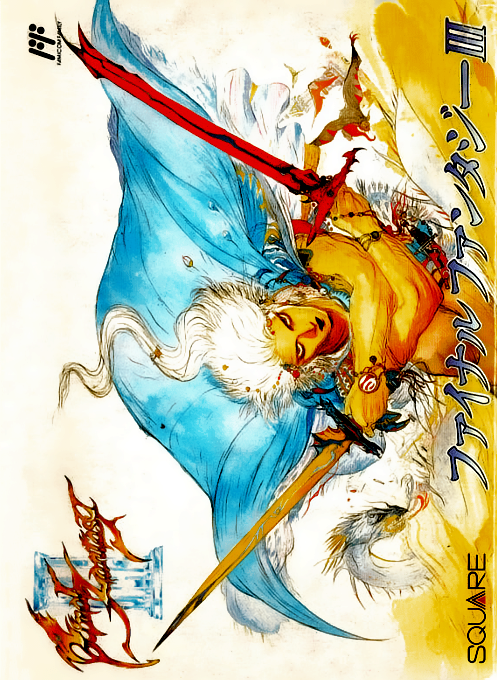
Final Fantasy III NES is Square’s 1990 fantasy role-playing game for the Japanese Family Computer, the version often grouped with the NES library. As the third main Final Fantasy adventure and Square’s last original entry for the system, it sends four orphaned youths from the village of Ur into a world thrown out of balance. An earthquake reveals Altar Cave, where the Wind Crystal chooses the boys as Warriors of Light. Their task grows from protecting their home into a journey to restore the elemental crystals and prevent darkness from consuming the world.
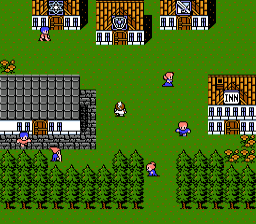
The original Final Fantasy III uses a top-down world map connected to towns, caves, towers, and other dungeons. Players speak with residents to move the story forward, visit inns and shops, equip weapons and armor, and travel by foot or on vehicles gained during the quest. Hostile areas trigger random battles. Combat is menu-driven and turn-based: the party selects actions such as attacking, defending, using magic, employing an item, or calling on a job’s special command, then watches the round play out against the enemy group. Victories provide gil for purchases and experience that strengthens the party.
Its defining feature is the job system. Rather than fixing each hero in one role for the whole game, Final Fantasy III lets the party change jobs as new crystal powers are obtained. The initial Onion Knight role eventually gives way to many specialized paths, including physical fighters, thieves, white and black mages, dragoons, bards, rangers, ninjas, and summoners. A job changes the commands available in battle and the equipment a character can use, so choosing a party is part of preparing for a dungeon or boss. Capacity points earned after fights govern job changes in the original version, encouraging players to consider when and how they reshape the team.
The adventure begins on the Floating Continent but gradually opens onto a much larger world. Along the way, the Warriors of Light aid Princess Sara, encounter the amnesiac Desch, work with the engineer Cid, and become involved in the struggle for the kingdom of Saronia. Airships and other forms of travel expand access to new regions and objectives. The quest ultimately leads toward the Crystal Tower, the mage Xande, and the Cloud of Darkness. Although the four protagonists of the Famicom game are unnamed, the supporting cast, crystal mythology, changing environments, and escalating means of travel give the story a broad fantasy scale.
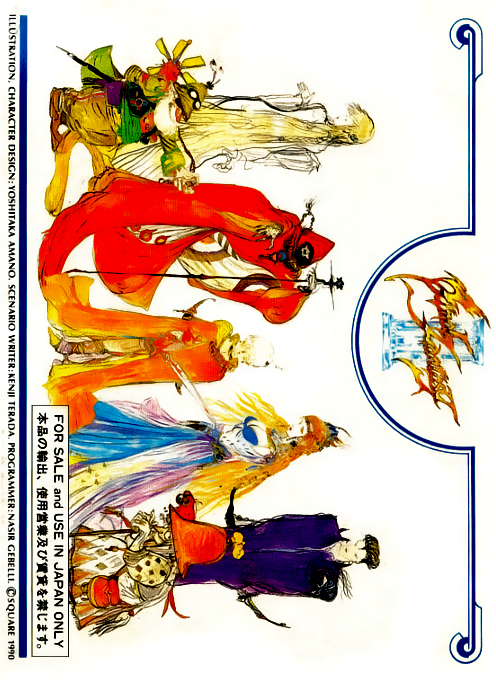
Final Fantasy III also marked several early series landmarks. It introduced the job-changing idea that became an important Final Fantasy tradition, and it brought Moogles and summoned creatures into the numbered series. Nobuo Uematsu composed the soundtrack, including “Eternal Wind,” while artists such as Yoshitaka Amano contributed to its visual identity. Square released the game in Japan on April 27, 1990; the original Famicom edition did not receive an overseas release at the time. Its later history includes Japanese Virtual Console editions, the international 3D Nintendo DS remake, and a Pixel Remaster release that finally made the original-style version widely available outside Japan. For players exploring the 8-bit era, Final Fantasy III stands as a substantial single-player RPG built around experimentation with its many jobs.
Gallery
Details
- Developer
- Square
- Publisher
- Square
- Genre
- JRPG
- Players
- 1
- Release Date
- April 27, 1990
- System
- NES
/Chuuka_Taisen.png)