About
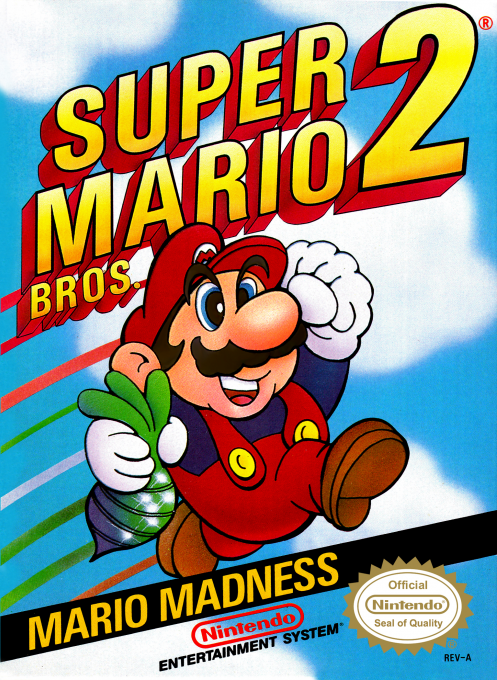
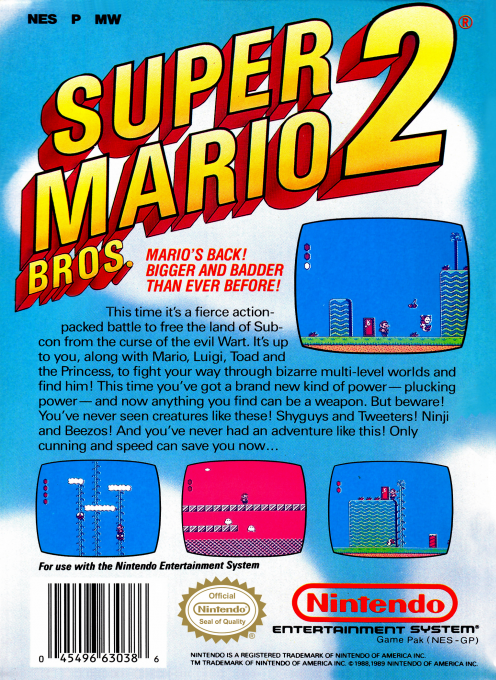
Super Mario Bros. 2 is Nintendo's 1988 NES platformer that takes Mario far beyond the familiar Mushroom Kingdom. This is the Western Super Mario Bros. 2: the game later released in Japan as Super Mario USA. It should not be confused with Japan's 1986 Famicom Disk System sequel, which eventually reached other territories as Super Mario Bros.: The Lost Levels. Here, Mario, Luigi, Toad, and Princess Toadstool answer a strange call from Subcon, a dream world placed under Wart's rule.
The adventure begins with a choice that shapes every stage. Mario is the balanced all-rounder, Luigi jumps higher, Toad is fast at lifting and carrying, and Princess Toadstool can float briefly in the air. Those differences make the same obstacle feel different in each character's hands. A long gap may favor Luigi's jump, a difficult enemy cluster may reward Toad's quick handling, and Peach's float can turn a risky landing into a controlled route. The game is single-player, but its four heroes give it an unusually flexible platforming rhythm.
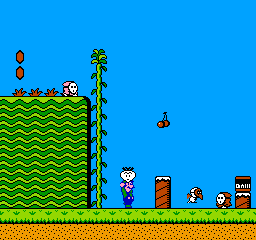
Instead of relying on the series' usual jump-on-enemy approach, Super Mario Bros. 2 makes objects central to play. Characters uproot vegetables, lift enemies, seize mushroom blocks, and throw their cargo at foes or obstacles. Doors, ladders, vines, keys, bombs, and POW Blocks turn levels into compact problem-solving spaces as well as tests of movement. The camera can travel vertically and in both horizontal directions, which gives the deserts, caverns, icy ledges, and other areas a more exploratory feel than a straight run to the right.
Subcon is divided into seven worlds and 20 stages, with each early world ending in a boss encounter before the final battle with Wart. The route is full of details worth learning: cherries can call in a Starman, stopwatches can freeze enemies, and a floating heart can restore lost health. A character begins with a small health meter rather than a single hit, while Mushrooms found in Sub-space can raise that maximum. These systems make careful scavenging meaningful even when a stage's exit is already in sight.
Magic potions open the door to Sub-space, a mirrored area where coins and Mushrooms can be collected. It is also where some jars reveal shortcuts to later worlds. The coins feed the Bonus Chance game between stages, offering a chance at extra lives, while hidden 1-Up Mushrooms provide another reward for attentive exploration. Together, these secrets invite players to revisit levels with another character, try a different path, or chase a safer way through a difficult room.
Wart rules the dream world, but the cast around him is just as memorable. Shy Guys, Birdo, Pokeys, Bob-ombs, Ninjis, Mouser, Tryclyde, and others give the game a personality distinct from the first Super Mario Bros. Many of these enemies and ideas became recurring parts of the larger Mario universe. That legacy is especially clear in the game's emphasis on picking up and throwing objects, a mechanic that returned in later Mario adventures in new forms.
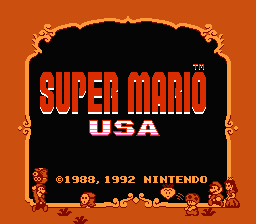
Its unusual identity has a clear history. Nintendo adapted Yume Kōjō: Doki Doki Panic, a Famicom Disk System game made for Fuji Television's Yume Kōjō '87 event, by replacing its festival characters and imagery with Mario characters and series elements. The result retained its own structure and mechanics while becoming a Mario release for North America and Europe. Nintendo's later Japanese release under the Super Mario USA name makes the regional distinction explicit.
This NES original is also separate from its enhanced remakes and collections. Super Mario All-Stars rebuilt it for Super NES with 16-bit presentation and gameplay adjustments, while Super Mario Advance later reworked that version for Game Boy Advance with further additions. The 1988 NES game remains the foundational version: a colorful, inventive platformer whose character choice, throwable objects, hidden Sub-space rooms, and dream-world atmosphere still make every expedition through Subcon feel unlike any other early Mario journey.
Gallery
Details
- Developer
- Nintendo
- Publisher
- Nintendo
- Genre
- Platformer
- Players
- 1
- Release Date
- October 28, 1988
- System
- NES