About
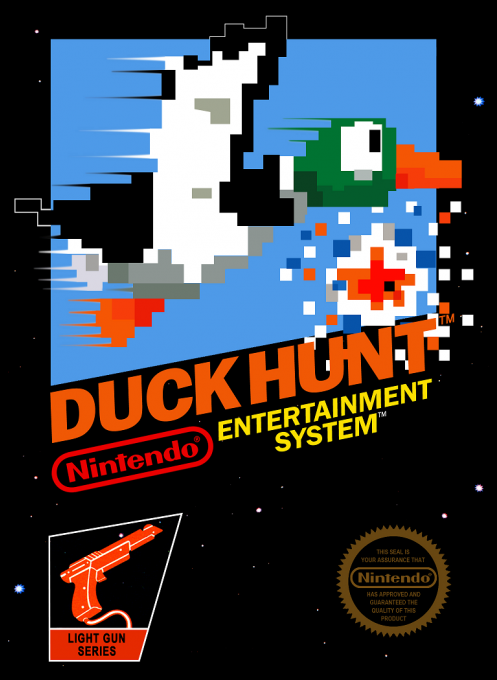
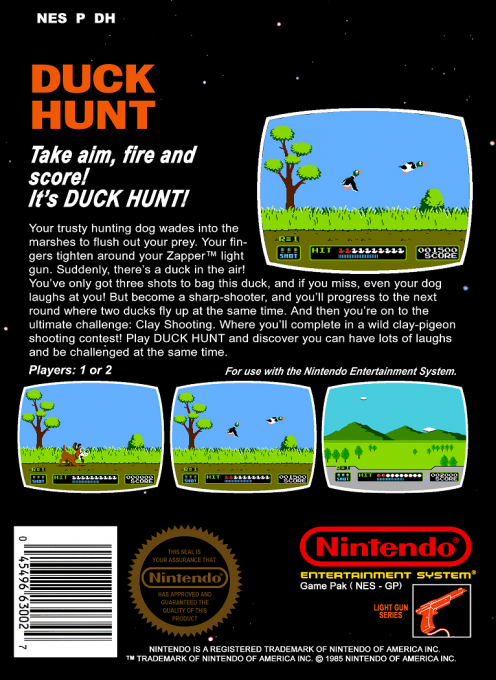
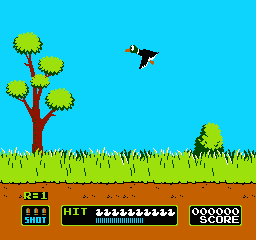
Duck Hunt turns a television screen into a small marshland shooting range. Nintendo’s NES game opens on grass, reeds, and a patient hound, then asks for the kind of quick decision that a controller-only game cannot quite reproduce: spot the target, raise the NES Zapper, and fire before the bird escapes. The scene is simple, but its rhythm is wonderfully direct. A duck bursts from the cover, changes direction in midair, and leaves only a few seconds to line up a shot. A hit sends it tumbling down for the dog to retrieve; a miss earns the famous laugh. That tiny exchange gives every round a clear, immediate sense of triumph or embarrassment.
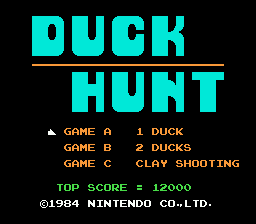
The original NES release is built around the NES Zapper light gun, connected to the second controller socket. On a compatible CRT television, the game detects a shot aimed at a target on the screen, making aim, distance, and picture setup part of the experience. The Zapper can even be used to move through the title menu and begin a selection. Duck Hunt is therefore best understood as a game made for the hardware and displays of its period, rather than as a conventional button-controlled shooter. Its appeal is physical and social: people take turns with the Zapper, lean toward the screen, and argue over whether a difficult shot should have counted.
Game A is the core duck-hunting challenge. The dog flushes one duck at a time from the thicket, and the hunter has three shots before the chance expires. Each round contains ten ducks, with a pass line showing how many hits are needed to continue. Reaching that target keeps the hunt going; falling short ends the game. The tension grows naturally as later rounds demand sharper shooting and faster reactions. Colored ducks can also appear for bonus points, while a round completed without a miss earns a perfect bonus. The score is not merely decorative: it captures a steadily tougher test of timing, tracking, and nerve.
Game A also contains one of Duck Hunt’s cleverest surprises. A second player can use Controller 1’s Control Pad to steer the duck’s flight, trying to evade the Zapper wielder until it gets away. That asymmetric contest changes the familiar hunting scene into a playful duel, with one person aiming and the other improvising an escape route. Game B removes that option and raises the pressure by launching two ducks together. The hunter still has only three shots for the pair, so choosing which flight path to follow becomes as important as pulling the trigger. It is a compact variation, but it makes the screen feel unexpectedly busy.
Game C trades birds for clay shooting. Two clay pigeons spring away at once and rapidly shrink as they travel into the distance, rewarding an early, accurate shot rather than a late chase. It follows the same round-and-pass-line structure as the duck games, and the three-shot limit remains, but the targets’ changing size gives this mode its own challenge. Together, the three selections make Duck Hunt more than a single gag or a test shot for the Zapper: it is a tightly designed set of target disciplines with different ways to practice anticipation.
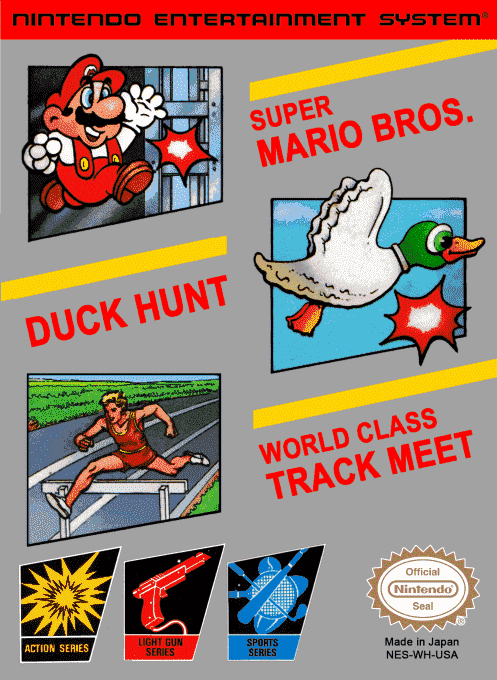
This entry is the 1985 Nintendo Entertainment System version of Duck Hunt, a launch-era NES title. It should not be confused with the earlier Famicom release or with Vs. Duck Hunt, the Nintendo VS. System arcade adaptation, which has its own structure and rules. Nor is it a description of the later combination cartridges that paired Duck Hunt with Super Mario Bros., or the three-game cartridge that also included World Class Track Meet. Those packages helped make the game widely recognizable, but the game here is the standalone NES Duck Hunt experience and its three selectable modes.
Duck Hunt endures because it makes its rules legible at a glance. There is no maze to learn and no elaborate arsenal to manage: grass rustles, targets fly, and the next shot is yours to make. Yet that clarity leaves room for skill. Reading a duck’s path, resisting a rushed trigger pull, and recovering from a miss are all part of the chase. The dog’s laugh may be the image most people remember, but the lasting magic is the feeling of aiming at a moving sprite and seeing the whole scene answer back. For NES collectors, Zapper fans, and anyone revisiting Nintendo’s early home-console era, Duck Hunt remains a brisk, playful showcase for a distinctive piece of hardware.
Gallery
Details
- Developer
- Nintendo
- Publisher
- Nintendo
- Genre
- Rail Shooter, Hunting & Fishing
- Players
- 1-2
- Release Date
- October 2, 1985
- System
- NES