Retro Explore — Discover classic retro games
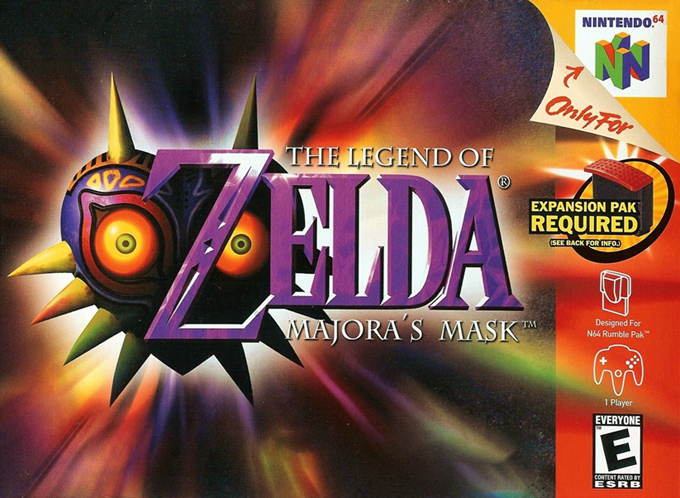
The Legend of Zelda : Majora's Mask
The Legend of Zelda: Majora's Mask for Nintendo 64 is Nintendo's 2000 action-adventure follow-up to Ocarina of Time. Developed and published by Nintendo, it sends Link away from Hyrule and into Termina, a world facing disaster: a huge moon is due to fall in three days. After Skull Kid steals the Ocarina of Time and leaves Link cursed in Deku form, the quest becomes a race to recover Majora's Mask, restore Link, and prevent the catastrophe before the Carnival of Time. Majora's Mask uses the third-person exploration, sword combat, item use, dungeon puzzles, and Z-targeting familiar from its Nintendo 64 predecessor. Link can defend with his shield, use tools such as bombs, arrows, and the Hookshot, and build his inventory as new routes and obstacles appear. The game rewards observing the world closely. Its four main regions lead to temples with enemies, puzzles, bosses, and trapped Great Fairies, while Clock Town serves as the busy central hub from which Link follows leads in every direction. The Ocarina of Time gives the adventure its distinctive structure. A complete three-day cycle lasts 72 in-game hours, and events unfold according to the clock. Playing the Song of Time takes Link back to the first morning, preserving major equipment, masks, songs, and dungeon progress while returning many local events to their starting point. Other melodies can slow time, move ahead to a chosen morning or evening, or help Link travel between activated owl statues. This turns conversations, schedules, and repeated visits into useful parts of exploration rather than simple background detail. Masks are equally central to Majora's Mask. Link can collect masks through story progress and optional tasks, and several transform him into forms with different movement and combat abilities. Deku Link can use Deku Flowers to launch into the air and skim across water; Goron Link rolls at speed, strikes heavily, and can cross lava; Zora Link excels in water, swimming quickly and using boomerang-like fins. Other masks offer situational benefits, from finding stray fairies to running faster, and the ways Termina's inhabitants react can open new solutions. The setting gives the Nintendo 64 game a strong sense of place. Beneath the approaching moon, the people of Clock Town and the surrounding swamp, mountain, coast, and canyon areas continue with their own concerns. Link's companion Tatl, Skull Kid, the Happy Mask Salesman, and the Four Giants all figure into the main journey, while many side stories depend on being in the right place at the right time. The Bomber's Notebook helps record people and appointments, making it easier to track the interconnected tasks that unfold across successive cycles. Majora's Mask was released for Nintendo 64 shortly after Ocarina of Time and uses an enhanced version of that game's technology, including a requirement for the Nintendo 64 Expansion Pak. It is a single-player adventure whose time loop and transformation system set it apart within the series. Nintendo later brought the original game to GameCube, Wii and Wii U Virtual Console services, and Nintendo Classics, while a separate Nintendo 3DS remake, The Legend of Zelda: Majora's Mask 3D, arrived in 2015. The Nintendo 64 original remains the version built around its Expansion Pak hardware and its unusual three-day countdown.


Kirby's Dream Land
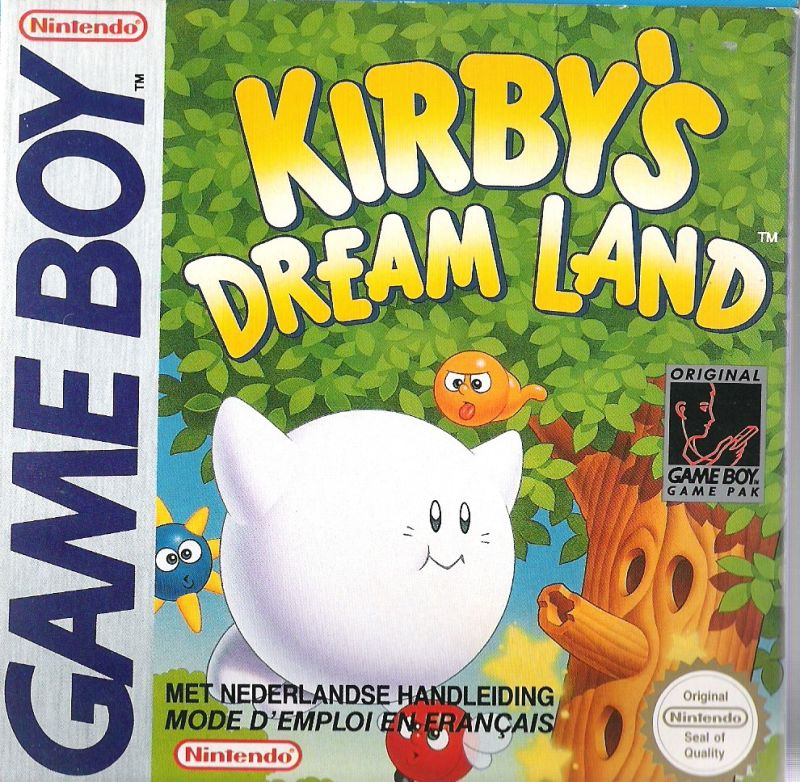
Dedede, King of Dream Land, is a penguin-like creature who is too gluttonous for his own good. Gathering food for his midnight feast, he got carried away and ended up taking all the food from the inhabitants of his country. One of them, a pink little guy named Kirby, decides to travel all the way to King Dedede's palace and retrieve the lost food by any means. Kirby's Dream Land is a side-scrolling platform action game, and the first in the Kirby series. Although the protagonist appears to be a weak little marshmallow, he is actually quite powerful: he has the ability to suck up his enemies like a vacuum, and then shoot them out at other enemies. Kirby can also swallow air and inflate himself, which allows him to fly. There are four levels in the game; no save feature is available.


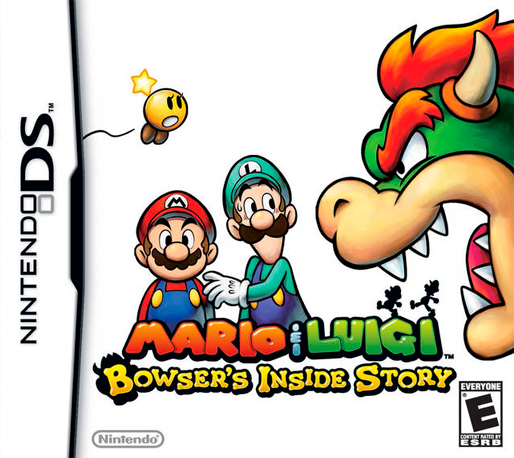
Mario & Luigi : Bowser's Inside Story
Mario & Luigi: Bowser's Inside Story for Nintendo DS is a 2009 role-playing adventure developed by AlphaDream and published by Nintendo. The third entry in the Mario & Luigi series follows Mario & Luigi: Partners in Time, but gives their longtime rival Bowser an unusually large role. When a strange illness called the Blorbs spreads through the Mushroom Kingdom, Bowser is tricked into gaining a powerful inhaling ability. Mario, Luigi, Princess Peach, and others are swallowed up in the confusion, placing the brothers inside Bowser while the villain Fawful exploits the crisis above ground. The game alternates between two connected adventures. Mario and Luigi explore the strange, side-scrolling spaces within Bowser’s body, while Bowser travels the Mushroom Kingdom in an overhead view without realizing the brothers are helping him. The Nintendo DS’s two screens make that division immediately readable: the brothers’ internal journey and Bowser’s outside-world exploits occupy their own spaces, with the story regularly switching control between them. As their separate routes overlap, actions taken inside Bowser can give him the strength or access he needs to continue outside. Exploration mixes conversation, environmental puzzles, item collection, and enemy encounters that appear directly in the field rather than arriving at random. Mario and Luigi move as a pair, with their individual buttons used for jumps and hammer actions; these inputs also underpin timing-based challenges and attacks. Bowser has his own approach, relying on physical power, fire breath, and his ability to inhale enemies or obstacles. Hidden paths, breakable barriers, and character-specific abilities encourage players to look at the same problem from the perspective of both the brothers and the Koopa King. Combat remains turn-based but asks for active responses throughout every exchange. Players choose attacks and special moves, then press buttons at the right moment to increase damage or avoid an opponent’s counterattack. Enemy tells matter: learning an attack pattern can make a dodge, jump, hammer strike, or counter possible. Mario, Luigi, and Bowser each gain experience and equipment, while the brothers can combine badges for useful effects. The game also turns Bowser’s unusual condition into minigames inside his body, where the brothers help activate muscles, digest food, or otherwise assist him during the larger quest. Some of the Nintendo DS release’s most dramatic sequences use Giant Bowser battles. In these encounters the system is held vertically, the stylus is used for selected actions, and the microphone can be used when Bowser needs to blow fire. These set pieces make the console’s hardware part of the design without replacing the main RPG structure. The original release is single-player, even though its heroes work in tandem, and its comedy comes from the contrast between Bowser’s bluster, the brothers’ silent cooperation, and the escalating trouble caused by Fawful and his ally Midbus. Mario & Luigi: Bowser's Inside Story was released first in Japan in February 2009, followed by North America in September and Europe in October. It later received a Nintendo 3DS remake, Mario & Luigi: Bowser's Inside Story + Bowser Jr.'s Journey, which adds a separate Bowser Jr. story; that version is distinct from this Nintendo DS game. The DS original stands as a chapter in AlphaDream’s Mario & Luigi series that builds its progression around linked viewpoints, timed RPG battles, and a premise that lets Mario, Luigi, and Bowser advance the same rescue mission from very different places.