About
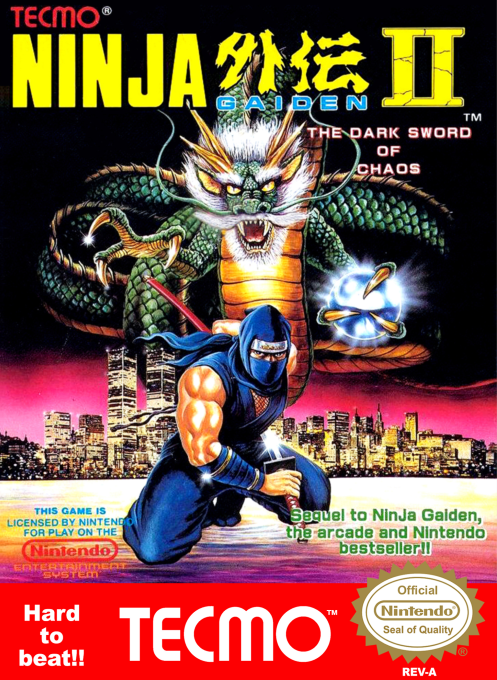
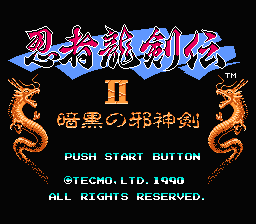
Ninja Gaiden II: The Dark Sword of Chaos for NES is Tecmo’s 1990 side-scrolling action-platform sequel starring the Dragon Ninja, Ryu Hayabusa. Set a year after the first NES adventure, it sends Ryu into another supernatural crisis when the ruler Ashtar sets his sights on Earth and the Dark Sword of Chaos threatens to open a path for greater evil. Released in Japan as Ninja Ryukenden II: Ankoku no Jashin Ken and later in Europe as Shadow Warriors II: The Dark Sword of Chaos, this is the middle chapter of Tecmo’s original NES trilogy, rather than the similarly named modern Ninja Gaiden II games.
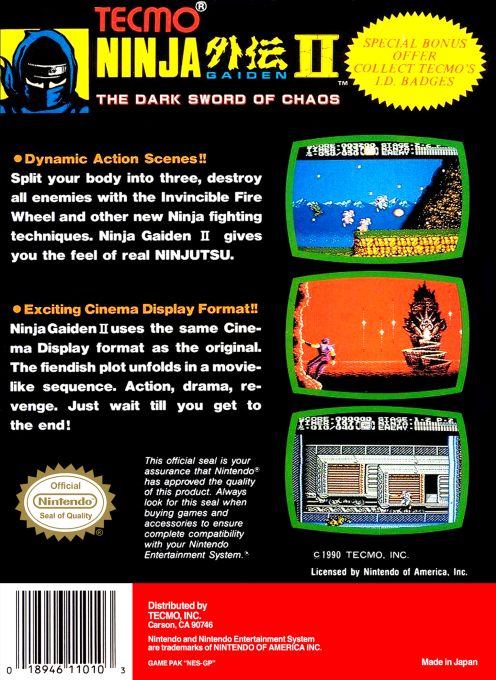
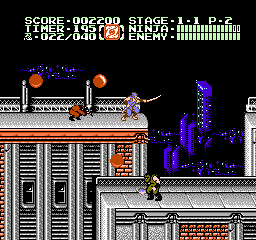
Ryu’s basic goal is direct but demanding: cross each Act, survive its enemies and hazards, and defeat the boss at the end. The NES controls center on running, jumping, and striking with the Dragon Sword, while Ryu can also seize vertical walls and ladders. The sequel expands that mobility by letting him climb both upward and downward on walls, and by allowing certain attacks from those positions. A health meter, a level timer, limited lives, and bottomless drops make movement as important as swordplay, so an ill-timed leap can be as costly as an enemy attack.
Crystal balls placed through the stages supply score items, health-restoring medicine, extra lives, ninja-power increases, and replacement ninjutsu. Ryu can spend ninja power on weapons such as shuriken, returning Windmill Throwing Stars, diagonal fire attacks, and the protective Invincible Fire Wheel. Picking up a different special weapon replaces the current one, which gives each route a small tactical choice. Bosses have their own life meters, encouraging players to learn their patterns while preserving enough health and ninja power for the encounter.
The game’s signature new device is the orange Ninja Shadow symbol. It creates a shadow double that trails Ryu and repeats his jumps, climbing, and attacks; a second symbol can add another copy. Because the shadows reproduce a sword strike or ninjutsu attack, careful positioning can let Ryu pressure enemies and bosses from more than one location. It is a simple-looking addition with consequences for timing, especially during fast platforming sequences where the original Ninja Gaiden formula already asks players to manage wall holds, enemies, and momentum at once.
Tecmo frames the action with cinematic cutscenes that carry Ryu from a freight train and a mountain stronghold into darker realms. Robert T. Sturgeon of U.S. Army Special Intelligence calls on Ryu, while Irene Lew is again caught in the conflict surrounding Ashtar, the sword, and the Gate of Darkness. The stages use changing conditions to complicate the familiar side view: wind can affect Ryu on a snowy mountain, and lightning briefly exposes platforms in a dark area. These scenes and environments give the NES game a film-like sense of escalation without interrupting its focus on precise action.
Ninja Gaiden II: The Dark Sword of Chaos remains a single-player NES game built around consecutive Acts, cinematic storytelling, and exacting platform combat. Tecmo released it for the Famicom in April 1990 and in North America the following month; the title later appeared on Nintendo digital services, while the original NES version was also adapted for Nintendo’s PlayChoice-10 arcade hardware. Its direct successor, Ninja Gaiden III: The Ancient Ship of Doom, arrived in 1991, completing the classic NES trilogy. For players exploring the series’ 8-bit roots, this sequel stands out for its climbable walls, shadow clones, and theatrical continuation of Ryu Hayabusa’s battle against demonic forces.
Gallery
Details
- Developer
- Tecmo
- Publisher
- Tecmo
- Genre
- Beat 'em Up
- Players
- 1
- Release Date
- May 1, 1990
- System
- NES