About
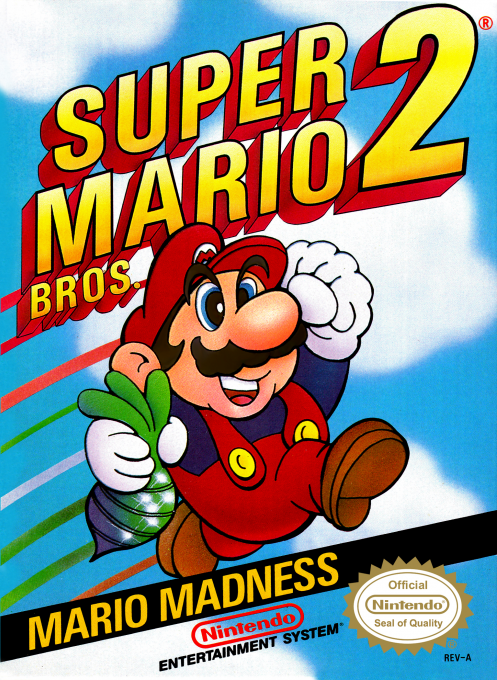
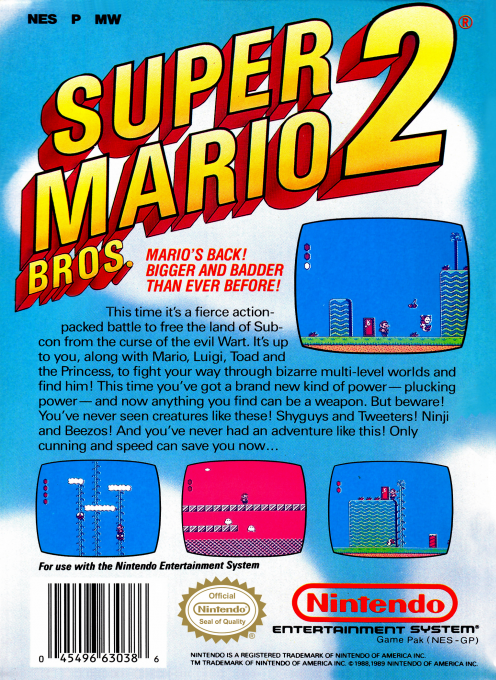
Super Mario Bros. 2 is Nintendo’s 1988 NES platform adventure for North America, later issued for the NES in Europe, developed and published by Nintendo. It is the Western Super Mario Bros. 2: a deliberately different game from the Japanese 1986 Famicom Disk System sequel of the same name, which later became known internationally as Super Mario Bros.: The Lost Levels. The Western release adapts Nintendo and Fuji Television’s 1987 Yume Kōjō: Doki Doki Panic, replacing that game’s heroes and setting with the Mario cast while preserving its distinctive movement, stages, and enemy encounters.
Mario’s adventure begins with a dream of Subcon, a land of dreams oppressed by the villain Wart. The next day, Mario, Luigi, Princess Toadstool, and Toad discover a cave and staircase leading to the same strange world. Their mission is to free Subcon by fighting through its varied landscapes and finally confronting Wart. That dream framing gives Super Mario Bros. 2 a surreal identity unlike the Mushroom Kingdom rescue of the first game, complete with masked foes, flying carpet rides, oversized doors, and an ending that returns to the story’s sleeping-world premise.
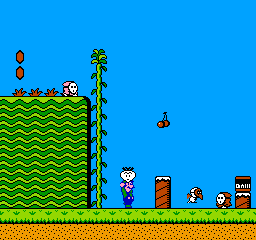
Instead of defeating every threat by jumping on it, the four heroes uproot vegetables, lift enemies, and throw whatever they can carry. Turnips are the signature ammunition, but bombs, shells, mushrooms, keys, and even opponents can become tools or weapons. The design makes positioning important: a thrown object can clear a path, hit a distant enemy, or be carried to solve the next obstacle. POW Blocks add another screen-wide option, knocking down enemies whenever a hero can find and lift one.
Each playable character changes the feel of a stage. Mario is the all-round choice, while Luigi jumps higher and drifts farther through the air at the cost of less steady footing. Toad runs quickly and pulls objects from the ground faster than the others, making him powerful in a hurry. Princess Toadstool can hover briefly after a jump, letting her cross gaps and correct her course in midair. Choosing between those strengths turns the same platforms, enemy patterns, and shortcuts into different challenges.
Magic potions are central to the game’s unusual exploration. Planting one creates a door to Sub-space, the dark mirror realm associated with the level, where players can gather coins and sometimes find mushrooms that increase their life capacity. Other doors transport the group between portions of a stage, and keys open locked exits, though the roaming Phanto masks punish anyone who tries to carry a key away. These mechanics give stages a puzzle-like rhythm alongside the precise jumping and throwing.
The quest spans seven worlds and twenty stages, moving from grassy fields and deserts to icy terrain, caverns, and the clouds above Subcon. Birdo, recognizable by the eggs or fire she spits, frequently guards the end of a stage and is usually beaten by throwing her own projectiles back. Other bosses include the bomb-throwing Mouser, three-headed Triclyde, flame creature Fryguy, crab-like Clawgrip, and Wart himself. Wart’s weakness to vegetables ties the final battle directly to the game’s defining action.
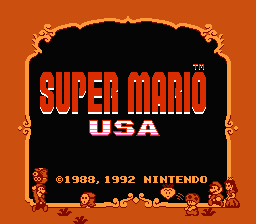
Because the Japanese Super Mario Bros. 2 was considered a much tougher, closely related follow-up to the original, Nintendo chose this Doki Doki Panic-based version for Western players. That decision explains why this Super Mario Bros. 2 has vertical scrolling, character selection, lifting, and Sub-space instead of the familiar power-up-and-fireball structure of Super Mario Bros. The Japanese version later received this game as Super Mario USA, while later collections made both branches of Mario history available together. Super Mario Bros. 2 therefore stands as an essential NES entry with its own style, characters, and dream-world mythology.
Gallery
Details
- Developer
- Nintendo
- Publisher
- Nintendo
- Genre
- Platformer
- Players
- 1
- Release Date
- June 3, 1986
- System
- NES
/Heisei_Tensai_Bakabon.png)
/Wagyan_Land.png)
/Puyo_Puyo.png)