About
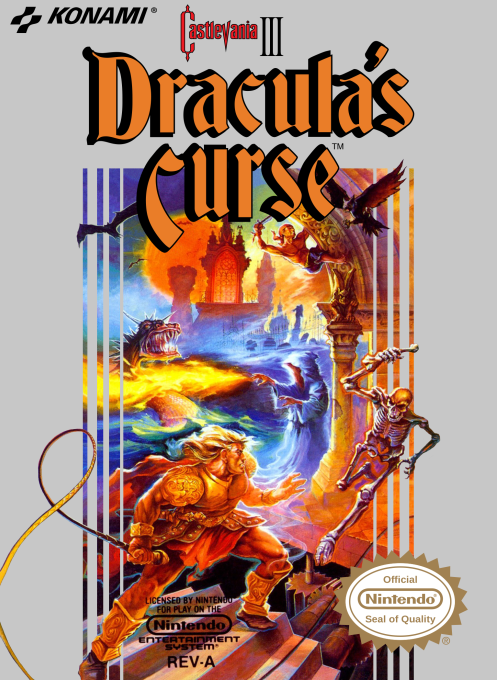
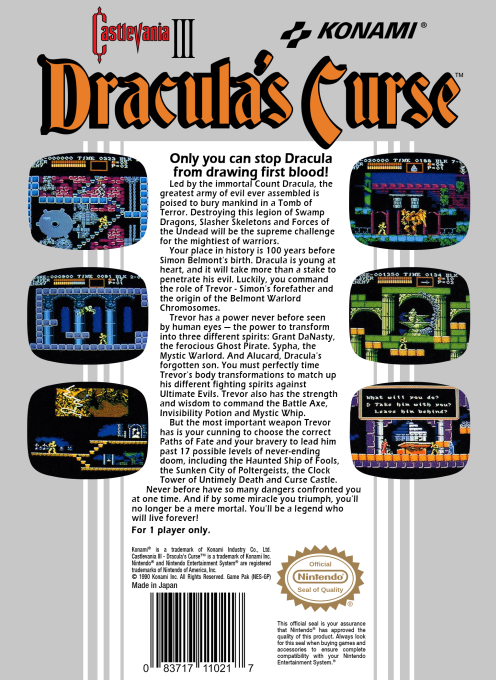
Castlevania III: Dracula's Curse for the Nintendo Entertainment System is Konami's 1990 North American action-platformer, released in Japan as Akumajō Densetsu in late 1989. Set long before the original Castlevania, it sends vampire hunter Trevor Belmont toward Count Dracula's fortress after the count unleashes monsters across the countryside. Trevor carries the Belmont family's whip into a world of graveyards, ruined towns, caverns, towers, and castle halls. The NES game returns to the series' stage-by-stage action focus while building its own identity around alternate routes and an unusually flexible cast of heroes.
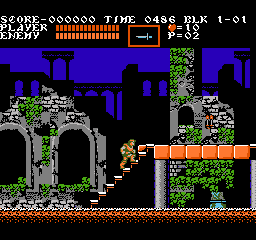
Each level asks Trevor to advance through hostile 2D terrain, judge enemy patterns, negotiate stairways and moving hazards, and defeat a boss to continue. The Control Pad handles movement and stairs, A jumps, and B attacks with the equipped main weapon; pressing Up and B uses a collected sub-weapon. Candles, enemies, and breakable scenery can yield hearts, health recovery, score items, weapon upgrades, or tools such as daggers, axes, boomerangs, holy water, and the stopwatch. Hearts serve as ammunition for sub-weapons, so choosing when to spend them is as important as finding them. Trevor's whip can be strengthened from its base form into longer chain variants, but damage can reduce that upgrade.
The central difference in Castlevania III: Dracula's Curse NES play is the choice of paths and companions. Forks after key stages can lead through different locations and encounters on the way to Dracula, making a run less fixed than the earlier NES Castlevania games. Trevor can recruit one ally at a time and switch control between them. Sypha Belnades attacks with a staff and uses elemental magic; Grant Danasty is agile and can cling to walls and ceilings; Alucard fires projectiles and can become a bat for limited flight. Their movement and attacks open different approaches to hazards, while the route and current companion also affect the conclusion.
This is a single-player game, but its party system gives one player several contrasting toolsets. Trevor remains the dependable close-range fighter, Grant can navigate surfaces inaccessible to the others, Sypha brings ranged magical attacks, and Alucard trades conventional platforming for airborne travel when enough hearts are available. Passwords allow progress to be recorded between sessions, and the challenge is shaped by limited lives, health, stage timers, and the need to preserve resources. The result is a carefully structured NES adventure in which decisions about route, companion, weapon, and timing all influence the trip to the final confrontation.
Regional hardware makes the original versions notably different. The Japanese Famicom cartridge used Konami's VRC6 chip, adding sound channels that support a richer arrangement of the score, while the NES release used different cartridge hardware and revised music. There are also gameplay and presentation changes between regions, including alterations to some enemy artwork and other content. Castlevania III later returned through Nintendo Virtual Console services and Konami's Castlevania Anniversary Collection, but its original NES form remains a key chapter in the early series: a prequel that paired classic whip-based platform action with branching progression and three memorable playable allies.
Gallery
Details
- Developer
- Konami
- Publisher
- Konami
- Genre
- Platformer
- Players
- 1
- Release Date
- September 1, 1990
- System
- NES