About
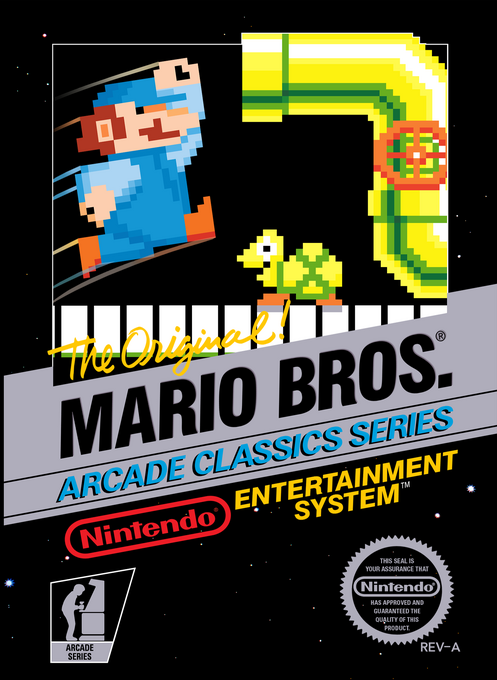
Mario Bros. for the Nintendo Entertainment System is Nintendo's home-console version of the arcade game that established the familiar pairing of Mario and Luigi. Released for the Famicom in 1983 and brought to the NES in 1986, this compact action-platform game sends the two plumbers into a pipe-filled underground stage to clear each phase of pests. It is a very different kind of Mario game from the later scrolling adventures: every encounter plays out on a single-screen arena, where position, timing, and quick reactions decide the score.
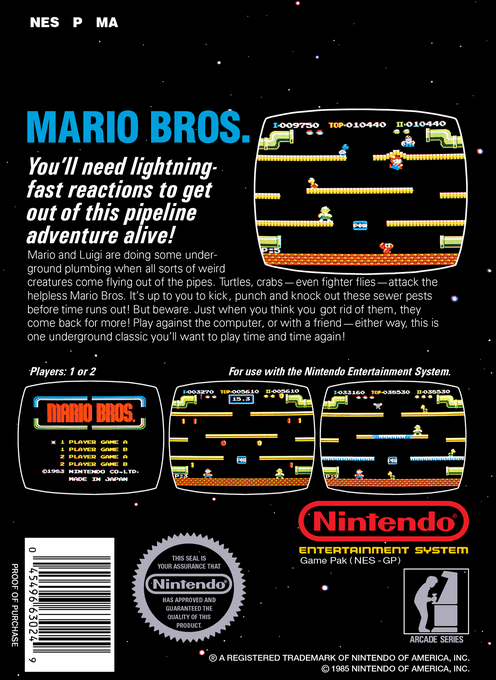
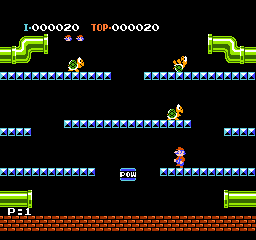
The objective is to remove every enemy from the stage. Mario runs left and right with the Control Pad and jumps with the A Button, but he cannot defeat enemies by landing on them. Instead, he strikes the platform from underneath to flip an opponent over, then has a brief window to run over and kick it away. Let a stunned enemy recover and it resumes its route at greater speed, so a moment of hesitation can turn a manageable screen into a crowded one.
The enemies each call for slightly different timing. Turtles fall after one well-placed hit, while crabs withstand an initial blow before they can be overturned. Fighter Flies move by hopping and must be hit as they touch down. Fireballs add a moving hazard, and Freezies can make floors slippery if they are allowed to travel. The central POW block offers a limited emergency tool: hitting it shakes enemies on the platforms and can clear fireballs, but it disappears after three uses. Screen wraparound lets Mario emerge from the opposite edge, adding another route for escapes and surprise attacks.
Mario Bros. also rewards efficient play rather than simply surviving. Consecutive kicks build larger point awards, coins appear from pipes after enemies are dispatched, and timed bonus stages ask players to gather every coin before the clock expires. As phases advance, the pace and hazards increase, with the last active enemy becoming especially urgent. The core loop remains easy to read—flip, kick, collect, and prepare for the next wave—yet its overlapping threats make high-score runs demanding.
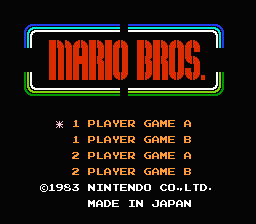
The NES game supports one player as Mario or simultaneous two-player play with Luigi on the second controller. Partners can coordinate, with one player knocking an enemy down and the other finishing it, but the same systems also create lively competition: players can interfere with a jump, disrupt a planned kick, or race for coins and points. The menu includes beginner and expert variants for both solo and two-player games, giving the small arena a choice of starting challenge levels.
As an early Mario series entry, Mario Bros. introduced Luigi alongside several enduring motifs, including green pipes, coins, turtle enemies, and the two-character multiplayer dynamic. Its arcade-style design was later revisited in Mario Bros. Classic, which appeared as an extra mode in several Game Boy Advance releases and Mario & Luigi: Superstar Saga. The NES original also returned through Nintendo's Virtual Console services and on the Nintendo Classic Mini: Nintendo Entertainment System, preserving the focused single-screen contest that helped define Mario and Luigi's partnership.
Gallery
Details
- Developer
- Nintendo
- Publisher
- Nintendo
- Genre
- Platformer
- Players
- 1-2
- Release Date
- June 2, 1985
- System
- NES