About
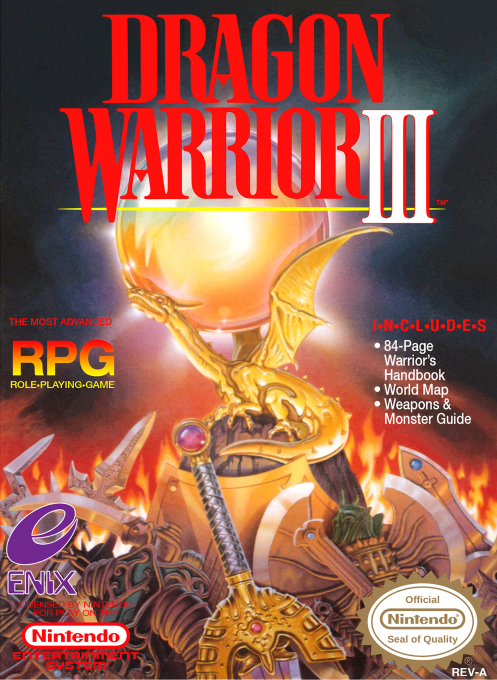
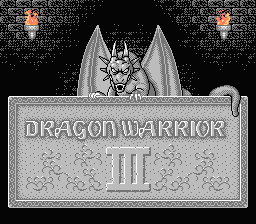
Released in North America for the NES in 1992 as Dragon Warrior III, this is the English localization of Enix's Dragon Quest III. Chunsoft developed the original 8-bit adventure, with series creator Yuji Horii providing its scenario, Akira Toriyama shaping its character and monster art, and Koichi Sugiyama composing the music. It serves as the concluding chapter of the original Erdrick trilogy, while its story takes place long before the first two games.
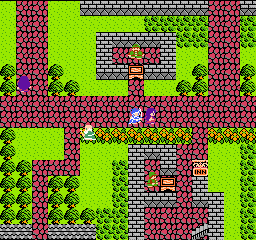
The quest begins in Aliahan on the Hero's sixteenth birthday. Ortega, the Hero's famed father, set out to defeat the Archfiend Baramos and never returned; the king entrusts his child with continuing that mission. From this modest opening, the party crosses a broad world of towns, castles, caves, towers, and distant lands, gradually uncovering what connects the Hero's journey to the legend of Erdrick.
Rather than supplying a fixed band of story companions, Dragon Warrior III lets players build a party at Luisa's Place and the Adventurer's Hall. Up to four characters travel together, and recruits can be stored or exchanged at the tavern. The NES roster offers Soldiers, Fighters, Merchants, Goof-offs, Pilgrims, and Wizards, so a group can be tailored toward weapon damage, healing, magic, money-making, or unpredictable comic relief.
Combat uses the series' menu-driven, turn-based battles. Players choose attacks, spells, items, or defensive actions for their active party, then watch the round resolve against groups of roaming monsters. Victories bring gold and experience, allowing characters to level up, improve their attributes, learn spells where their vocation permits, and buy stronger equipment before venturing into harder territory.
Its vocation system gives party building a longer arc than simply choosing four roles at the start. After reaching level 20, recruited characters can change class at the Dharma Temple; they return to level 1 with reduced attributes but keep learned spells, inviting deliberate hybrid builds. The Sage is a special advanced class rather than a normal starting choice, rewarding players who plan ahead with access to both Pilgrim and Wizard magic.
Progression mixes guided objectives with an unusually open sense of travel for an early console RPG. Keys open new doors and regions, local problems yield tools for the larger mission, and obtaining a ship turns the world map into a much wider field of exploration. Later discoveries, including the six mystical orbs, enable the party to reach places that ordinary travel cannot.
The moving world also has a day-and-night cycle. Time passes while the party walks across the field, changing the brightness of the screen and altering the state of the world: most shops close at night, castle access can be restricted, townspeople may offer different information, and nocturnal encounters become more frequent or complex. Inns, certain spells, and special items can influence the time of day, making timing part of exploration.
This NES release preserves the original 8-bit framework and its North American Dragon Warrior terminology. It should not be confused with the later Super Famicom and Game Boy Color remakes, which added features such as a Thief class, character personalities, revised presentation, and extra content, nor with modern ports and the HD-2D remake. For NES players, its appeal is the foundational version's mix of custom party design, demanding resource management, and an adventure whose prequel reveal reframes the trilogy.
Gallery

Details
- Developer
- Enix
- Publisher
- Enix
- Genre
- JRPG
- Players
- 1
- Release Date
- March 1, 1992
- System
- NES