Retro Explore — Discover classic retro games
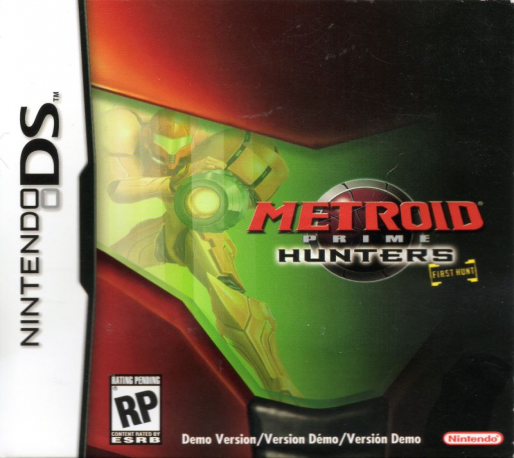
Metroid Prime : Hunters
Metroid Prime Hunters Nintendo DS is a 2006 first-person action-adventure game developed by Nintendo Software Technology and published by Nintendo. Set between Metroid Prime and Metroid Prime 2: Echoes, it sends intergalactic bounty hunter Samus Aran into the Alimbic Cluster after the Galactic Federation intercepts a telepathic promise of "ultimate power." North America received the game in March 2006, followed by Europe in May and Japan in June. Rather than being the earlier Metroid Prime Hunters: First Hunt demonstration supplied with some launch-era DS systems, this is the complete adventure with its own campaign and multiplayer suite. The single-player Adventure mode adapts the exploratory side of the Metroid Prime games to a handheld. Samus travels in her Gunship among the locations of the Alimbic system, including the volcanic world of Alinos, frozen Arcterra, the Celestial Archives, and the Vesper Defense Outpost. Each destination is built from interconnected rooms, routes, locked doors, hazards, enemies, and artifacts. Progress hinges on locating Octoliths, ancient keys connected to the source of the transmission, while revisiting areas as new equipment and information make further paths accessible. The Nintendo DS layout is central to how Metroid Prime Hunters plays. The upper screen presents Samus's visor view, with status information such as health and ammunition, while the touch screen carries the radar and aiming controls. In the default setup, the D-pad moves Samus and stylus movement turns her viewpoint and targets the Arm Cannon. Samus can scan objects and opponents for data, fire her standard armament and acquired weapons, launch missiles, and curl into the compact Morph Ball to travel through narrow passages and place bombs. The result is a first-person game that asks players to navigate, look, scan, fight, and manage the twin screens at once. Samus is not alone in the hunt. Six competing bounty hunters pursue the Alimbic secret: the Federation-hating Sylux, cybernetic Space Pirate Weavel, Kriken hunter Trace, laboratory-made Kanden, Vhozon warrior Noxus, and the last Diamont, Spire. They appear as rivals during the campaign, giving the race for the artifacts a competitive edge. Their presence also matters mechanically: each hunter has an individual combat specialty, signature weapon, and alternate form, mirroring Samus's ability to become the Morph Ball. The story gradually reveals what became of the Alimbic civilization and why its long-hidden power is so dangerous. Multiplayer broadens the cast beyond the Adventure mode. Up to four participants can choose Samus or the six rival hunters for arena battles, with time and point settings, radar options, and computer-controlled additions when fewer human players are available. The original DS release supported local Multi-Card Play and DS Download Play, and it also launched with Nintendo Wi-Fi Connection features, including online matches and voice chat. Choosing a hunter changes more than appearance because the characters' weapons and alternate forms create different approaches to movement and combat. Hunters occupies a distinctive place in the Metroid Prime branch of the series. It was made by Nintendo Software Technology rather than Retro Studios, yet it retains familiar Prime ideas such as visor-based scanning, environmental discovery, the Arm Cannon, and Samus's Gunship. At the same time, its stylus-led aiming and hunter-versus-hunter design make it a Nintendo DS-specific interpretation of the formula. The game later returned on Wii U Virtual Console, although that version does not provide the original wireless communication features. For players exploring the series' mid-2000s history, Metroid Prime Hunters remains the chapter that introduced its rival hunters while bringing Samus's first-person missions to the DS.

Animal Crossing : Wild World
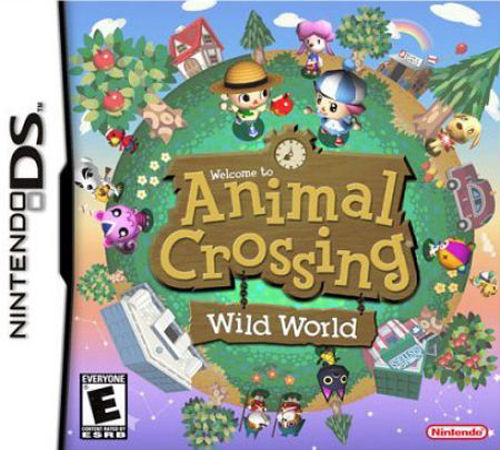
Animal Crossing: Wild World for Nintendo DS is Nintendo’s 2005 life-simulation game and the handheld sequel to Animal Crossing on GameCube. First released in Japan in November 2005 and in North America that December, it puts a human player in a small, ever-changing village populated by animal neighbors. Rather than setting a final objective or asking players to defeat a villain, Wild World builds its play around ordinary routines, collecting, decorating, and the slow process of making a town feel personal. A new resident begins by choosing a character and settling into a house, then earns Bells by selling found items and performing the practical work of village life. Fishing in rivers and ponds, catching insects, shaking fruit from trees, digging for buried fossils, and gathering shells provide a steady reason to explore. Many catches and discoveries can be donated to the museum, while furniture, clothing, tools, and other items feed into the game’s collecting and customization systems. The player can also repay the home loan and expand the house, creating more room to arrange its interior. The village follows the Nintendo DS system clock and calendar. Day and night, weather, seasonal scenery, shop hours, visitors, and the creatures available to catch all change with real time. A brief session can be as simple as checking the mail or talking to a neighbor, but returning across days and seasons opens different opportunities. Residents move in and out, send letters, trade items, give requests, and develop recognizable conversational patterns, making the town’s social life as important as its inventory of collectibles. Wild World adapts the series to the DS in ways that go beyond portability. Its two screens show the nearby ground and the sky at once through a curved, rolling view of the village. Players can use buttons or the stylus to move, manage pockets, select tools, write letters, and create custom patterns. At the Able Sisters tailor shop, those patterns can become clothing designs, and the town itself can be reshaped by planting or removing trees. The night sky has its own creative feature as well: players may draw constellations that later appear overhead. The town’s shops and civic locations give its open-ended play a familiar rhythm. Tom Nook’s store is the place to buy and sell goods, the museum accepts donations, and the town hall handles services and information. A player can furnish a house, change outfits, cultivate flowers and fruit, compose letters, and make each visit suit a different goal. This structure lets progress come from self-directed projects instead of a fixed sequence of levels, whether the focus is museum collecting, home decoration, landscape changes, or friendships with the villagers. Multiplayer was a major part of this Nintendo DS entry. Nearby players could visit one another’s towns through DS wireless communication, while Nintendo Wi-Fi Connection originally allowed registered friends to travel between towns online. Up to four people could explore one village together, exchange items and custom patterns, and leave messages. The official Nintendo Wi-Fi Connection service ended in 2014, so its original online features are no longer available, but the game’s local village routines, collection goals, and single-cartridge town remain central to the original experience. Animal Crossing: Wild World also sits between two distinct console entries in the series. It follows the GameCube game’s village-life foundation while reworking it for the Nintendo DS, then connects forward to Animal Crossing: City Folk on Wii through a wireless character-transfer feature. Nintendo’s decision to make the calendar content easier to localize meant that some region-specific occasions from earlier Animal Crossing releases were not carried over in the same form. Its combination of real-time play, portable sessions, stylus input, and town visits made Wild World an important early expression of the series on a handheld system.

The Legend of Zelda : Phantom Hourglass
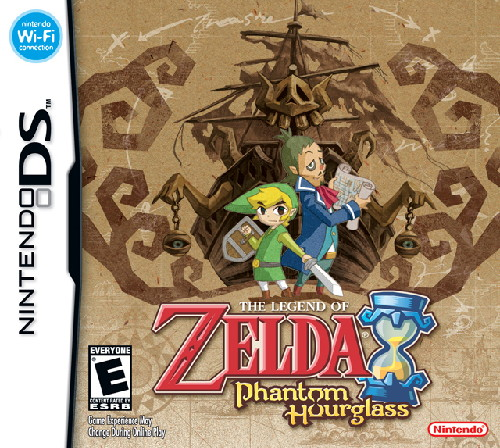
The Legend of Zelda: Phantom Hourglass is Nintendo EAD’s 2007 action-adventure game for Nintendo DS, published by Nintendo. Released first in Japan in June 2007 and in North America that October, it continues the story and bright cel-shaded look of The Legend of Zelda: The Wind Waker. Link, Tetra, and her pirate crew are searching for new land when a strange vessel appears in the fog. After Tetra disappears aboard the Ghost Ship and Link is swept into the sea, he washes up on Mercay Island and begins a new voyage to find her. Phantom Hourglass turns the Nintendo DS touch screen into the center of Link’s adventure. Players tap where they want him to run, tap enemies to strike with his sword, and use the stylus for many familiar Zelda tools. A drawn path sends the boomerang around corners, while other items such as bombs and the bow expand the ways Link can fight, solve puzzles, and reach new places. The top screen commonly holds the area map, and the game lets players bring that map down to the touch screen to mark clues and routes by hand. The quest moves between islands, towns, temples, and the open Great Sea. Link travels with the treasure hunter Captain Linebeck aboard the S.S. Linebeck, plotting a course directly onto a sea chart before the boat follows it. At sea, the player can redraw the route, use the cannon against hostile targets, and jump clear of hazards. Each new destination supplies characters to meet, secrets to investigate, and dungeons built around keys, switches, enemies, and the items collected over the course of the journey. A central part of the progression is the Temple of the Ocean King. Link returns to this dungeon as he acquires sea charts that open further stretches of ocean. Its hostile Phantoms cannot ordinarily be defeated, so advancing through its rooms calls for observation, timing, safe zones, and newly gained abilities rather than simply defeating every guard. The Phantom Hourglass holds back the temple’s life-draining curse for a limited time, making efficient exploration important. As Link learns shortcuts and obtains better tools, earlier sections become quicker to cross on later visits. The story gives Link allies beyond the familiar Zelda cast. Ciela, a fairy with missing memories, guides him after his arrival on Mercay Island, while Linebeck provides both transport and comic friction on the voyage. Their search for Tetra leads to the Ocean King, the Ghost Ship, and Bellum, the creature threatening the seas. The adventure ultimately asks Link to gather the materials for the Phantom Sword, the weapon needed to challenge the forces at the heart of the mystery. Alongside the main single-player quest, the original Nintendo DS release includes a competitive two-player Battle mode using local wireless, DS Download Play, or Nintendo Wi-Fi Connection. One player guides Link to collect Force Gems and carry them back to base; the other commands three Phantoms to stop him, then the sides switch. Phantom Hourglass is a direct sequel rather than a remake of The Wind Waker, adapting that game’s ocean-going setting to a dual-screen handheld and building its puzzles around the DS stylus, microphone, and map notes. Nintendo later released it on Wii U Virtual Console, though that version did not retain the original wireless features.