About
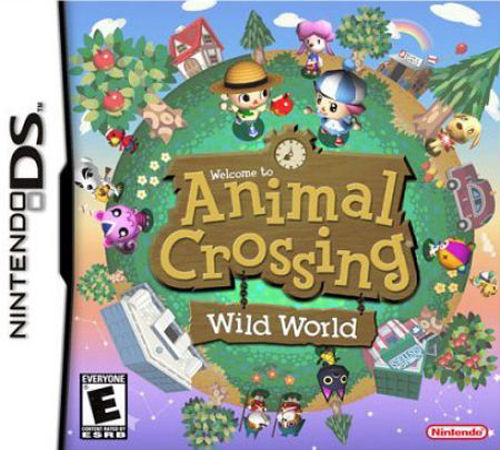
Animal Crossing: Wild World for Nintendo DS is Nintendo’s 2005 life-simulation game and the handheld sequel to Animal Crossing on GameCube. First released in Japan in November 2005 and in North America that December, it puts a human player in a small, ever-changing village populated by animal neighbors. Rather than setting a final objective or asking players to defeat a villain, Wild World builds its play around ordinary routines, collecting, decorating, and the slow process of making a town feel personal.
A new resident begins by choosing a character and settling into a house, then earns Bells by selling found items and performing the practical work of village life. Fishing in rivers and ponds, catching insects, shaking fruit from trees, digging for buried fossils, and gathering shells provide a steady reason to explore. Many catches and discoveries can be donated to the museum, while furniture, clothing, tools, and other items feed into the game’s collecting and customization systems. The player can also repay the home loan and expand the house, creating more room to arrange its interior.
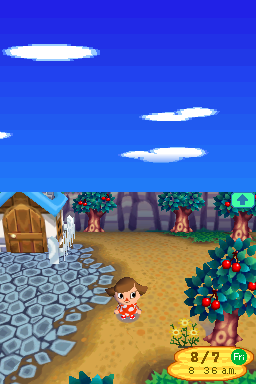
The village follows the Nintendo DS system clock and calendar. Day and night, weather, seasonal scenery, shop hours, visitors, and the creatures available to catch all change with real time. A brief session can be as simple as checking the mail or talking to a neighbor, but returning across days and seasons opens different opportunities. Residents move in and out, send letters, trade items, give requests, and develop recognizable conversational patterns, making the town’s social life as important as its inventory of collectibles.
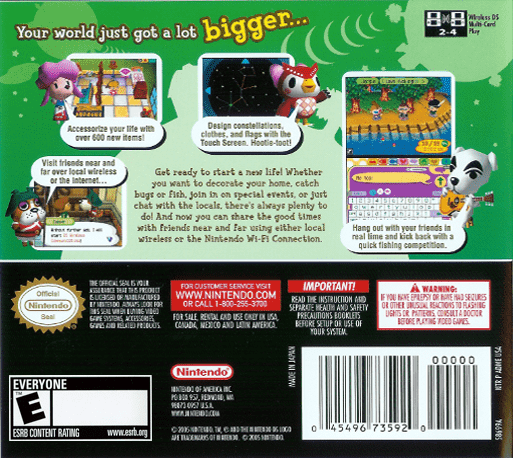
Wild World adapts the series to the DS in ways that go beyond portability. Its two screens show the nearby ground and the sky at once through a curved, rolling view of the village. Players can use buttons or the stylus to move, manage pockets, select tools, write letters, and create custom patterns. At the Able Sisters tailor shop, those patterns can become clothing designs, and the town itself can be reshaped by planting or removing trees. The night sky has its own creative feature as well: players may draw constellations that later appear overhead.
The town’s shops and civic locations give its open-ended play a familiar rhythm. Tom Nook’s store is the place to buy and sell goods, the museum accepts donations, and the town hall handles services and information. A player can furnish a house, change outfits, cultivate flowers and fruit, compose letters, and make each visit suit a different goal. This structure lets progress come from self-directed projects instead of a fixed sequence of levels, whether the focus is museum collecting, home decoration, landscape changes, or friendships with the villagers.
Multiplayer was a major part of this Nintendo DS entry. Nearby players could visit one another’s towns through DS wireless communication, while Nintendo Wi-Fi Connection originally allowed registered friends to travel between towns online. Up to four people could explore one village together, exchange items and custom patterns, and leave messages. The official Nintendo Wi-Fi Connection service ended in 2014, so its original online features are no longer available, but the game’s local village routines, collection goals, and single-cartridge town remain central to the original experience.
Animal Crossing: Wild World also sits between two distinct console entries in the series. It follows the GameCube game’s village-life foundation while reworking it for the Nintendo DS, then connects forward to Animal Crossing: City Folk on Wii through a wireless character-transfer feature. Nintendo’s decision to make the calendar content easier to localize meant that some region-specific occasions from earlier Animal Crossing releases were not carried over in the same form. Its combination of real-time play, portable sessions, stylus input, and town visits made Wild World an important early expression of the series on a handheld system.
Gallery
Details
- Developer
- Nintendo
- Publisher
- Nintendo
- Genre
- Other Adventure
- Players
- 1-4
- Release Date
- December 5, 2005
- System
- NDS