About
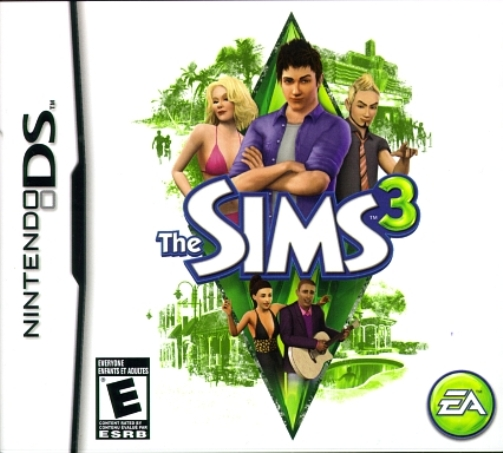
The Sims 3 for Nintendo DS brings Electronic Arts’ life-simulation series to a dual-screen handheld in a version designed around touch controls and a compact, open-ended town. Released in North America on October 26, 2010, it arrived alongside console editions but is not simply the PC game reduced for a smaller screen. The DS release was developed by Exient and presents a self-contained take on the familiar Sims premise: create a character, settle into a home, manage daily needs and decide what kind of life that Sim will lead.
Players begin by shaping a Sim’s appearance and choosing personality traits that influence behavior and ambitions. From there, the game’s central loop is the recognizable balance of practical care and personal direction. A Sim needs food, rest, hygiene, entertainment and social contact, while the player also guides employment, friendships, skills and purchases. The format makes ordinary routines part of the strategy, because work, money, mood and relationships all affect the options available from day to day.
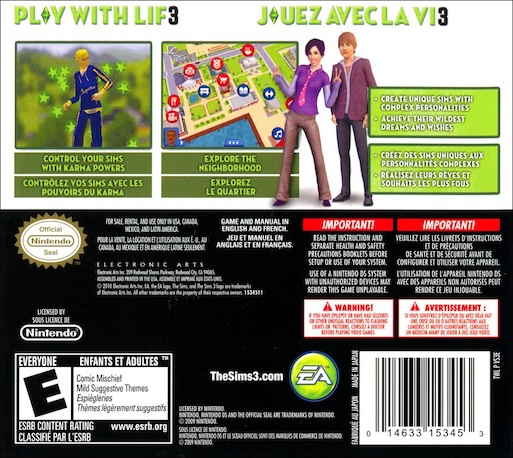
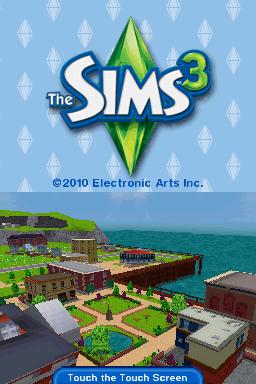
Rather than using the heavily scripted progression of several earlier handheld Sims games, The Sims 3 on DS lets players explore its neighborhood and set their own priorities. Houses can be furnished and improved, and items are more than decoration: many support needs, activities or skill building. Players can move through the town to visit locations, meet residents and pursue opportunities, giving the game a small-scale sense of place that suits a portable session.
Career advancement is one route toward a more comfortable virtual life. A Sim can take a job, develop useful abilities and work toward better pay, while spending earnings on household upgrades and other goals. Relationships offer another layer of choice, as conversations and repeated encounters build social connections with the town’s residents. The game rewards players who keep an eye on a Sim’s immediate condition without losing sight of longer-term plans.
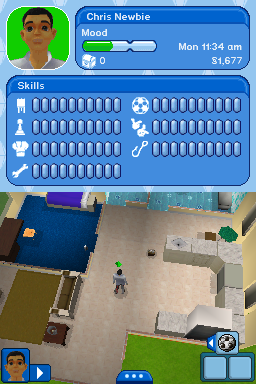
The Nintendo DS hardware shapes how these systems are presented. The stylus-friendly interface puts actions and management tools within easy reach, and the two screens help separate the active world from contextual information and menus. This edition simplifies and omits features found in larger versions of The Sims 3, including generational aging and the full breadth of the PC game’s customization, but it preserves the series’ pleasure in directing an unpredictable everyday life wherever the player happens to be.
A Karma system adds a distinctly console-era twist to the simulation. By earning and using Karma powers, players can influence events with helpful or troublesome effects, adding an extra element of intervention beyond normal household management. That mechanic can turn an otherwise routine stretch of work and socializing into a chance to solve a problem, improve a situation or invite a little chaos into a Sim’s story.
The Sims 3 on Nintendo DS is therefore best approached as a handheld interpretation of the franchise rather than a replacement for the desktop original. Its focus is on creating a resident, establishing a home and making personal choices within a manageable town. For Sims fans looking for a portable life simulation with touch-screen play, character customization, home building, careers and social goals, it offers an accessible snapshot of the series’ enduring sandbox appeal.
Gallery
Details
- Developer
- Maxis Software
- Publisher
- Electronic Arts
- Genre
- Life Simulation
- Players
- 1
- Release Date
- October 26, 2010
- System
- NDS