About
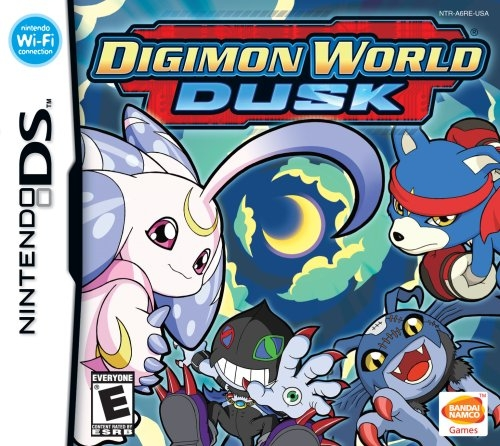
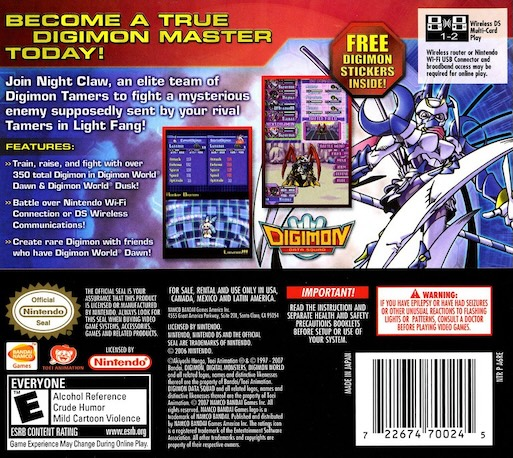
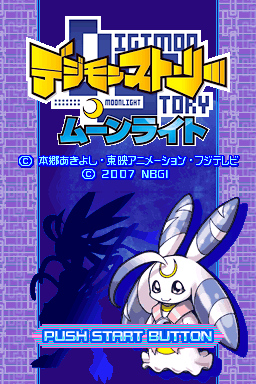
Digimon World: Dusk is a Nintendo DS role-playing game from BEC and Bandai Namco, released in North America in September 2007. Known in Japan as Digimon Story: Moonlight, it is the dark-themed companion to Digimon World: Dawn, not an expansion or a reissue of the earlier Digimon World DS. The two cartridges share a core adventure and many systems, but Dusk has its own presentation, encounter selection, areas, and perspective on the central conflict. It is a monster-collecting RPG built around assembling, training, and evolving a large roster of Digimon.
The Dusk story places the player in Darkmoon City as a rookie tamer with the Night Crow team. A strange disaster shakes the digital world, damages the routes that connect important locations, and leaves Digimon regressing into Digi-Eggs. Investigating the event leads the team through quests, dungeons, and rival encounters while the larger mystery connects to the events seen from Dawn's Light Fang side. Players may choose a male or female protagonist, but Dusk's Night Crow identity and Darkmoon setting give this version a distinct point of view within the paired storyline.
Exploration follows a top-down, quest-driven structure. The home city provides a counter for jobs that award useful items and progress the campaign, while the surrounding Digital World locations supply battles, story events, and new Digimon to scan. Dusk favors a different set of available creatures and environments from Dawn, with many dark, machine, beast, and organic-themed species helping define its version-specific collection. That split makes the choice between the two releases meaningful for players who enjoy completing a personal roster or trading with another owner.
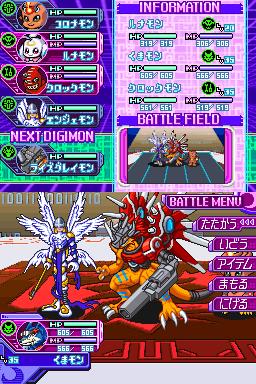
Combat is turn based and uses positioning rather than a simple one-on-one lineup. A party can contain up to six Digimon, with as many as three deployed at once against groups of enemies. The battlefield is divided into zones, and attacks have different target patterns, so placement, range, attributes, and elemental weaknesses all matter. Equipment can improve a Digimon's capabilities, while successful multiplayer battles reward Tamer Points that support advancement through the tamer ranks.
Collecting and customization are the heart of Digimon World: Dusk. Battles gradually raise the scan percentage for encountered species; once a species reaches the required level, it can be created in the DigiLab. Digimon can then digivolve along branching routes when they meet the appropriate levels and conditions, or de-digivolve to explore a different development path and build stronger statistics. Matching two Digimon can produce an egg with inherited traits, adding another route to experimentation beyond finding monsters in the wild.
The Digifarm gives unused Digimon a useful role between expeditions. Creatures stored there can gain experience over time, and the player can customize the space with items such as decorations, terrain boards, and music. The Nintendo DS hardware is used for touchscreen and stylus control alongside standard buttons, while local wireless play and the original Nintendo Wi-Fi Connection supported trading, battling, and matching Digimon with other players. For fans seeking a portable Digimon RPG with extensive party building and the Night Crow side of the Dawn and Dusk tale, Digimon World: Dusk remains a substantial 2007 DS entry.
Gallery
Details
- Developer
- BEC
- Publisher
- Bandai Namco
- Genre
- JRPG
- Players
- 1-2
- Release Date
- September 18, 2007
- System
- NDS