About
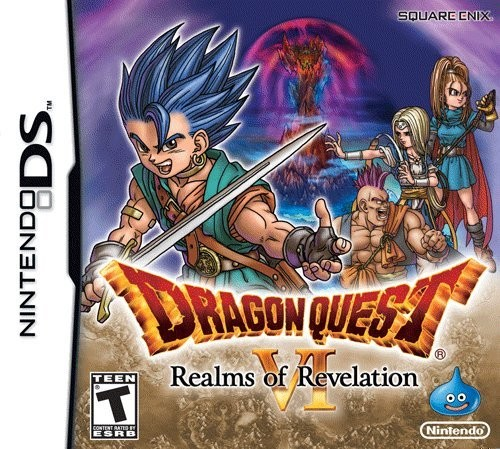
Dragon Quest VI: Realms of Revelation for Nintendo DS is a turn-based role-playing game released in North America in February 2011. Developed by ArtePiazza and published by Square Enix, it remakes the 1995 Super Famicom entry in the long-running Dragon Quest series. The DS release finally brought this chapter to English-speaking players, while European editions use the subtitle Dragon Quest VI: Realms of Reverie. It is the final game in the Zenithian trilogy on Nintendo DS, following the handheld remakes of Dragon Quest IV and Dragon Quest V.
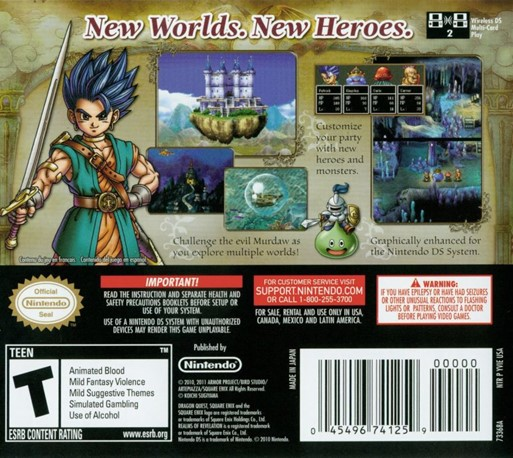
The adventure begins with a confrontation against the demon Murdaw, only for the young hero to awaken in the quiet village of Weaver's Peak with troubling gaps in his memory. A prophecy sends him out from home, and his search soon reveals a strange phantom realm beneath the familiar world. The story moves between two interconnected worlds as the hero tries to understand his identity and the threat that could engulf both realms. Companions including the martial artist Carver, the mysterious Milly, healer Nevan, magician Ashlynn, and swordsman Terry join the journey at different points.
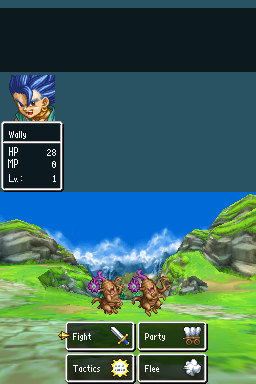
Exploration follows the series' classic top-down format. Players visit towns, castles, caves, towers, and the world map, speaking to residents, finding key items, solving local problems, and opening new routes as the party's means of travel expands. Random encounters lead to first-person command battles. On each turn, the player selects attacks, spells, items, or special abilities for the active party, then watches allies and enemies carry out their actions. Experience earned from victories raises character levels and helps the group prepare for mandatory boss encounters.
A central part of Dragon Quest VI on Nintendo DS is its vocation system. After reaching Alltrades Abbey, party members can train in more than sixteen vocations, choosing paths such as physical fighters, spellcasters, and support-oriented roles. Vocations gain progress through battles and teach spells or techniques; learned abilities remain available after a character changes to another vocation. This invites players to shape a party around different approaches and to unlock more advanced classes through prior training, rather than locking each companion into a single permanent battle role.
The Nintendo DS remake adapts the quest to the system's dual screens, placing a map of the two worlds on the upper display while the adventure plays below. It presents the world in 3D while retaining the series' menu-driven combat and colorful character design. The remake also includes wireless Tag Mode functionality for communication between DS systems and a Slime Curling activity. These additions sit alongside familiar Dragon Quest diversions such as casinos, hidden Mini Medals, and optional pursuits, giving exploration value beyond the main plot.
Dragon Quest VI: Realms of Revelation is especially notable as a localization of a major series installment that had remained exclusive to Japan in its original form. Its 2011 DS version preserves the broad premise of the Super Famicom game while making the story, party, and vocation mechanics accessible in English for the first time. The shifting relationship between its real and dreamlike realms distinguishes it from the neighboring Zenithian games, and the flexible character development gives the lengthy quest a strong place within the Nintendo DS Dragon Quest collection.
Gallery

Details
- Developer
- Arte Piazza
- Publisher
- Square Enix
- Genre
- JRPG
- Players
- 1-2
- Release Date
- February 14, 2011
- System
- NDS