Retro Explore — Discover classic retro games
Ridge Racer
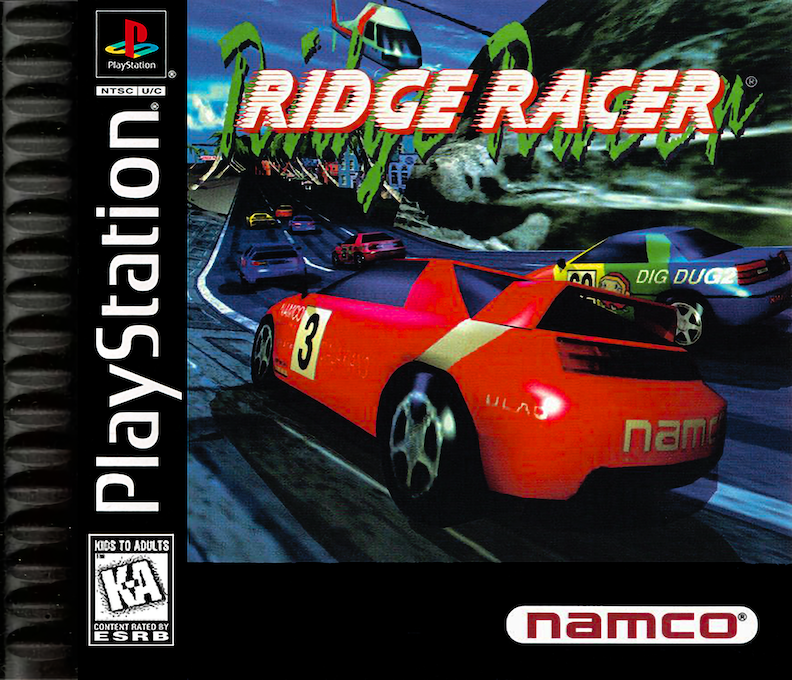
Ridge Racer for PlayStation brings Namco’s landmark arcade racer into the living room with a fast, deliberately arcade-focused take on road racing. Developed and published by Namco, it began in arcades in 1993 before arriving as a Japanese PlayStation launch title in December 1994; it reached North America in September 1995 and Europe later that month. Rather than aiming for a detailed driving simulation, this PS1 Ridge Racer turns smooth cornering, speed and committed slides into the heart of every race. The action is built around a single circuit that opens into several course configurations. Novice offers the most approachable route, while Intermediate, Advanced and Time Trial increase the challenge and extend the drive. Races run over laps against a countdown clock, so reaching each checkpoint matters as much as overtaking the field. Letting the timer expire ends the attempt, encouraging players to learn the road’s bends, braking points and faster lines rather than simply chase collisions. Before setting off, players select a car, a music track and either automatic transmission or a six-speed manual option. The available machines differ in acceleration, maximum speed and handling, giving the compact roster distinct strengths. Cornering is especially important: the game rewards carrying momentum through turns and sliding through them at high speed. Contact with other cars or scenery does not model damage, but it costs valuable momentum, keeping the focus on recovering quickly and pushing onward. The PlayStation conversion adds choices and secrets beyond the original arcade format. It includes a chase-camera viewpoint alongside the in-car view, and it supports Namco’s analogue NeGcon controller. Winning races opens reversed course variants, while Time Trial eventually introduces the formidable 13th Racing car as a rival and unlockable vehicle. A hidden mirror arrangement also flips the circuit’s direction, asking experienced drivers to rethink familiar turns. One of the port’s most memorable touches appears before the race itself. While the game loads, players can take on a brief Galaxian challenge; completing it unlocks additional cars for the main game. Once Ridge Racer is running, its CD-based presentation also lets the console play its six in-game music tracks, helping give the races their distinctive electronic energy. These extras make the home release more than a straight transfer while retaining the quick, repeatable structure of the arcade game. Ridge Racer was an early showcase for PlayStation’s ability to bring 3D arcade racing home. Its PlayStation release necessarily runs differently from the System 22 arcade original, but its textured 3D roads, responsive drifting and emphasis on immediate competition made it a defining early game for the system. It also launched a long-running Namco racing series, followed on PlayStation by Ridge Racer Revolution, while the original remains a concise snapshot of mid-1990s arcade design: one road, many ways to master it.
WipEout 3 : Special Edition
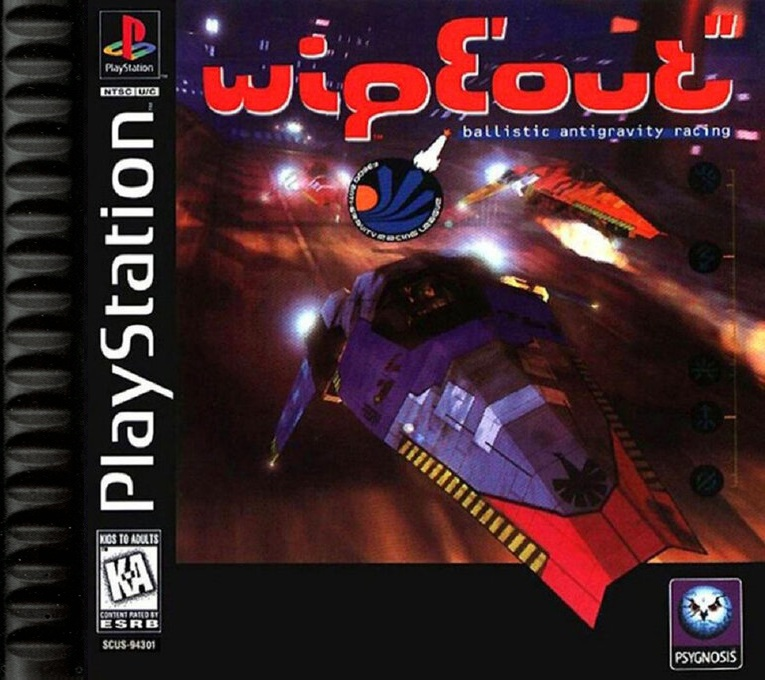
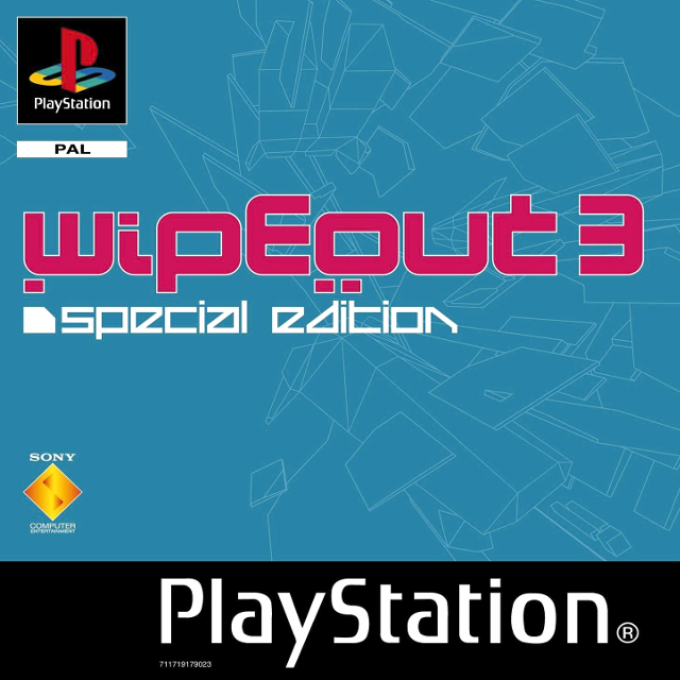
WipEout 3: Special Edition for PlayStation is an expanded European release of Psygnosis’s futuristic anti-gravity racer, published by Sony Computer Entertainment on 14 July 2000. It revisits WipEout 3, the 1999 PlayStation entry in the long-running series, but is much more than a new label on the box: the Special Edition refines the original game and greatly enlarges its circuit selection. Set in the franchise’s sleek vision of competitive high-speed racing, it puts pilots in weapon-equipped hovercraft rather than conventional cars and makes precision at extreme speed the heart of every event. Races are won by learning the rhythm of each course: steering a craft through sweeping bends and sudden direction changes, using airbrakes to settle the ship into tight turns, and judging when extra speed is worth the energy it consumes. The vehicles carry defensive shields that absorb the punishment of walls, rival attacks, and track hazards. Players can replenish that protection in pit lanes, while weapon pads around the circuits supply offensive and defensive pickups. Missiles, rockets, mines, and other tools can disrupt competitors, but clean racing and quick lines remain essential when checkpoint limits and fast opponents leave little room for recovery. The PlayStation game offers several ways to test those skills. Single-race events, time-focused challenges, tournaments, and the Eliminator-style combat mode all present different priorities, from placing consistently across a series of races to scoring through aggressive encounters. Progress is tied to better results, opening further content as players earn their way through the competition. The original’s two-player split-screen racing is retained, allowing rivals to share one console, while the responsive analogue control support gives careful pilots a more gradual way to guide their craft than a simple directional input. Special Edition’s defining addition is its much broader track line-up. The release contains 22 courses instead of the standard edition’s 12, combining WipEout 3 material with eight returning circuits: three from the original WipEout and five from WipEout 2097, the game known as Wipeout XL in North America. It also includes two prototype circuits that had previously been hidden in the Japanese version of WipEout 3. That mixture turns the release into a compact PlayStation-era survey of the series, with older courses brought into the later game’s presentation and handling framework rather than presented as a separate compilation. Psygnosis also adjusted details beneath the headline track expansion. Craft physics differ from the standard release, and the edition includes quality-of-life changes such as automatic loading of saves, clearer unlock messages, and artificial-intelligence fixes. These changes matter in a racer built around repeated attempts: subtle differences in how a ship responds, how opponents behave, and how readily the game returns a player to their progress can change the flow of mastering a difficult circuit. The visual identity remains firmly tied to WipEout 3’s clean, graphic-design-led future, with a soundtrack assembled around electronic music and a presentation designed to make its imagined racing world feel coherent rather than merely fantastical. For multiplayer groups with the necessary hardware, WipEout 3: Special Edition extends beyond ordinary split-screen. Two PlayStation consoles and two televisions can be connected with the PlayStation Link Cable for up to four players, with two racers on each screen. This is a particularly notable feature for a late PlayStation release, since it lets players stage a larger local race while using two separate displays. The Special Edition was not released in North America; it was made specifically for the European PlayStation market, so its regional availability is an important part of its identity. As the final WipEout game produced for the original PlayStation, WipEout 3: Special Edition serves as a substantial closing chapter for the series on the system. It preserves the fast anti-gravity racing, combat items, courses, and polished electronic style associated with its predecessors, while its returning tracks and technical revisions make it the fullest version of this particular PlayStation generation entry. The next main console instalment, WipEout Fusion, moved the series to PlayStation 2, leaving Special Edition as a distinctly late-era PlayStation release built around both refinement and retrospective breadth.
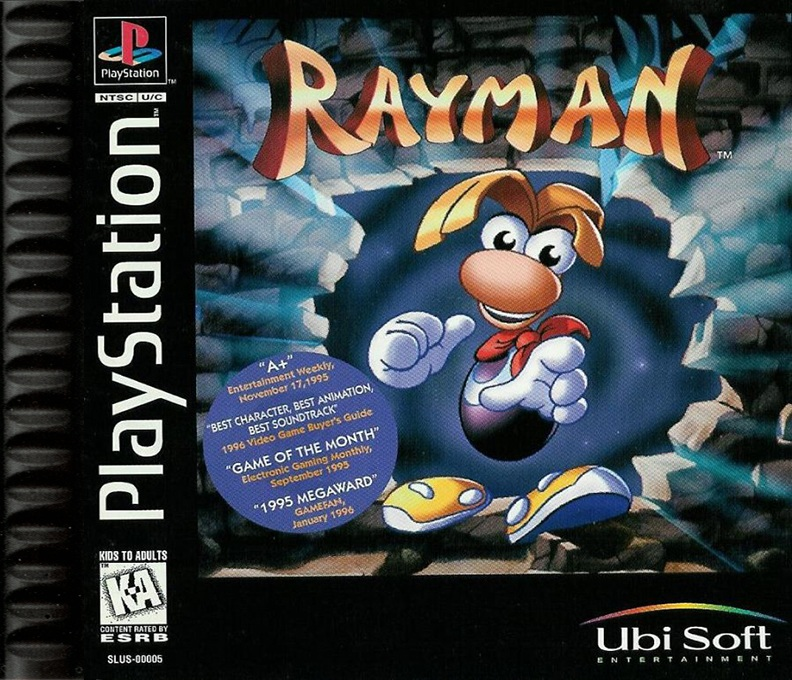
Rayman
Rayman on PlayStation is a 2D platform adventure built around an immediately memorable hero: a limbless guardian with floating hands, shoes, and a shock of blond hair that doubles as a helicopter. The world begins in balance under the Great Protoon, but Mister Dark steals the magical force and defeats Betilla the Fairy. With the Electoons scattered and trapped in cages across the land, Rayman sets out to restore harmony. It is a simple fairy-tale premise, delivered with enough strange characters, playful animation, and color to give every new area its own identity. The journey is spread across six wildly different worlds, beginning in the tangled Dream Forest and moving through the musical hazards of Band Land, the rocky Blue Mountains, the illusion-filled Picture City, and the underground Caves of Skops. The final destination is Candy Chateau, Mister Dark’s confectionery hideout. Each setting has its own obstacles, enemies, visual jokes, and boss encounter, so the game keeps changing its flavor even while its side-scrolling fundamentals remain clear. A giant mosquito, a living rock, and a rolling-pin-wielding Space Mama are only a sample of the opponents waiting at the end of the road. Rayman starts with the essentials: walking, jumping, crawling, and grabbing onto vines. Betilla gradually expands his toolkit as the quest unfolds. His telescopic fist lets him punch enemies at a distance, later abilities allow him to grab, run, and hang from ledges, and his signature helicopter hair slows a fall when used after a jump. These powers are more than flashy upgrades. They reshape how levels are read, opening routes that were previously out of reach and making a return visit worthwhile for players determined to uncover every cage. Exploration matters as much as reaching an exit. Every level tracks six Electoon cages, and rescuing them is the key to completing Rayman’s mission rather than a disposable side activity. Collectible Tings offer extra lives in groups of one hundred and can also be spent to enter bonus stages through the Magician. The world map reveals newly available routes after a level is cleared, often letting the player pick between directions. That structure gives the adventure a sense of discovery while inviting a closer look at stages that first seemed finished. The PlayStation controls make Rayman’s movement direct and expressive. Cross handles jumps, Circle starts a run, and Square uses the telescopic fist or interacts with flying rings. A second press of Cross in the air activates the helicopter maneuver, giving tricky drops a little more control. Crawling and automatic ledge-hanging round out a move set that rewards attention to spacing and timing. The challenge can be demanding, especially when hazards, moving platforms, and enemies overlap, but the controls give Rayman the mobility needed to work through difficult sequences. Much of the game’s charm comes from how it turns familiar platforming ideas into a cartoon world that feels unlike anything else on the original PlayStation. Swamps, musical notes, clouds, instruments, avalanches, theater scenery, cave walls, and desserts are not merely backdrops; they shape the way each section plays. The result is an adventure that can shift from a jungle crossing to a gauntlet of slippery music bars without losing its mischievous character. Its visual imagination makes even a tough stretch feel like another scene in an animated fantasy. Rayman’s progress is also tied to memorable friends and temporary powers. Tarayzan can provide a Magic Seed that grows into a plant, the Musician offers special helicopter control in the Blue Mountains, and Joe the Extraterrestrial supplies a firefly to light the dark reaches of the Caves of Skops. These moments add variety without breaking the game’s central rhythm of running, jumping, searching, and fighting. The Photographer’s snapshots serve as restart points, while the game’s power pickups and extra lives encourage persistence through its more punishing challenges. Released for PlayStation in 1995, Rayman introduced a character who would become central to Ubisoft’s history. This original PlayStation adventure remains a celebration of hand-drawn style, precise movement, and secret-filled platform design. Whether the aim is to see the route through Candy Chateau, master the haircopter over a dangerous fall, or free every last Electoon, Rayman offers a colorful quest with a demanding streak beneath its cheerful surface.