About
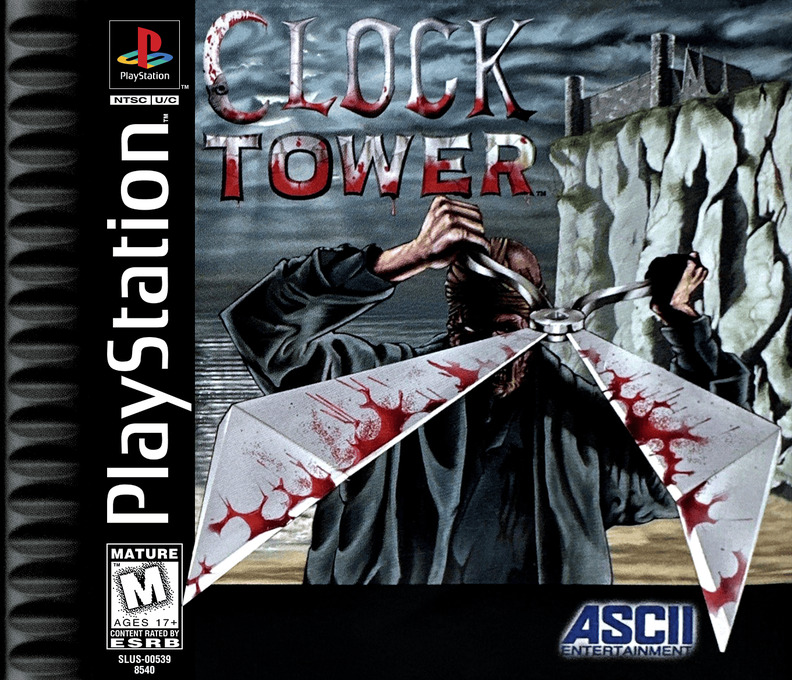
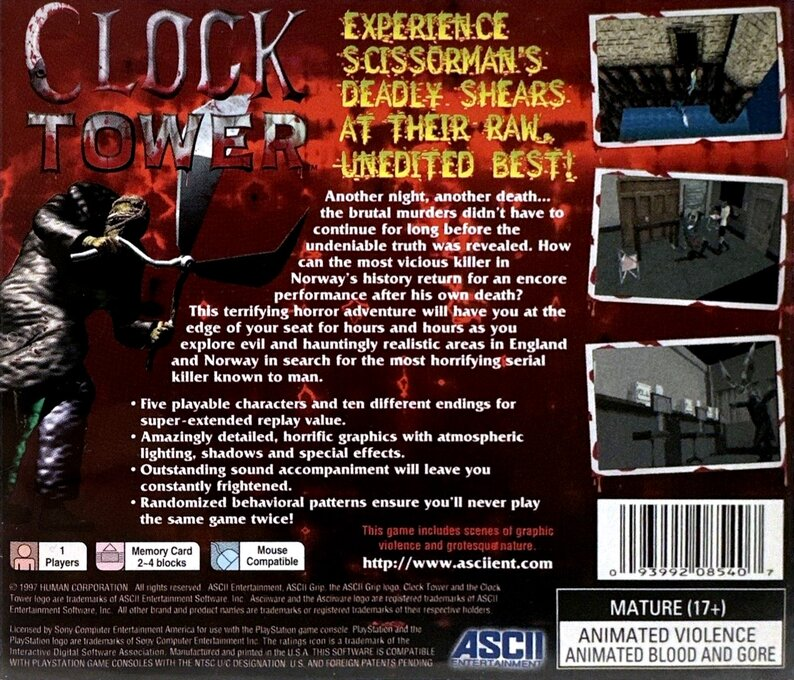
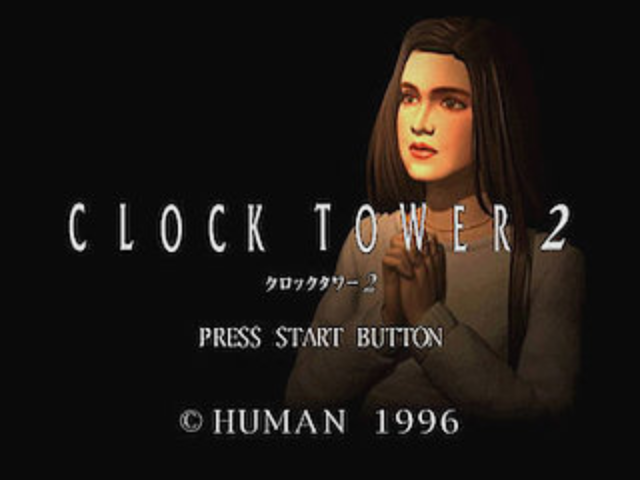
Clock Tower for PlayStation is the 1996 survival-horror adventure released in Japan as Clock Tower 2. Developed and published there by Human Entertainment, it continues the story of the 1995 Super Famicom Clock Tower rather than serving as that game's PlayStation conversion. The Japanese edition arrived on December 13, 1996; its later overseas release was titled simply Clock Tower and published by ASCII Entertainment. Series creator Hifumi Kono returned as director for this single-player sequel, which moves Jennifer Simpson's nightmare beyond the original Barrows Mansion.
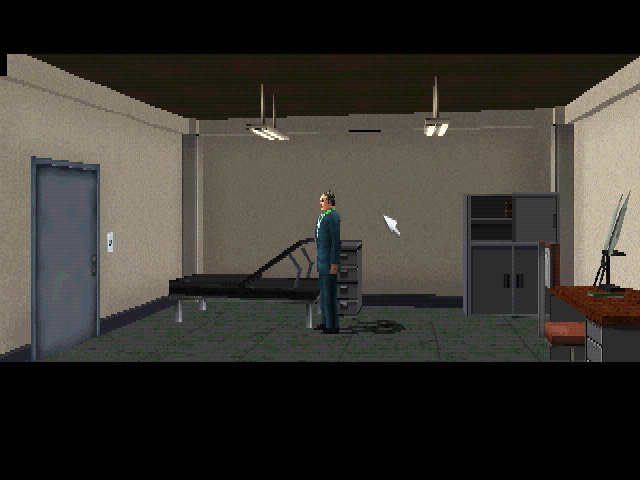
The PlayStation game is controlled as a cursor-driven adventure. A controller or PlayStation Mouse moves the pointer across each scene, and its changing shape signals objects, exits, characters, or items that can be examined. Clicking directs the current protagonist or uses an inventory item, so progress depends on searching rooms, recognizing useful clues, and choosing the right response rather than fighting enemies. The interface makes ordinary details—doors, furniture, hiding places, and environmental mechanisms—central to both puzzle solving and escape.
Jennifer returns after surviving the earlier Scissorman case and is now under the care of criminal-psychology assistant professor Helen Maxwell in Oslo, Norway. A fresh series of murders suggests that the scissor-wielding killer has returned. The opening can put the player in control of Jennifer or Helen, and subsequent choices determine which characters, locations, and investigations form the route through the story. Other figures, including reporter Nolan Campbell and detective Stan Gotts, can become part of the search for answers surrounding the Barrows family and the force behind Scissorman.
Scissorman is not an opponent to defeat through weapons. When the killer closes in, the cursor reflects the protagonist's condition: calm strength can slip into warning and panic after an attack or strenuous action. During a chase, only certain clickable opportunities can interrupt the pursuit, such as an escape route or a hazard that buys time. If strength is exhausted, the scenario ends and play resumes from a recent room with limited endurance. That system turns observation into survival, asking players to identify a safe action before the attacker reaches them.
Clock Tower PS1 organizes its branching narrative into a prologue and later scenarios, with intermissions between major sections. Decisions in the early chapters influence the lead character, the places visited to recover the Demon Idol, and the path to Barrows Castle. Intermissions permit conversations and exploration without Scissorman's immediate pressure, while the scenario structure brings back the threat when the required conditions are met. Jennifer and Helen each have several possible conclusions, and the game contains ten endings in total, giving different routes through the case a clear purpose.
This sequel was Human Entertainment's first project to use a 3D graphics engine, although its interaction remains rooted in the studio's point-and-click horror design. Kono's team used shifting camera angles, cinematic scenes, animation, and deliberately placed stretches of sound and silence to frame its murders and escapes. It is distinct from Clock Tower: The First Fear, the PlayStation adaptation of the 1995 original, and from the later 1998 Japanese game Clock Tower: Ghost Head, localized as Clock Tower II: The Struggle Within. For players exploring the original PlayStation horror library, Clock Tower is the direct Jennifer Simpson sequel known in Japan as Clock Tower 2.
Gallery
Details
- Developer
- Human Entertainment
- Publisher
- ASCII Entertainment
- Genre
- Survival Horror
- Players
- 1
- Release Date
- January 10, 1997
- System
- PS1