About
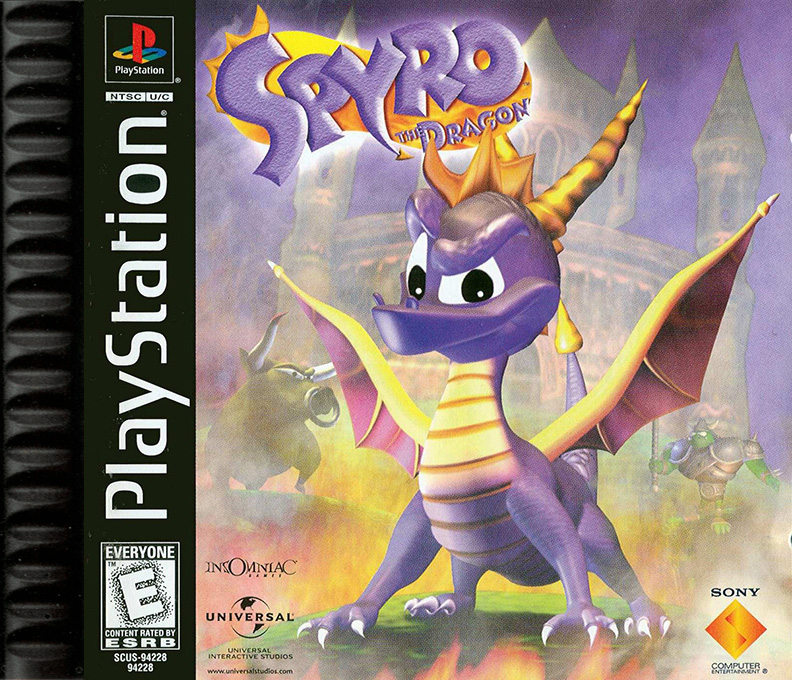
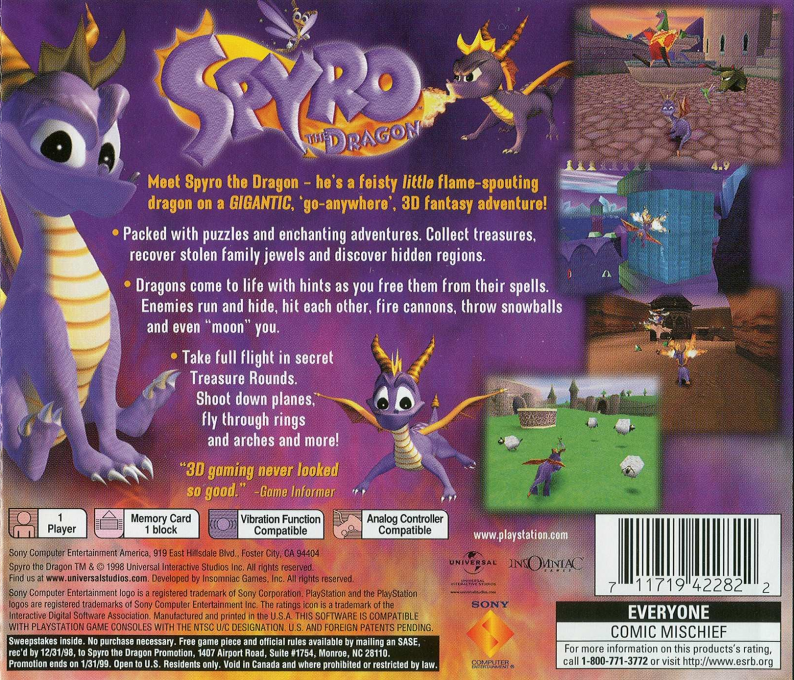
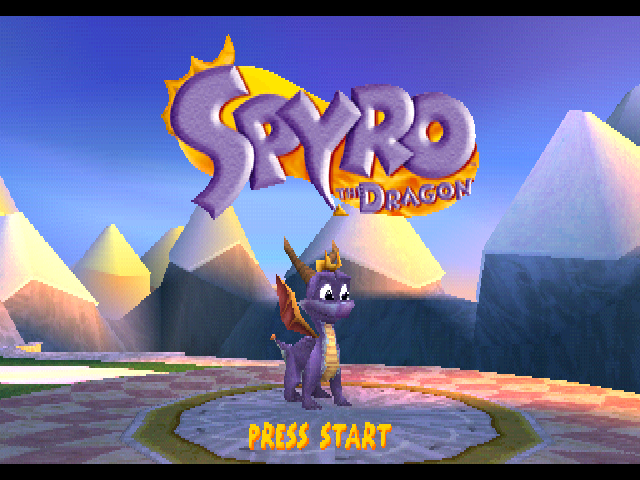
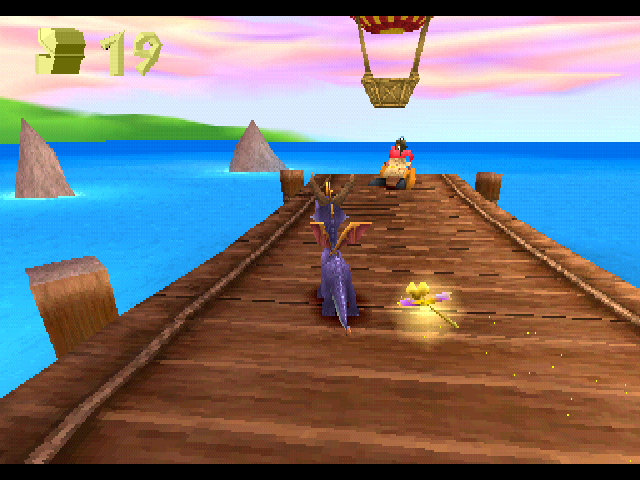
Spyro the Dragon for PS1 is a bright, free-roaming 3D platform adventure starring a small purple dragon and his dragonfly companion, Sparx. It begins when the sharp-tongued Gnasty Gnorc responds to an interview by freezing the other dragons inside crystal and seizing their treasure. Spyro is overlooked in the attack, leaving him to cross the Dragon Kingdom, release its elders and confront Gnasty in his own domain. The premise stays light and playful, but it gives every rescue a purpose: the statues hold dragons with useful advice, while the stolen wealth has been turned into the forces blocking the path forward.
The journey is arranged around a chain of themed homeworlds: Artisans, Peace Keepers, Magic Crafters, Beast Makers, Dream Weavers and Gnasty's World. Each hub is more than a menu between stages. Portals are scattered across outdoor spaces, and gem requirements open later areas, so arrival invites a quick survey of paths, doors and distant landmarks before choosing a level. The regular stages range from castle courtyards and cliff-lined canyons to icy towers, swamps and surreal dreamlike places. A few portal destinations are dedicated flight courses, while others lead to a single boss encounter.
Spyro's basic moves make the spaces feel built for a dragon rather than a conventional mascot. He can breathe fire to dispatch enemies vulnerable to heat and smash certain objects, or lower his horns and charge through foes, fragile obstacles and speed-gated routes. A jump followed by a held jump becomes a glide, carrying him across gaps and toward ledges that first appear out of reach. The glide cannot gain altitude, so judging a takeoff point, preserving momentum and steering in the air become central to exploration. Ramps add the Supercharge, a rapid downhill burst that can break tougher barriers, outrun targets and propel Spyro across long jumps.
Sparx quietly supports that movement-focused design. The dragonfly circles Spyro as a visible health indicator, changing condition after hits; when he is gone, another hit costs a life. Sparx also gathers nearby loose gems, sparing the player from having to touch every sparkling piece precisely. Butterflies found by defeating small creatures restore his health, and a special gate can bring Sparx back if he has disappeared. The result is a forgiving rhythm of charging, flaming and gliding, yet the game still expects care near hazards, projectile attacks and ambitious aerial shortcuts.
Collecting is the thread that joins its open levels together. Gems sit on paths, hide in breakable chests and containers, appear after enemies are defeated, or wait at the end of a risky detour. Crystallized dragons are the main rescues, and their short conversations provide hints before they depart. Egg thieves add a different chase: their winding routes demand a fast charge and careful turns before a stolen egg can be reclaimed. The inventory tracks discoveries in every stage, making the remaining gem, dragon and egg totals a clear invitation to revisit a world and search its overlooked corners.
Progression is flexible within its limits. Reaching the next homeworld requires enough rescued dragons, and entrances beyond that ask for a growing stockpile of gems. That structure allows several available levels to be tackled in a chosen order while ensuring that the journey still moves steadily toward Gnasty. The Speedways replace ordinary platforming with timed flights through rings, chests, arches and moving targets; each success adds more time, encouraging an efficient route. Boss stages are shorter arenas where reading an enemy's movement and choosing flame or charge matters more than combing the scenery for treasure.
The PS1 controls are direct: Spyro runs on the ground, turns tightly into a charge, jumps into a glide and uses his breath as an immediate close-range attack. The camera can be adjusted for a better view, which is especially helpful when lining up a long glide or spotting a route from a homeworld overlook. Levels favor broad, readable silhouettes and colorful landmarks, but their secrets often sit behind a high wall, below a bridge or across a gap visible from somewhere else. Finishing the route is only part of the task; completion-minded players are encouraged to learn how each space connects.
Developed by Insomniac Games and published by Sony Computer Entertainment in 1998, Spyro the Dragon arrived as a PlayStation platformer designed around unusually expansive scenery. Its panoramic engine used changing levels of detail to keep distant terrain on screen, making the hubs and wide stages feel more continuous than many contemporaries on the hardware. Stewart Copeland composed the music, giving each realm its own driving, offbeat atmosphere, while Carlos Alazraqui supplied Spyro's voice. The game established the foundation for two further PS1 adventures, but this original entry remains a focused trip through six worlds built around motion, observation and the pleasure of collecting one more gem just beyond the next glide.
Gallery
Details
- Developer
- Insomniac Games
- Publisher
- Sony Computer Entertainment
- Genre
- Platformer
- Players
- 1
- Release Date
- September 10, 1998
- System
- PS1