About
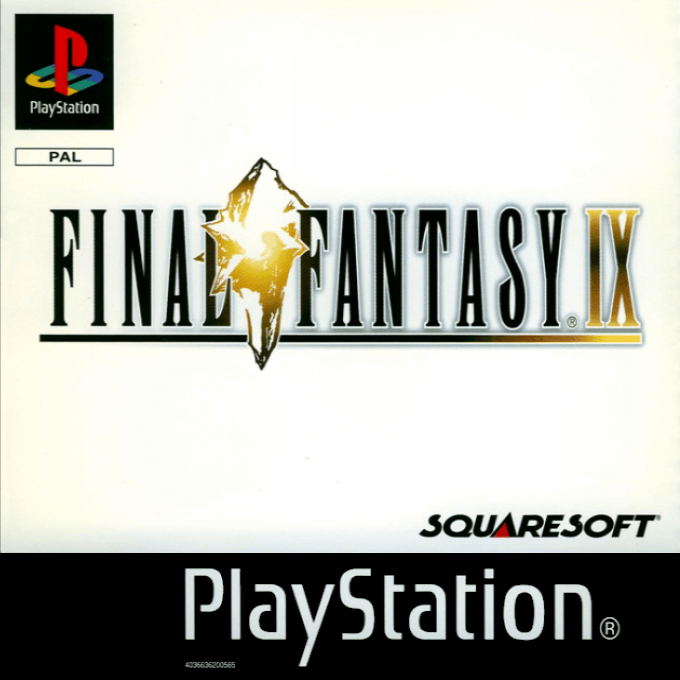
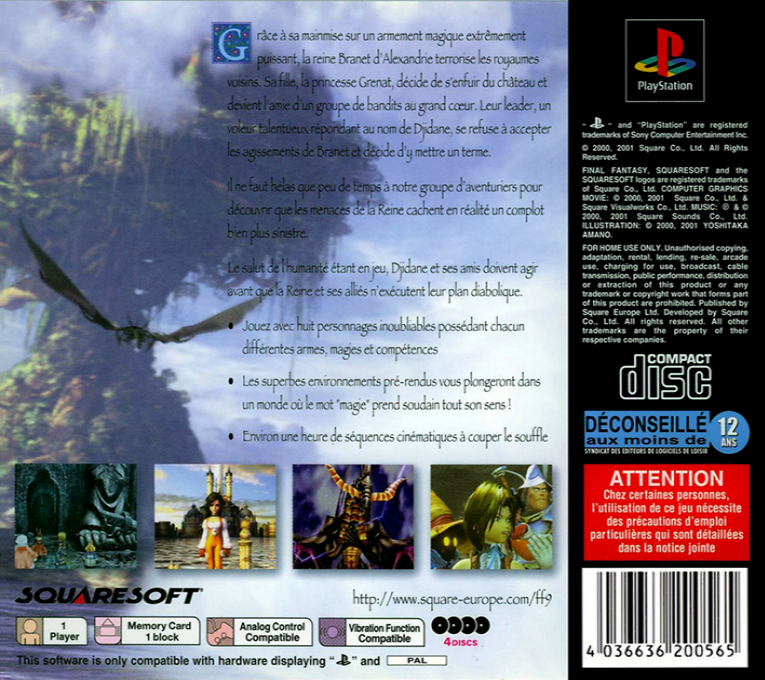
Final Fantasy IX is the ninth mainline Final Fantasy adventure, a PlayStation role-playing game from Squaresoft that arrived in Europe on 16 February 2001. It returns the series to a storybook-flavored world of castles, airships, bustling towns, strange creatures, and elemental magic, but its inviting look carries a grand journey with room for humour, wonder, and heartfelt character moments. On the original PS1 release, the adventure spans four discs and asks you to save your progress with a Memory Card, a fittingly tangible part of its turn-of-the-millennium RPG experience.
The story begins in Alexandria during a theatrical celebration, where Zidane Tribal and the Tantalus troupe set a daring plan in motion involving Princess Garnet. Their escape brings together an unlikely travelling party, including the earnest black mage Vivi and the duty-bound knight Adelbert Steiner. From that first lively sequence, Final Fantasy IX builds its appeal around the changing perspectives, frictions, and friendships of its cast rather than treating its world as scenery between battles.
Exploration moves between illustrated field locations, a broad world map, towns, dungeons, and later forms of transport. Players can speak with residents, search for points of interest, visit moogles to save and prepare, and stray from the critical path to discover optional diversions. Its fantasy setting mixes old-world architecture with early steam-powered inventions, creating a distinctive PlayStation-era world that feels both familiar to Final Fantasy fans and self-contained for newcomers.
One of the game’s most distinctive ideas is Active Time Events. When the prompt appears, choosing to watch can reveal a short scene elsewhere in the current location, offering another character’s point of view or a glimpse of parallel activity. These scenes are optional, so the main story remains easy to follow, but seeking them out makes towns feel busier and gives the ensemble more texture. It is a simple, effective invitation to slow down and see more of Gaia between major story beats.
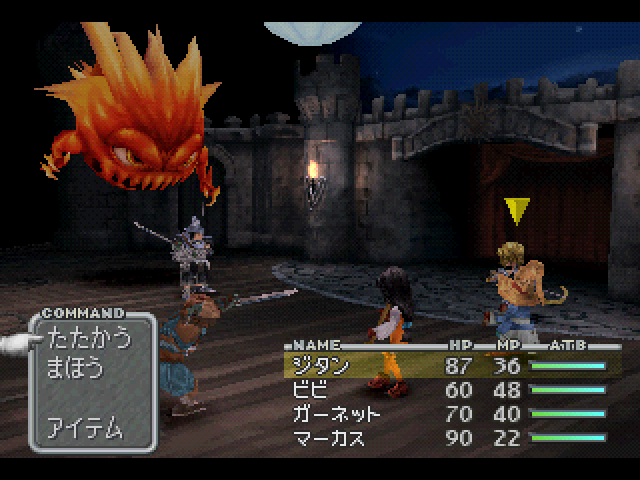
Combat uses the series’ Active Time Battle format: commands become available as gauges fill, so deciding when to attack, heal, use items, or deploy a character’s special skills matters. Each party member has a clear specialty, from theft and black magic to knightly techniques and summoning. Taking damage gradually fills a Trance gauge; when it is full, that character enters a temporary empowered state with altered commands. The system stays approachable while leaving space to consider targets, timing, status effects, and party composition.
Final Fantasy IX makes equipment part of character growth. Weapons, armour, and accessories grant usable abilities while they are equipped, and earning Ability Points in battle lets characters permanently learn them. Action abilities consume magic points, while support abilities can be set to provide passive benefits within the available Magic Stone capacity. Shops and synthesis give regular loot decisions more purpose, because combining items can create new gear and open up another route through a character’s growing toolkit.
Away from combat, the game has the kind of optional activities that encourage a longer stay in its world. Tetra Master is a collectible card game played on a four-by-four grid, where directional arrows, card battles, and chain reactions can turn an opponent’s cards. Chocobos offer a different way to travel the world map and lead into Chocobo Hot & Cold, while jump rope, frog catching, treasure hunting, and other small challenges provide breaks from the main quest. Collectors can also pursue cards, abilities, and items well beyond what is required to finish the story.
For players looking for a classic PlayStation JRPG, Final Fantasy IX combines a colorful fantasy world with a substantial party adventure, strategic turn-based battles, and plenty to explore between key scenes. Its original release is worth approaching on its own terms: pre-rendered vistas, random encounters, controller menus, Memory Card saves, and a steady four-disc journey. Later remasters add high-definition presentation, autosave, trophies, and optional boosters, but this PS1 version is the foundational game—an expansive, character-led RPG built for patient exploration and the pleasure of discovering what each new place has to offer.
Gallery
Details
- Developer
- Squaresoft
- Publisher
- Squaresoft
- Genre
- JRPG
- Players
- 1
- Release Date
- February 16, 2001
- System
- PS1