About
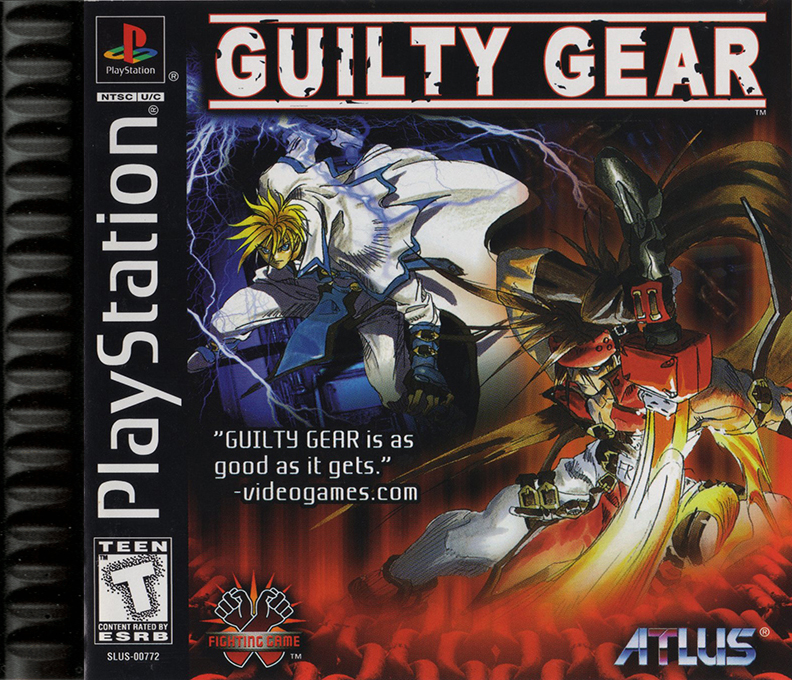
Guilty Gear for PlayStation is the 1998 debut of Arc System Works’ long-running fighting-game series. This original PS1 release pits highly stylized combatants against one another in fast, side-viewed one-on-one bouts, combining a fantasy-and-science-fiction setting with an aggressive 2D fighting system. In Japan it was published by Arc System Works, while the PAL release was handled by Studio 3; Atlus published the North American edition. The game introduced the characters, world, visual identity, and hard-rock musical direction that later entries would expand.
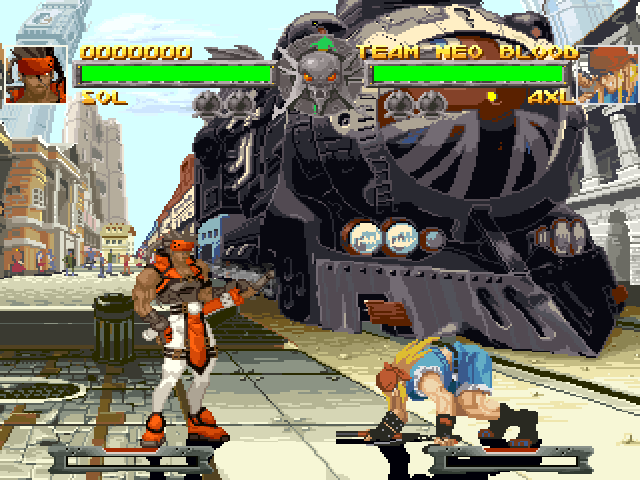
Its story takes place after a catastrophic conflict between humanity and bio-organic weapons known as Gears. Justice, a powerful Gear once sealed away after the war, has escaped, and a tournament is staged to find a fighter capable of stopping the threat. The prize is the fulfillment of any wish, giving the entrants personal reasons to join. Sol Badguy, the game’s blunt, sword-wielding central figure, and the Sacred Order knight Ky Kiske are among the challengers, alongside fighters such as May, Axl Low, Chipp Zanuff, Millia Rage, Potemkin, and the unsettling Dr. Baldhead. Character-specific endings add pieces of motivation and background to the tournament framework.
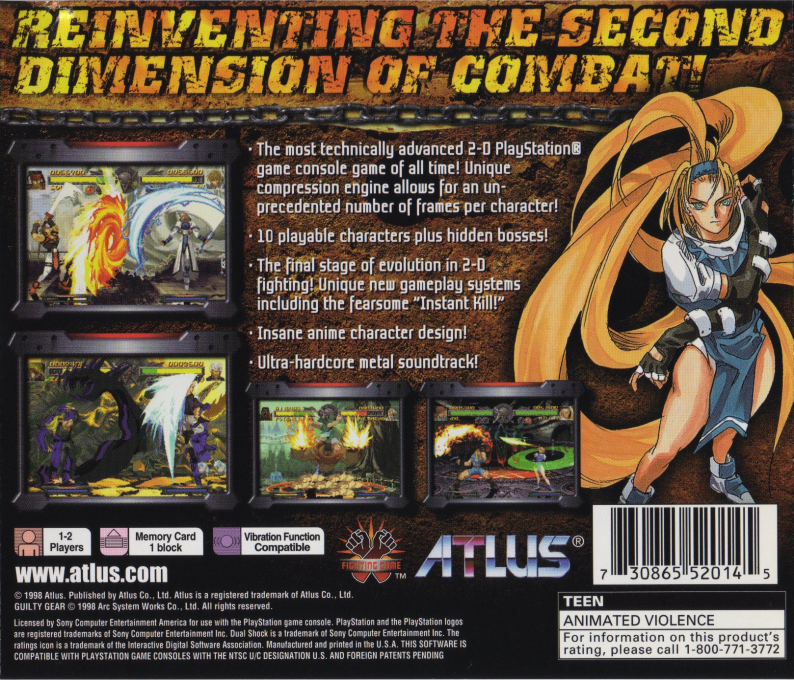
Matches are built around a directional controller and a six-button attack layout: Punch, Kick, Slash, Heavy Slash, Taunt, and Respect. The usual aim is to reduce the opposing fighter’s life bar over rounds, but the system rewards more than basic exchanges. Every combatant has a distinct move set, including command-input special moves and powerful attacks that require timing, spacing, and familiarity with the character. Players can cancel or link attacks into combinations, use aerial movement, and build momentum through pressure rather than relying on a single universal strategy.
A Tension Gauge gives Guilty Gear’s PlayStation battles an additional risk-and-reward layer. Offensive play and forward movement help fill it, and the stored energy can be spent on stronger techniques. The original game also includes Deathblow attacks: difficult, high-stakes moves that can immediately decide a match if they connect, while a failed attempt leaves the attacker without Tension for the remainder of the round. Chaos Mode can change the complexion of a close fight once a character’s health reaches its yellow portion, making the game’s already brisk confrontations less predictable.
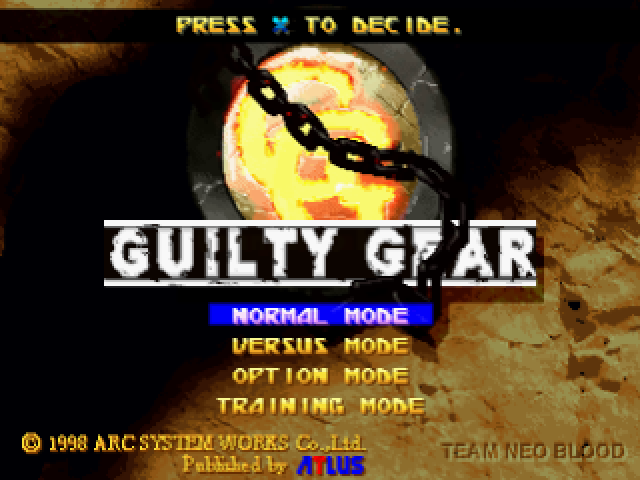
The PlayStation version offers Arcade Mode for a single-player sequence of computer-controlled opponents and character endings, Versus Mode for local two-player fights, and Training Mode for practicing commands and combinations. Ten fighters are initially available, with additional characters unlocked through progress. Rather than aiming for the more realistic presentation popular in some late-1990s fighters, Guilty Gear uses expressive sprites, exaggerated weapons, unusual character concepts, and a theatrical soundtrack to establish its own tone.
As the first Guilty Gear game, this PlayStation release is important both as a standalone fighter and as the foundation for a major Arc System Works franchise. Later games added and refined systems such as Roman Cancels and Bursts, but the original already establishes the series’ appetite for fast offense, technical special moves, bold character design, and a world where magic and destructive artificial life forms shape the conflict. For players exploring the series’ roots, Guilty Gear on PS1 presents the tournament, cast, and core fighting ideas from which its many sequels grew.
Gallery
Details
- Developer
- Arc System Works
- Publisher
- Studio 3
- Genre
- Fighting
- Players
- 1-2
- Release Date
- October 31, 1998
- System
- PS1