Retro Explore — Discover classic retro games
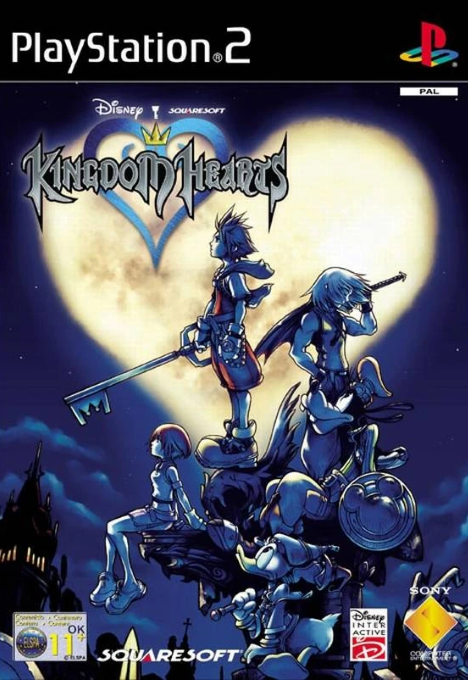
Kingdom Hearts
Kingdom Hearts for PlayStation 2 is the 2002 action role-playing game that began Square and Disney's long-running crossover series. Developed by Squaresoft under director Tetsuya Nomura, it first arrived in Japan in March 2002 before reaching North America that September and Europe later that year. The adventure puts an original hero, Sora, at the center of a journey that connects Disney locations and characters with Square-created worlds and familiar faces from Final Fantasy. The story starts on the peaceful Destiny Islands, where Sora dreams of exploring beyond home with his friends Riku and Kairi. When the islands are swallowed by darkness, Sora gains the Keyblade, a key-shaped weapon that can fight the shadowy Heartless. Separated from his friends, he joins Donald Duck and Goofy, who are searching for King Mickey. Their shared trip carries them between worlds while Sora looks for Riku and Kairi and the group tries to stop the Heartless from consuming more places. Combat is played in real time from a third-person view. Sora handles regular Keyblade attacks, jumps, guarding, items, and magic, while Donald and Goofy usually fight beside him as computer-controlled party members. The command menu keeps options such as spells and items close at hand, and the party grows stronger by earning experience and unlocking abilities. Encounters reward timing and positioning alongside role-playing preparation: equipment can be changed, magic consumes MP, and healing spells or items can bring injured allies back into the fight. Disney worlds supply much of the game’s variety. Sora visits places inspired by Alice in Wonderland, Hercules, Aladdin, The Little Mermaid, The Nightmare Before Christmas, Tarzan, Peter Pan, and other films, meeting their residents and confronting villains whose plans overlap with the Heartless threat. The game also introduces destinations made for the series, including Traverse Town, Hollow Bastion, and the End of the World. Characters such as Leon, Yuffie, Aerith, Cloud, and Sephiroth bring a selection of Final Fantasy references into the crossover without replacing Sora’s own story. Exploration alternates between battles, platforming, puzzles, dialogue, shops, and optional challenges. Each world has its own visual style and may alter the party’s appearance or movement, such as the underwater forms used in Atlantica. The Olympus Coliseum offers tournaments and optional fights, while synthesis gives players a reason to collect materials for equipment. Summons let certain Disney allies provide help in battle after being unlocked, adding temporary special abilities to Sora’s regular move set. Travel between the worlds uses the Gummi Ship. In the original PlayStation 2 release, new routes begin as on-rails shooting sequences where players steer through space, avoid hazards, and fire on enemies. Gummi pieces, blueprints, weapons, engines, and armor make it possible to build or adjust ships as the journey expands. This separate mode gives Kingdom Hearts a mechanical break from its action-RPG areas and makes reaching a newly opened world part of the progression. The first Kingdom Hearts is notable for the way it framed Disney characters, settings, and music within an original adventure rather than simply retelling the films. Yoko Shimomura composed the score, while Hikaru Utada's theme song appears as “Hikari” in Japan and “Simple and Clean” in English-language releases. The game also used a prominent voice cast, with Donald, Goofy, and Mickey voiced by actors associated with those characters and English performances for Sora, Riku, and Kairi. Later versions expanded the original game instead of replacing its PS2 identity. The Japan-only Kingdom Hearts Final Mix added material that had appeared in the international release as well as further enemies, scenes, abilities, and optional content. That version was eventually included in high-definition collections, but the 2002 PlayStation 2 game remains the starting point for Sora, Donald, and Goofy’s search across the worlds and for the wider Kingdom Hearts series.


Persona 3
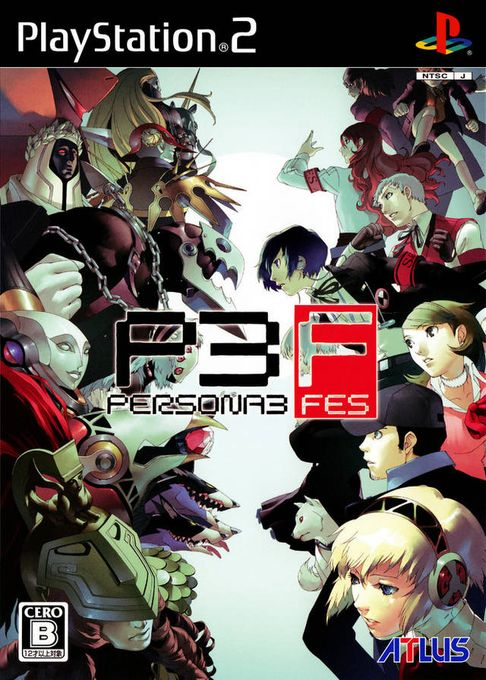
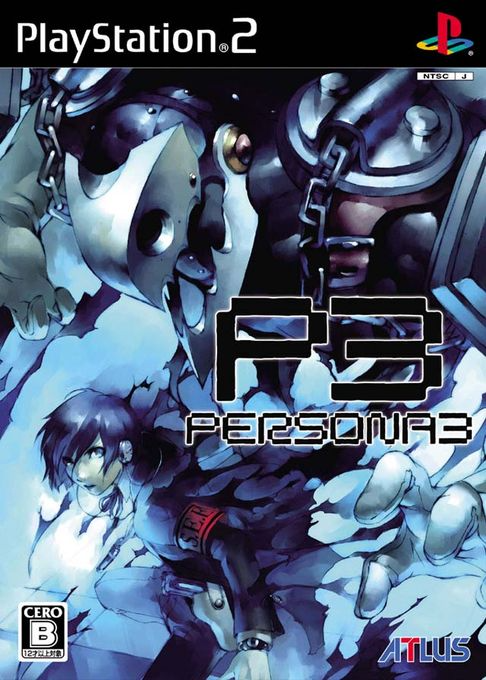
Persona 3 for PlayStation 2 is a supernatural role-playing game developed by Atlus and first released in Japan in 2006. It arrived in North America in 2007, where it was branded Shin Megami Tensei: Persona 3, and reached Europe in 2008 through Koei. The fourth main Persona game turns a Japanese school year into the framework for a story about facing mortality, making friends, and confronting threats that emerge after midnight. Players guide a newly transferred Gekkoukan High School student whose hidden potential draws him into a secret battle that most of the city never sees. The central mystery is the Dark Hour, an extra stretch of time concealed between one day and the next. During it, ordinary people become coffins, predatory Shadows roam Tatsumi Port Island, and the school transforms into the immense tower known as Tartarus. After surviving an early attack, the protagonist joins the Specialized Extracurricular Execution Squad, or S.E.E.S. Alongside fellow students and other Persona users, the group investigates the Dark Hour, climbs Tartarus, and prepares for dangerous encounters that occur around each full moon. Persona 3 PS2 balances a calendar-based school-life simulation with dungeon exploration and turn-based battles. Days can be spent attending class, studying, pursuing activities, or meeting people around town, while many evenings offer a chance to enter Tartarus. Time advances as choices are made, so deciding how to use each day is part of the role-playing experience. Building academics, charm, and courage unlocks opportunities, while spending time with particular characters forms Social Links that tie the hero's daily relationships directly to his growth in combat. In battle, characters call on Personas: manifestations of the self that wield elemental magic, support skills, and physical techniques. The protagonist is unusual in that he can change between multiple Personas, while the rest of the team has their own signature companion and role. New Personas can be acquired and combined in the Velvet Room, giving players room to shape a party's strengths and resistances. Exploiting a Shadow's weakness or landing a critical hit can knock it down and grant another action; toppling every enemy opens the way for the party's high-impact All-Out Attack. Tartarus supplies the game's long-term dungeon challenge. Its floors contain roaming Shadows, treasure, rescue objectives, and barriers that keep the team from advancing until the story moves forward. Major boss battles punctuate the year and bring the Dark Hour's larger danger into focus. Outside the tower, the cast includes classmates such as Yukari Takeba, Junpei Iori, Akihiko Sanada, and Mitsuru Kirijo, plus the anti-Shadow weapon Aigis and the Persona-using dog Koromaru. Their relationships, personal conflicts, and evolving abilities give the campaign its distinctive blend of school drama and occult adventure. The original PlayStation 2 release also stands apart from later editions. Party members act under the player's chosen tactical instructions rather than direct command, a design choice that makes battle planning important. Persona 3 FES later expanded the PS2 game with an epilogue, while Persona 3 Portable reworked presentation and battle options for PSP; those are separate versions rather than features of this release. As a key entry in the wider Megami Tensei franchise, Persona 3 established the school-calendar and relationship systems that became defining elements of the modern Persona series.
Harry Potter and the Chamber of Secrets
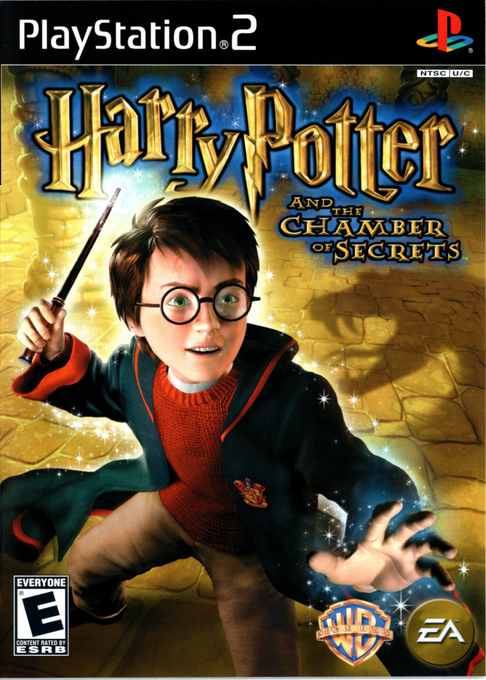
Harry Potter and the Chamber of Secrets PS2 is a 2002 action-adventure game from EA UK, published by EA Games for the PlayStation 2. Based on the second Harry Potter novel and its film adaptation, it follows Harry's return to Hogwarts for a school year overshadowed by attacks on students and rumours of a hidden chamber. This is a distinct PlayStation 2 production rather than a simple conversion of the same-titled games on earlier consoles, handhelds, and computers, built around a fully three-dimensional Hogwarts adventure. Harry begins amid the aftermath of his summer at the Dursleys before familiar faces such as Ron Weasley and Hermione Granger draw him back into the wizarding world. The journey takes him through locations including the Burrow, Diagon Alley, and Hogwarts, where the apparent opening of the Chamber of Secrets becomes the central mystery. Events and characters from the story are adapted into the game's own sequence of exploration, lessons, confrontations, and set-piece missions, culminating in Harry's attempt to uncover the danger beneath the school. Most of the game is played from a third-person view as Harry moves through castle corridors, classrooms, grounds, and more hazardous areas. Progress depends on looking closely at the environment as well as following the story: doors, obstacles, mechanisms, and hostile creatures often require a spell or an alternate route. Harry starts with familiar magical abilities and expands his options through Hogwarts activities. Rictusempra can incapacitate threatening creatures, Skurge clears ghostly ectoplasm that blocks a path, and Diffindo cuts through particular obstructions. These spells turn wandering the school into a series of practical puzzles rather than merely a tour between scenes. Classes and dedicated spell challenges provide the framework for learning and practising magic, while the castle supplies secrets to find away from the main route. The adventure also includes potion-related tasks, encounters with magical creatures, and wizard duels, so its pace moves between puzzle solving, platforming, and action. Hogwarts is used as a connected hub for much of the experience, letting a newly learned spell make previously inaccessible details worth revisiting. Harry's friends, teachers, and rivals give these excursions a context tied to his second year at school. Flying is a defining part of the PlayStation 2 edition. After earning access to the Nimbus 2000 through broom training, Harry can take to the air and explore in free-flight mode. The PS2 game notably allows him to land wherever the environment permits, a flexibility not shared by the contemporary Xbox and GameCube releases, whose landing areas are restricted. Flight is therefore more than a brief travel animation: it offers another way to survey Hogwarts and reach activities around the grounds. The PS2 release belongs to a family of 2002 Chamber of Secrets games that shared a title and source material but not a single design. EA UK handled the PlayStation 2 game, while Eurocom developed the Xbox and GameCube versions; Argonaut Games made the PlayStation release, KnowWonder produced the Windows game, and the handheld entries took other approaches again. Players looking for Harry Potter and the Chamber of Secrets on PS2 are therefore getting the sixth-generation console adventure with its own level design, progression, and flying rules, rather than the PlayStation sequel, the PC adventure, or the Game Boy role-playing and quest-based versions. The game arrived alongside the second Harry Potter film in November 2002, when the series was becoming a major cross-media property. Its production involved teams at EA UK and Eurocom, with the console project developed across the two studios even though the PS2 build itself was EA UK's responsibility. Jeremy Soule composed the game's music, adding an orchestral identity to Harry's trips through the school, its grounds, and the Chamber's dangerous depths. For PlayStation 2 players, it remains a standalone interpretation of the Chamber of Secrets story shaped around spell-driven exploration and unusually open broom travel.