About
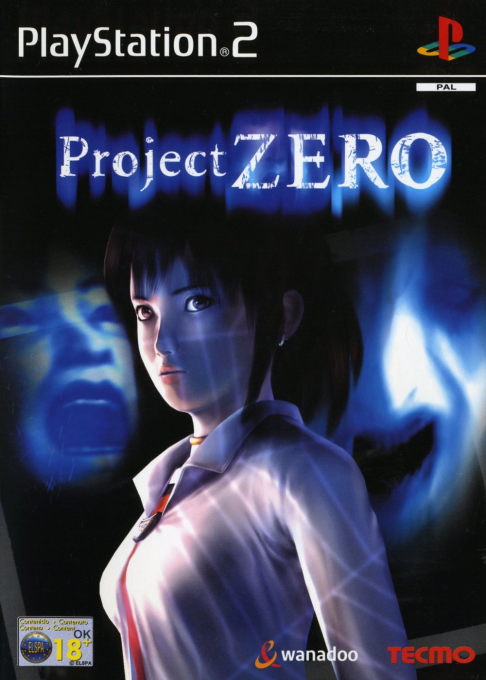
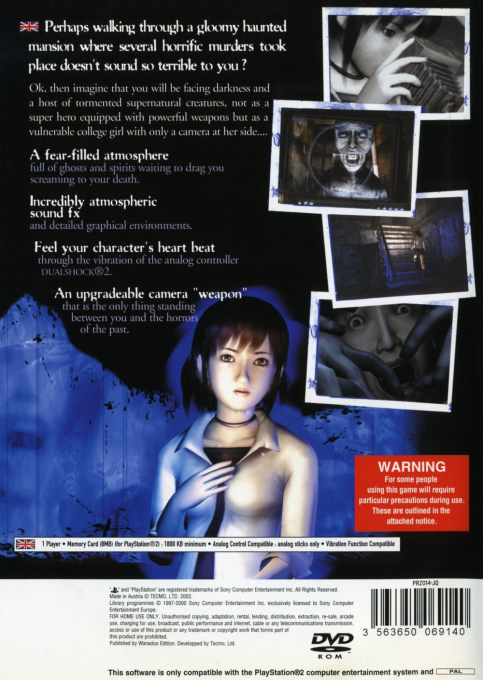
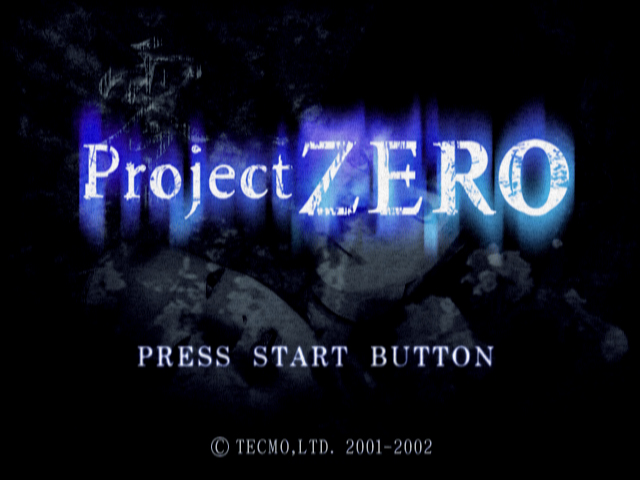
Project Zero is Tecmo’s PlayStation 2 survival-horror game, released first in Japan in 2001 and brought to Europe in 2002 by Wanadoo Edition. It is the European PAL name for the original Fatal Frame, and it introduced the series’ central idea: confronting a ghost story with a camera rather than conventional weapons. The game is structured as a prologue followed by four chapters, combining a deliberately paced haunted-house investigation with encounters that can turn suddenly dangerous.
Miku Hinasaki, a young woman with a sensitivity to the supernatural, enters the abandoned Himuro Mansion after her brother Mafuyu disappears. Mafuyu had been looking for his tutor, Junsei Takamine, and the people accompanying him, all of whom vanished while investigating the building’s unsettling reputation. Miku’s search gradually uncovers the fate of the visitors and the history of the Himuro family, making found documents, recordings, visions, and apparitions part of the storytelling rather than mere scenery.
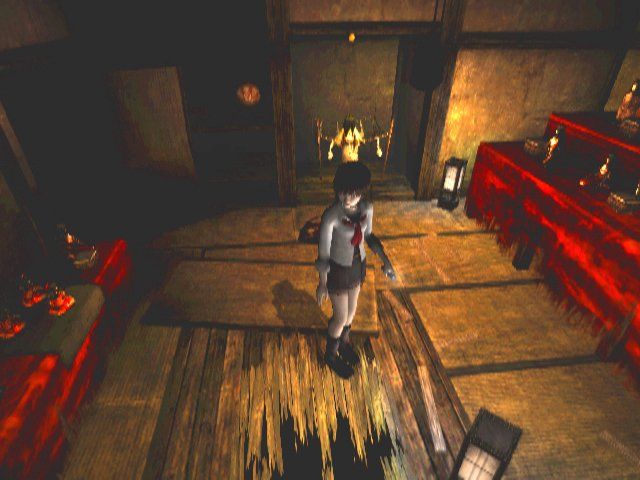
The mansion is a dark, interconnected Japanese residence explored through room-by-room movement and shifting fixed camera angles. A flashlight helps Miku navigate its corridors, courtyards, and sealed-off spaces, while maps, keys, and special objects mark routes forward. The game asks players to inspect details closely, collect clues, and solve environmental puzzles; the Camera Obscura itself can expose hidden messages, reveal supernatural traces, and help break through illusions that would otherwise block progress.
Miku’s means of defence is the Camera Obscura, an antique camera able to capture hostile spirits on film. Raising it changes the view to a first-person finder, where keeping a ghost framed lets the shot charge for greater damage. Ghosts can fade from sight, close distance, and harm Miku on contact, so each encounter becomes a tense contest of tracking movement, timing a photograph, and accepting the risk of waiting for a more powerful shot when an enemy is near or attacking.
The camera also creates an economy around survival. Film serves as ammunition and appears in several grades, with stronger types doing more damage but being less plentiful; supplies can be discovered while searching the mansion, while some film can be replenished at save points. Defeating or photographing spirits earns points that can improve camera functions such as firing speed and damage, and can unlock additional abilities that alter how it affects ghosts. Health-restoring items and careful saves add further pressure to exploration.
Although its story leans on a family curse and a ritual tied to the mansion, Project Zero makes observation its defining action. Benign spirits may appear briefly in specific locations, rewarding players who notice them, while combat relies on what the camera can see rather than on direct physical attacks. That balance of vulnerable exploration, puzzle solving, scarce resources, and photographic exorcism is what distinguishes its survival-horror design.
This PAL PlayStation 2 edition should be distinguished from the later Xbox expansion, Fatal Frame Special Edition. The Xbox version added visual upgrades, additional ghosts, altered camera-interface elements, costumes, and a new difficulty option; those extras are not the defining feature set of the 2002 European PS2 release catalogued here as Project Zero. The different regional titles refer to the same original game, with Tecmo as developer and Wanadoo Edition as the European publisher.
Gallery
Details
- Developer
- Tecmo
- Publisher
- Wanadoo Edition
- Genre
- Survival Horror
- Players
- 1
- Release Date
- October 28, 2002
- System
- PS2