Retro Explore — Discover classic retro games
Wendy: Every Witch Way
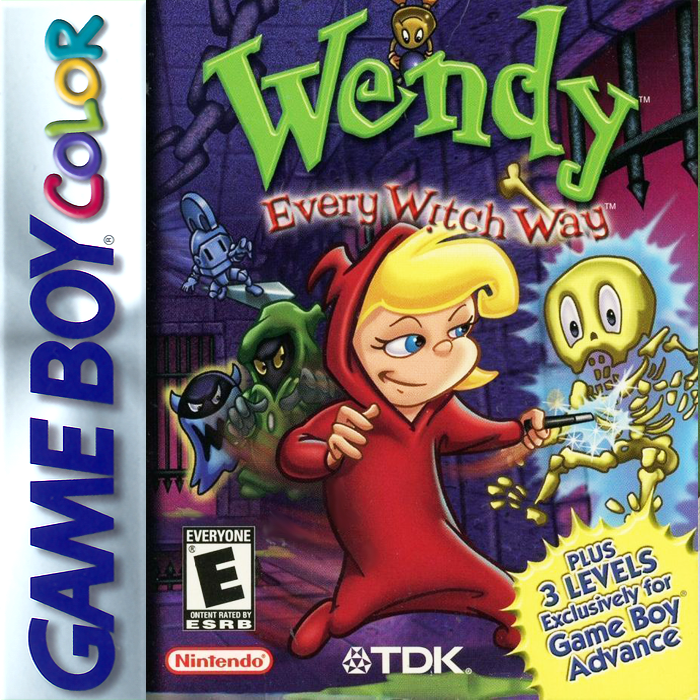
While exploring her house's attic, the little witch Wendy discovers a treasure chest. Upon opening it, magical stones are released from their prison, and head to a castle which is suspended in the sky. The power of the stones upsets gravity, and the castle comes crashing to the ground, right on top of Wendy's house! It's up to Wendy to set things right again! Wendy: Every Witch Way is a combination of a side-scrolling platformer and a puzzle game. As Wendy, players explore the castle in search of the troublesome stones that have upset gravity. Wendy has the ability to control gravity herself – by pressing up or down on the control pad while jumping, Wendy will cause gravity to reverse in that direction. Most enemies and obstacles in the game world are also affected by the gravity switching – you'll need to manipulate gravity frequently to progress through the game's different puzzles. Stars can be used to power up Wendy's magic. For every star that she collects (to a maximum of five), her magic will increase. Beginning with a small weak shot, you can power your magic up to a spread shot that fires in three directions. The stars also act as Wendy's health meter – if you get hit, you'll lose a star, as well as some magical power. Get hit when you have no stars left, and you'll lose a life. At the end of every world, there is a short bonus stage with Wendy riding on her broomstick. In these stages, you must attack enemies and collect stars as Wendy automatically flies to the next world.






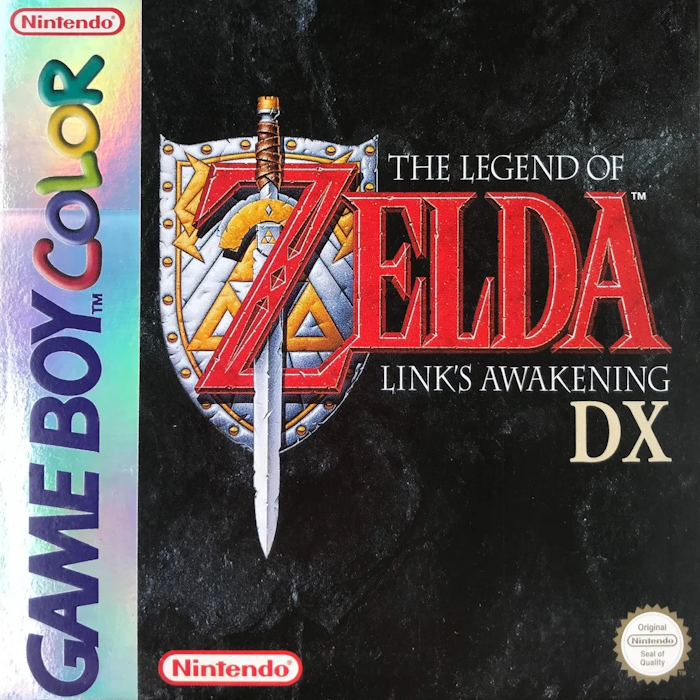
The Legend of Zelda : Link's Awakening DX
The Legend of Zelda: Link's Awakening DX for Game Boy Color is Nintendo's 1998 color-enhanced edition of the 1993 Game Boy adventure. Developed by Nintendo EAD and published by Nintendo, it sends Link away from Hyrule and onto Koholint Island after a storm leaves him shipwrecked. An owl explains that the only way to leave is to wake the island's sleeping Wind Fish, beginning a solitary fantasy quest that remains separate in setting and tone from the series' usual struggle over Hyrule and the Triforce. This is the original handheld game rebuilt for Game Boy Color, rather than the later Nintendo Switch remake. Play unfolds from a top-down view across an interconnected island of beaches, forests, mountains, caves, villages, and underground labyrinths. Link moves with the directional pad, swings his sword, raises his shield, and assigns the tools he discovers to the handheld's action buttons. Progress comes from exploring, speaking with Koholint's inhabitants, uncovering hidden routes, and using each new item to reach places that had been inaccessible. Keys, switches, blocks, enemy encounters, and environmental puzzles make each dungeon a compact challenge, while hearts and other upgrades help Link withstand increasingly dangerous battles. The central objective is to recover the eight Instruments of the Sirens from eight major dungeons and use them to awaken the Wind Fish. Every completed dungeon adds a new tool or ability to Link's inventory, changing how he navigates the overworld as well as how he approaches later puzzles. Familiar Zelda equipment such as bombs, a boomerang, a hookshot, and other usable items works alongside dungeon-specific obstacles, so exploration often means recognizing when a recently acquired tool can solve an earlier problem. The game also includes side activities and item exchanges that reward curiosity beyond the main route. Koholint gives Link's Awakening DX its unusual character. The island's residents include Marin, her father Tarin, and a broad cast of people and creatures whose dialogue gradually makes the setting feel stranger and more dreamlike. The adventure mixes original characters and locations with playful nods to other Nintendo games, while its enemies and bosses keep the journey focused on combat, puzzle solving, and discovery. Link travels alone, and the Game Boy Color release is a single-player game, built around methodical exploration rather than a multiplayer mode. DX adds the most visible change in its fully colored presentation, making the island's environments, characters, enemies, and dungeon details easier to distinguish than in the monochrome Game Boy original. It can still run in monochrome on an original Game Boy, but its exclusive content is designed around the Game Boy Color. The added Color Dungeon uses color-coded puzzles, switches, and foes; finishing it lets the player choose a Red Tunic for stronger attacks or a Blue Tunic for reduced damage. Revised owl-statue hints also offer extra direction inside dungeons. The Game Boy Color version also introduces a Camera Shop and a photo album. At specific moments around Koholint, a photographer can capture scenes featuring Link; the images can be reviewed in-game and, with the appropriate Game Boy Printer and Game Link Cable setup, printed as stickers. These additions do not replace the original adventure's eight-dungeon structure, but they give returning players new discoveries alongside the color artwork and extra dungeon. Link's Awakening DX was later made available through Nintendo's 3DS Virtual Console, preserving this particular Game Boy Color version for another generation of players.













The Legend of Zelda : Oracle of Seasons
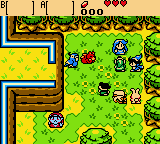
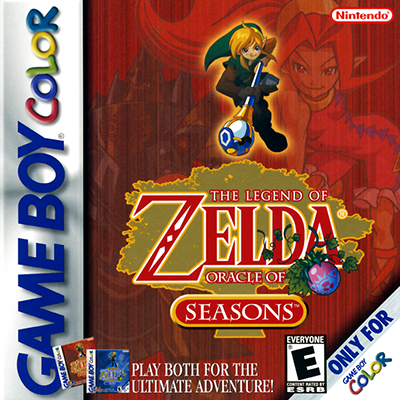
Released for Game Boy Color in 2001, The Legend of Zelda: Oracle of Seasons is an action-adventure game developed by Flagship and published by Nintendo. It shares its engine, visual language, and broader premise with its companion title, Oracle of Ages, but stands as a complete adventure in its own right. Exploration is viewed from above, with Link fighting enemies, searching for keys and tools, and working through dungeons built around combat encounters, spatial puzzles, and boss battles. The Triforce carries Link from Hyrule to Holodrum, where he meets the dancer Din and her companions. Din is the Oracle of Seasons, and the General of Darkness, Onox, abducts her in a storm before imprisoning her. With the oracle removed, Holodrum's seasons fall into chaos and the land begins to lose its vitality. Link is asked to seek the eight Essences of Nature, restore the Maku Tree's power, and open a path to Onox's stronghold. The Rod of Seasons gives the game its central idea. At specially marked tree stumps, Link can call on the seasons he has learned to alter the terrain around him. Winter freezes water into walkable ice, summer grows vines that form climbing routes, autumn clears or changes plant growth, and spring rearranges parts of the landscape. The rod turns the overworld into a shifting puzzle, as familiar places yield new paths depending on the current season. Holodrum is joined to the underground realm of Subrosia through a network of portals, giving the journey a second distinct region to explore. Across both areas, Link collects tools such as bombs, a boomerang, the Power Bracelet, the Seed Satchel, and the Magnetic Gloves, which expand both his combat options and his ability to solve environmental puzzles. He can also travel with animal companions: Dimitri crosses deep water, Ricky uses boxing gloves and leaps, while Moosh can glide across gaps. The quest's eight main dungeons each protect an Essence of Nature and combine keys, switches, obstacles, monsters, and a guardian battle. Link's sword and shield remain the foundation of combat, but the game's two item buttons make it possible to adapt a loadout to a dungeon's particular challenges. Optional activities add further goals, including the collection and appraisal of magical rings, equipment upgrades, and a trading sequence that can reward a stronger sword. Oracle of Seasons was designed to connect with Oracle of Ages. Finishing one game provides a password that can start the other as a Linked Game, carrying selected progress and enabling extra character encounters, items, and story material. Passwords can also be exchanged between the games to transfer certain rewards, while a Game Link Cable supports ring trading. Playing both adventures as a linked pair ultimately opens an expanded finale beyond the ending of either standalone quest. While Oracle of Ages centers its world around time travel in Labrynna, Oracle of Seasons focuses on manipulating Holodrum's four seasons and is generally the more action-oriented half of the pair. The two releases use different settings, villains, oracle characters, central tools, and dungeon challenges, yet their shared password system makes the order of play meaningful. That structure lets Seasons function both as a self-contained rescue story and as one route into the duology's larger conclusion.