About
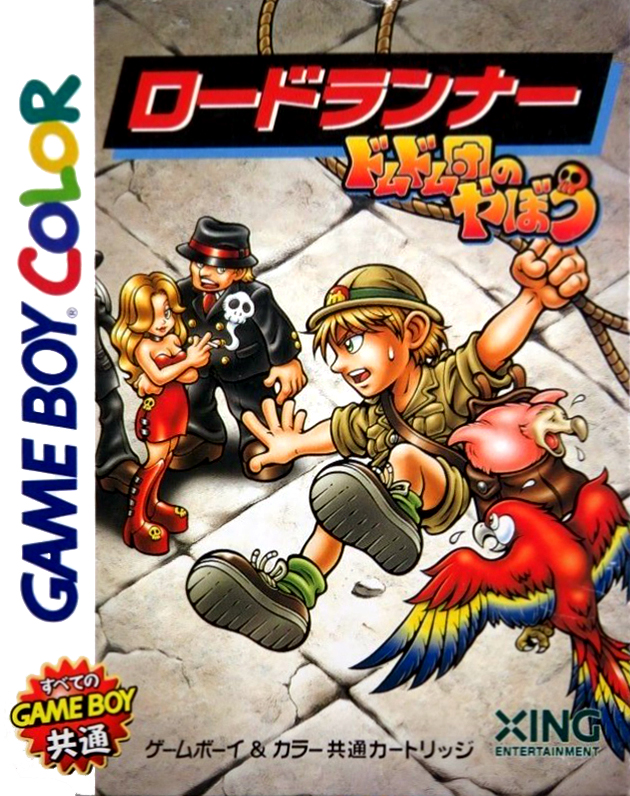
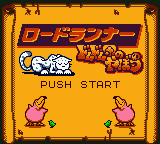
Lode Runner: Domudomu Dan no Yabou is a Japan-only Game Boy Color entry in the long-running puzzle-action series, released in 2000 and developed and published by Xing Entertainment. Its Japanese title is commonly rendered as Lode Runner: Domdom Dan no Yabou, meaning the Domdom Gang's Ambition. Although it retains the name and basic language of Doug Smith's classic Lode Runner, this handheld game gives the familiar chase-and-dig format its own story-driven setting and animal-rescue objective.
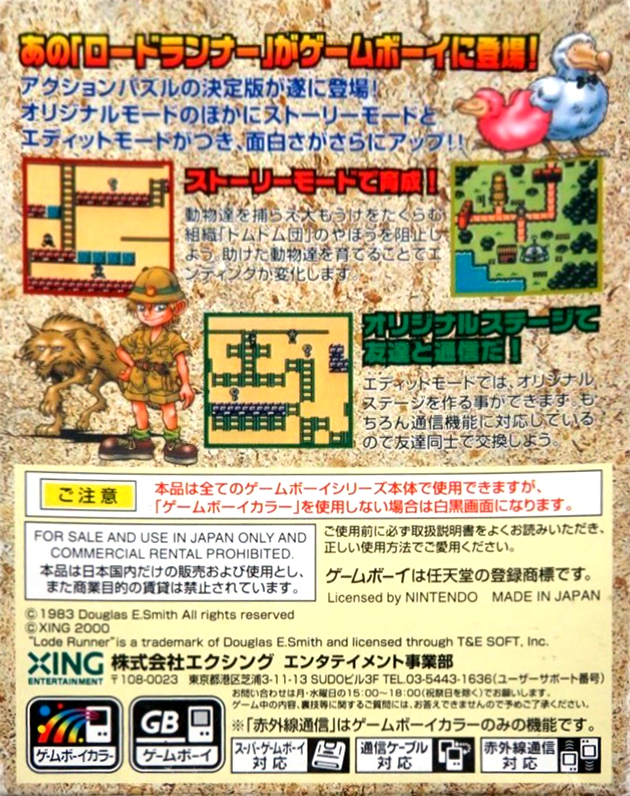
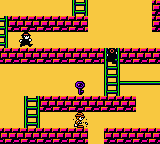
The central challenge still comes from negotiating compact, vertical stages built around platforms, ladders, hanging bars, and breakable ground. The player guides the runner through each area while enemies patrol nearby, using carefully placed holes to delay pursuers and create safe routes. Success depends on reading the layout, choosing a route before committing to it, and acting before a temporary opening closes. Rather than making jumping the focus, the Game Boy Color game asks players to solve space, timing, and enemy-position puzzles through movement and digging.
Its story mode casts the Domdom Gang as an organization that intends to profit by capturing and selling animals, including creatures described as rare or endangered. The runner travels between the gang's hideouts to free the captives. This premise changes the goal from simply clearing a screen of treasure: rescuing animals becomes part of the progress through the adventure. The captured animals can then be cared for, giving the game a small management element alongside the stage-by-stage action.
The animal-raising system also affects the conclusion. How the rescued animals have been cared for determines which ending the player sees, adding a reason to consider the collection and care side of the game beyond an individual stage clear. This feature separates Domudomu Dan no Yabou from a straightforward recreation of the original formula and ties its puzzle levels to a broader campaign.
Xing included an Original mode as well as the story-focused content. Original mode presents a more direct Lode Runner-style experience, while the adventure material supplies the animal-rescue framework. The game contains 50 stages plus additional content, offering a substantial set of short, screen-sized problems designed for portable play. It is a single-player Game Boy Color release, and its Japanese-language presentation means that players who do not read Japanese may miss some of the narrative context even though the immediate movement puzzles are visual and easy to recognize.
Creation is another important part of Lode Runner's history, and this Game Boy Color version carries that tradition forward with an edit function. Players can build their own stages and use the system's communication capability to exchange them with friends. That feature lets the cartridge extend beyond its built-in layouts, while the rescue story, care-based endings, and handheld-specific mode selection make Lode Runner: Domudomu Dan no Yabou a distinctive late entry in the series rather than merely a port of an earlier game.
Gallery
Details
- Developer
- Xing Entertainment
- Publisher
- Xing Entertainment
- Genre
- Platformer, Logic Puzzle
- Players
- 1
- Release Date
- April 28, 2000
- System
- GBC