Retro Explore — Discover classic retro games
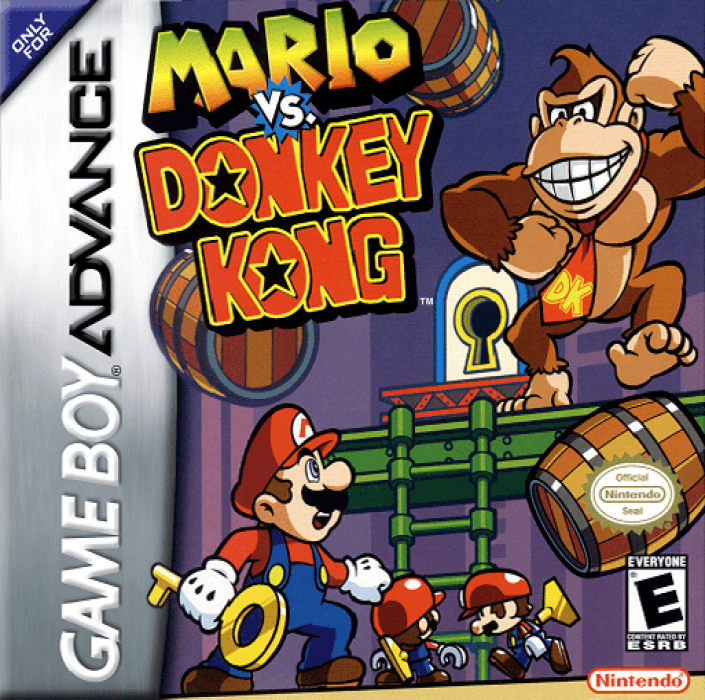
Mario vs. Donkey Kong
Mario vs. Donkey Kong GBA is a 2004 puzzle-platform game for Nintendo's Game Boy Advance, developed by Nintendo Software Technology and published by Nintendo. Released first in North America in May 2004, it revives the classic Mario-and-Donkey Kong rivalry in a form that draws closely on the 1994 Game Boy Donkey Kong game while building a new puzzle campaign around the Mini-Mario toys. The trouble starts when Donkey Kong sees an advertisement for the wind-up figures made by Mario's Toy Company, finds them sold out, and raids the factory. Mario sets off after him to recover the stolen toys, turning a familiar rivalry into a sequence of compact, obstacle-filled challenges. The main stages blend careful planning with quick platforming. Mario commonly begins by finding a key, carrying it through a room of traps and enemies, and placing it in the matching locked door. Reaching that door opens a second area where a Mini-Mario waits to be rescued. Because a carried key can be set down, thrown, and used to trigger devices, the route is rarely just a straight run to the exit. Players read each small screen for the correct order of switches, ladders, moving platforms, springs, conveyor belts, and hazards, then execute the solution before the stage timer expires. Mario has a larger tool set here than in a basic side-scrolling platformer. He can run, jump, climb and grab, but also use acrobatic moves including handstands, side somersaults, and high jumps to reach awkward ledges or avoid danger. The design asks players to apply those moves to the room's layout rather than simply react to a long scrolling course. A misplaced key, a badly timed jump, or an activated switch at the wrong moment can block progress, while a clean solution can turn one object into the route to the next. This makes individual levels well suited to short handheld sessions without reducing their later puzzles to simple action tests. The campaign alternates its key-and-door stages with different kinds of challenges. In some sections Mario must lead a group of Mini-Marios safely to a toy box, so the small wind-up figures become part of the puzzle instead of merely a goal at the end. Donkey Kong also confronts Mario at the end of each themed area, creating boss encounters that break up the precision platforming. After the regular journey, tougher Plus and Expert stages add further opportunities to replay the game and pursue stronger results. Its environments range from construction-inspired rooms that recall the arcade roots of the characters to more hazardous settings built around heat, heights, and moving machinery. Although its title is shared by later games, Mario vs. Donkey Kong GBA is specifically the original entry in the Mario vs. Donkey Kong series, not the Nintendo DS sequel Mario vs. Donkey Kong 2: March of the Minis or the 2024 Nintendo Switch remake. The Game Boy Advance release has its own sprite-based presentation, single-player campaign, and puzzle sequence. Nintendo's European release followed in November 2004, bringing the game to that region later in the year. By combining Mario's expanded movement with the key-based puzzle design associated with Game Boy Donkey Kong, this installment established the Mini-Mario premise that later series entries would develop in different directions.
Castlevania : Aria of Sorrow
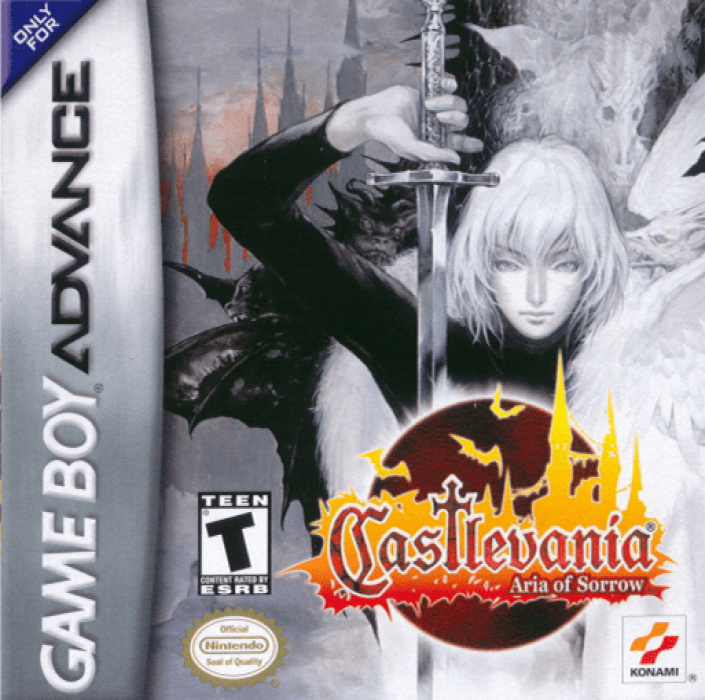
Castlevania: Aria of Sorrow is a 2003 action-adventure game developed and published by Konami for Game Boy Advance. It arrived in North America on May 6, 2003, and is the third Castlevania adventure made for the handheld. Rather than revisit the series' usual historical settings, the game moves its gothic tale to 2035 Japan, pairing a futuristic date with Dracula's familiar, ever-changing castle. The story follows Soma Cruz, a high-school exchange student who travels with his childhood friend Mina Hakuba to view a solar eclipse near Hakuba Shrine. As the eclipse reaches totality, the pair loses consciousness and awakens within a mysterious castle. Soma's attempt to escape soon becomes a hunt for answers about the castle, its inhabitants, and the unsettling power he discovers within himself. Aria of Sorrow is built around a large interconnected castle rather than a straight sequence of stages. Corridors, towers, underground passages, gardens, and other distinct areas fold back on one another, rewarding careful map-reading and revisits. Doors, high ledges, hazardous terrain, and unexplored routes gradually become accessible as Soma gains the movement and traversal powers needed to reach them. Combat combines the series' side-scrolling action with role-playing progression. Soma can find and equip a broad range of weapons, including swords, spears, axes, hammers, and other armaments with different reach and attack rhythms, while armor and accessories adjust his capabilities. Defeated enemies grant experience, allowing his level and core attributes to grow, so exploration, combat, and equipment choices all feed into how he handles the castle's enemies and bosses. Its defining feature is the Tactical Soul system. Soma can claim the souls of defeated monsters and assign them to slots that provide active attacks, guardian effects, or passive enhancements. These powers include magical projectiles, summons, transformations, resistances, and movement-related abilities, creating room to tailor a loadout to a particular area, enemy, or play style. The original Game Boy Advance release also let players exchange collected enemy souls through the Game Link Cable. The castle's progression is tied closely to discovery. New souls and relic-like abilities open alternate routes, while hidden rooms, rare drops, and optional equipment encourage a return to earlier locations. Boss encounters test positioning and timing as much as raw character strength, and the game's arsenal makes it possible to approach many fights with very different combinations of weapons and supernatural powers. Aria of Sorrow has multiple conclusions. Advancing without the correct preparation can lead to an early ending, while uncovering the necessary clues and meeting the relevant conditions reveals the deeper confrontation behind the castle's crisis. Completing the main adventure also opens additional challenges and modes, extending the game beyond a single trip through its map. Within the Castlevania series, Aria of Sorrow closes the Game Boy Advance trilogy after Circle of the Moon and Harmony of Dissonance. Its story of Soma Cruz continued in Castlevania: Dawn of Sorrow for Nintendo DS, while the original game later returned in the Castlevania Advance Collection. The blend of a modern-era setting, interconnected exploration, character growth, and the flexible Tactical Soul system gives this chapter a distinct identity within Konami's long-running vampire-hunting saga.
Golden Sun : The Lost Age
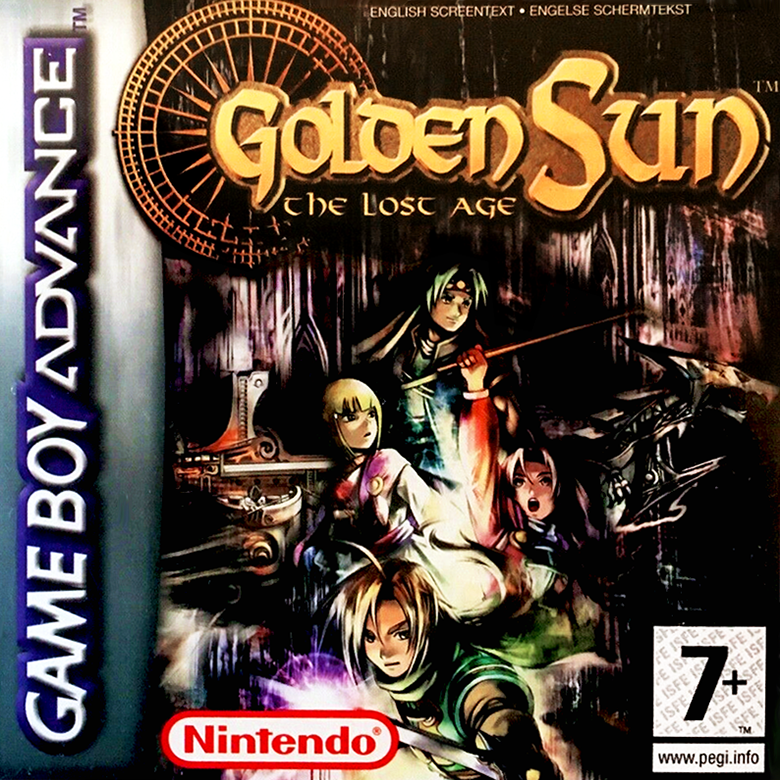
Golden Sun: The Lost Age for Game Boy Advance is a fantasy role-playing game developed by Camelot Software Planning and published by Nintendo. First released in Japan in 2002 and in North America in April 2003, it is the direct second half of the original Golden Sun story. Rather than immediately following Isaac’s party, the adventure begins from the perspective of Felix and the companions previously seen as their pursuers. Their journey across Weyard is driven by a dangerous question: can restoring the sealed power of Alchemy save a fading world without placing that power in the wrong hands? Players guide Felix through towns, wilderness areas, caves, ruins, and towering Elemental Lighthouses, speaking with residents, collecting equipment, and uncovering a long-form fantasy narrative. The party’s early members include Felix’s sister Jenna, the Jupiter Adept Sheba, the scholar Kraden, and the seafaring Mercury Adept Piers. Their route eventually opens into a broad ocean voyage aboard Piers’s ship, giving this sequel a larger, more open-feeling world than its predecessor. Islands and distant continents become destinations as new abilities make previously inaccessible paths and secrets worth revisiting. Exploration revolves around Psynergy, the series’ elemental magic. Some Psynergy is used in battle, while field abilities transform the environment into puzzles: moving objects, creating routes, crossing hazards, or revealing a way forward. These tools make dungeons more than a string of encounters, as progress often depends on noticing how a spell can change the layout. New utility Psynergy is gained through story progress, character development, and special items, continually expanding the party’s options around Weyard. Combat uses turn-based commands, with weapons, offensive Psynergy, recovery abilities, and items forming the basic choices. Its distinctive layer is the Djinn system. Djinn are collectible elemental spirits that can be assigned among characters to alter their statistics, available Psynergy, and class. Setting a Djinni on standby allows it to be used directly or combined with other standby Djinn for a powerful Summon, but doing so temporarily removes the benefits it provided to its host. Choosing whether to keep a strong class setup or spend those resources on a dramatic attack gives battles a practical risk-and-reward rhythm. The Lost Age deliberately recontextualizes the first game’s conflict. Felix’s group is trying to light the remaining lighthouses and restore Alchemy, while Isaac and his allies follow them with grave fears about the consequences. As the two groups learn more about Weyard, the story develops beyond a simple pursuit and brings questions of responsibility, survival, family, and inherited power to the foreground. Familiar faces and unresolved events from Golden Sun make the game especially rewarding as a continuation, while its opening still establishes Felix’s party and goals for players coming in fresh. For owners of the first Game Boy Advance game, Golden Sun: The Lost Age supports transferring completed-game data by password or Game Link Cable. The transferred information can carry characters, equipment, Djinn, and other progress into the sequel, reinforcing how closely the two adventures were designed to connect. The game was later released on Wii U Virtual Console, though that version did not retain the original communication features, and it joined the Game Boy Advance library on Nintendo Switch Online + Expansion Pack in 2024. On its original handheld, however, The Lost Age remains the expansive conclusion to Camelot’s first Golden Sun duology.