About
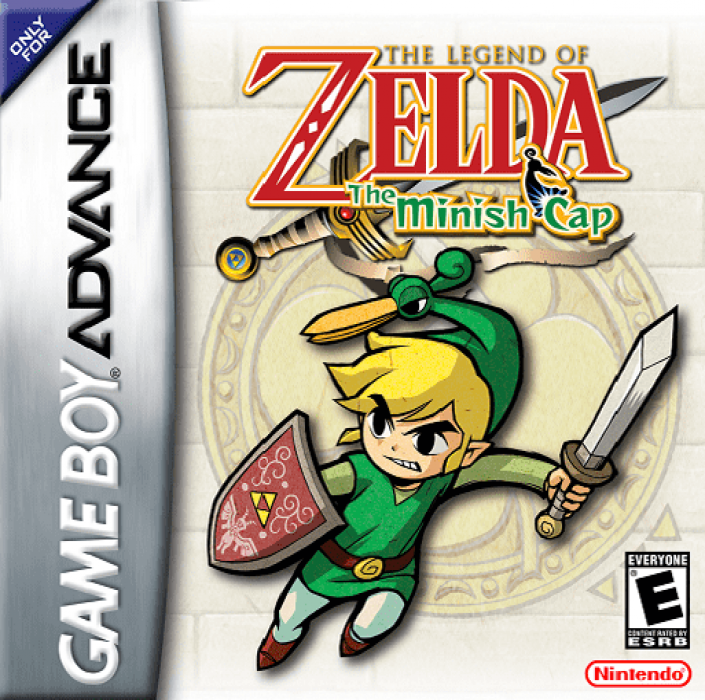
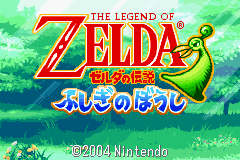
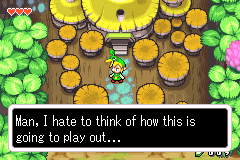
The Legend of Zelda: The Minish Cap is a single-player Game Boy Advance action-adventure from Nintendo, developed by Capcom and Flagship. It arrived in Japan and Europe in 2004, followed by North America in January 2005. Built around the series’ classic overhead viewpoint, it sends Link across Hyrule’s fields, towns, caves, and themed dungeons with a sword, shield, familiar tools, and a steadily expanding set of abilities. Its compact handheld scale never diminishes the sense of discovery: a route that looks ordinary at first can become a new puzzle once Link has the right item, a new sword technique, or a reason to look at the world from a different size.
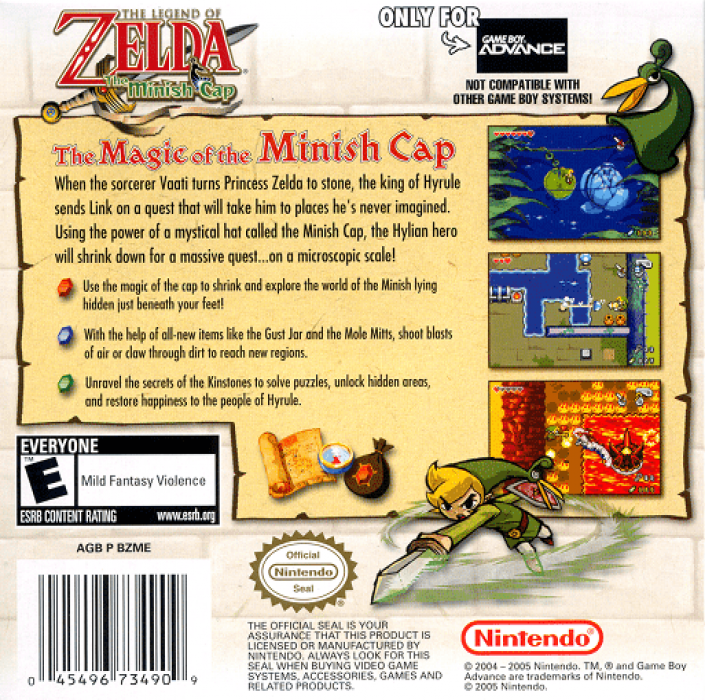
The adventure begins during Hyrule’s Picori Festival, a celebration tied to the tiny Picori people, also called the Minish. A mysterious tournament champion, Vaati, shatters the Picori Blade, unleashes monsters, and turns Princess Zelda to stone. Link’s task is to find the Minish and restore the blade so he can confront Vaati. That premise places folklore, a festival, and a threatened kingdom at the center of the quest, while giving the game a clear connection to Four Swords: it tells the origin of both Vaati and the Four Sword. The story also introduces Ezlo, a sharp-tongued companion trapped in the form of a green cap.
Ezlo’s magic is the game’s defining idea. At special portals, he lets Link shrink to Minish size, transforming familiar rooms and outdoor spaces into very different places. A puddle becomes an impassable lake, a small opening becomes a route, and everyday objects can hide a path or a secret. This is not merely a visual trick; it reshapes exploration, combat situations, and puzzle-solving throughout Hyrule. The changing viewpoint gives the game its distinctive rhythm, inviting players to revisit a location and ask what might be possible when Link is no longer human-sized.
The Minish Cap keeps the satisfying Zelda loop of exploring, finding a dungeon item, and using that item to rethink obstacles. Alongside staples such as bombs, bows, and shields, it adds tools with unusual jobs. The Gust Jar can draw in enemies and objects, the Cane of Pacci flips certain targets, and the Mole Mitts open paths through soft earth. Other challenges ask Link to create temporary copies of himself, a single-player variation on ideas associated with the Four Swords games. Each tool is both a means of fighting and a new piece of environmental language, so a reward often immediately suggests a fresh set of questions to try elsewhere.
Hyrule also rewards patient wandering beyond its main path. Kinstone Fusion pairs matching fragments with characters and even other points of interest, causing changes somewhere in the world: a hidden route may open, a treasure may become available, or a new opportunity may appear on the map. Sword masters teach techniques, collectible figurines fill out Carlov’s collection, and pieces of heart encourage thorough exploration. These systems make conversations and return visits matter, giving the journey a deliberately playful sense that the next small connection can lead to something surprising.
Visually, the game uses bright, expressive sprite work and a storybook-like presentation that fits its fairy-tale setting. Hyrule Town in particular serves as more than a place to restock: it is a busy hub full of residents, shops, side activities, and size-changing discoveries. The game’s music, animation, and readable item design help its dungeon puzzles stay clear on the Game Boy Advance screen, while bosses ask players to recognize patterns and apply the tools they have learned. The result is an accessible adventure with enough optional searching and item experimentation to reward careful play.
The Legend of Zelda: The Minish Cap remains the original Game Boy Advance release, not a remake or a port; it was later made available through services such as Wii U Virtual Console and Nintendo Switch’s Game Boy Advance library. For players looking for a concise top-down Zelda with a self-contained quest, inventive dungeon tools, and a memorable scale-shifting hook, it is an especially charming entry. Link’s journey balances heroic stakes with the pleasure of noticing how much wonder can be hidden beneath a table, behind a crack in a wall, or inside a corner of Hyrule that only the Minish can reach.
Gallery
Details
- Developer
- Flagship
- Publisher
- Nintendo
- Genre
- JRPG
- Players
- 1
- Release Date
- January 10, 2005
- System
- GBA