About
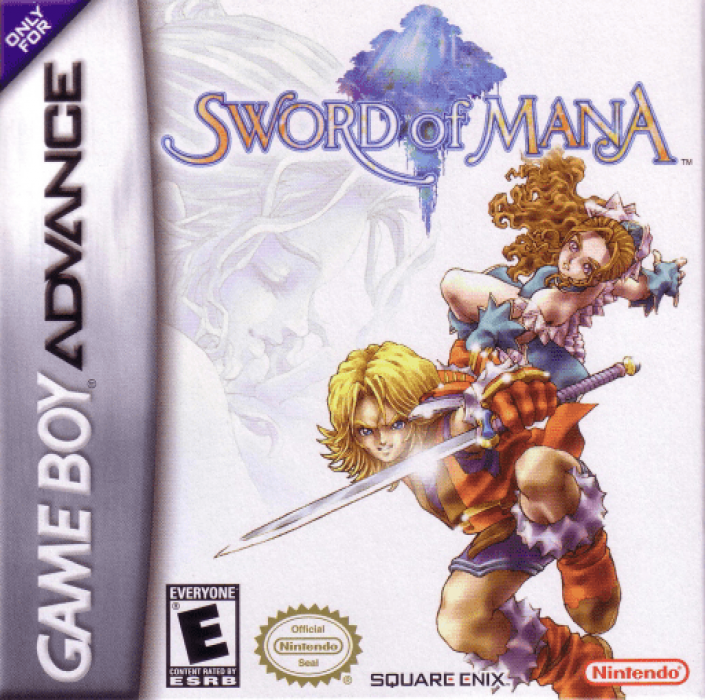
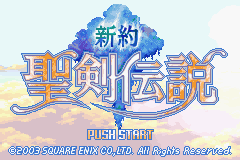
Sword of Mana for Game Boy Advance is a 2003 action role-playing game and a rebuilt version of the first Mana adventure, originally released on Game Boy as Final Fantasy Adventure in North America and Mystic Quest in Europe. Developed by Brownie Brown with Square Enix and published by Square Enix in Japan and Nintendo in Western territories, it arrived in Japan as Shin'yaku: Seiken Densetsu before reaching North America in December 2003. The colorful handheld remake revisits the series’ early world of Mana while substantially expanding its presentation, dialogue, and playable-character choice.
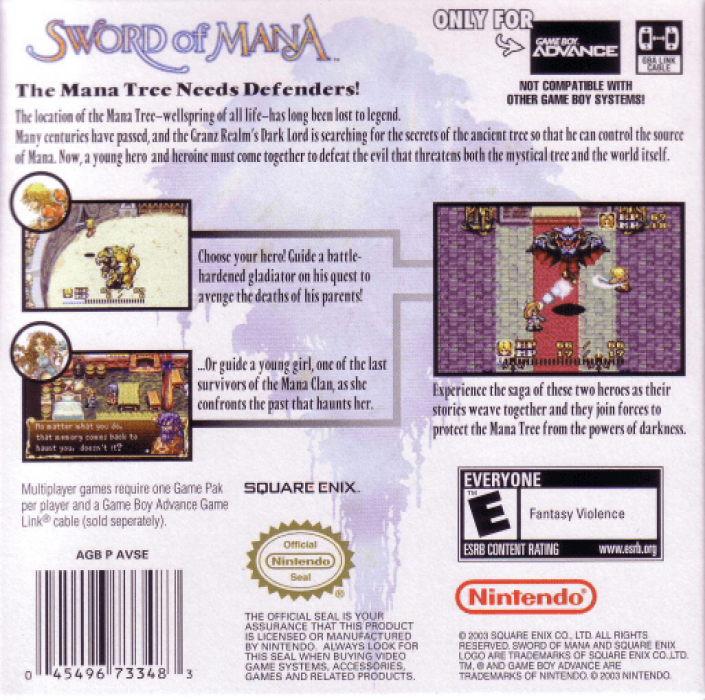
The adventure begins from one of two perspectives. Players name and select either a young gladiator from the realm of Granz or a young woman tied to the Mana tribe, then follow that character’s route through the same larger conflict. Their paths meet as the Dark Lord threatens the Mana tribe and seeks power connected to the Mana Tree, the source of Mana. The alternate lead changes the point of view and emphasizes the two characters’ parallel journeys, while the story ultimately brings them together for the central quest.
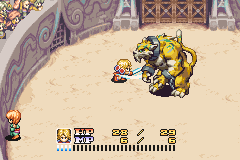
Exploration and battles take place from a top-down view across towns, fields, caves, and other fantasy locations. Combat happens in real time: the active character can attack with equipped weapons, use magic, and face enemies with differing strengths. The hero is more adept with close-range weapons, while the heroine has a greater affinity for magical attacks. When a companion is present, the player can switch control between party members during combat, adding flexibility when a situation calls for a different approach.
Sword of Mana adapts the Ring Command menu from later Mana games for its Game Boy Advance interface. This circular menu pauses the action while players choose weapons, spells, items, and other options, making preparation part of surviving tougher encounters. Winning battles grants experience, leading to level increases and improvements to character attributes. Towns provide places to rest, purchase equipment and healing supplies, and prepare for the next stretch of the journey.
The remake also adds systems beyond the original Game Boy release. Its day-and-night cycle affects which enemies may appear in certain areas, and the Hot House gives players a place to grow produce and forge weapons. The game uses a full-color visual style and freer movement than the earlier monochrome, grid-oriented adventure, while retaining its mix of exploration, equipment management, magic, and action-focused combat. Familiar elements from later Mana entries, including characters such as Niccolo and Li’l Cactus, help connect this retelling to the broader series.
As a remake, Sword of Mana is distinct from simply rereleasing Final Fantasy Adventure. It removes the original game’s Final Fantasy branding elements and reshapes the material around the Mana identity that developed through subsequent installments. Series creator Koichi Ishii produced the project, and composer Kenji Ito returned to rework music from the original alongside new material. For Game Boy Advance players, it presented the opening chapter of Mana history in a more elaborate form, with two playable viewpoints and systems drawn from the series’ later evolution.
Gallery
Details
- Developer
- Brownie Brown
- Publisher
- Nintendo
- Genre
- JRPG
- Players
- 1-2
- Release Date
- December 1, 2003
- System
- GBA