About
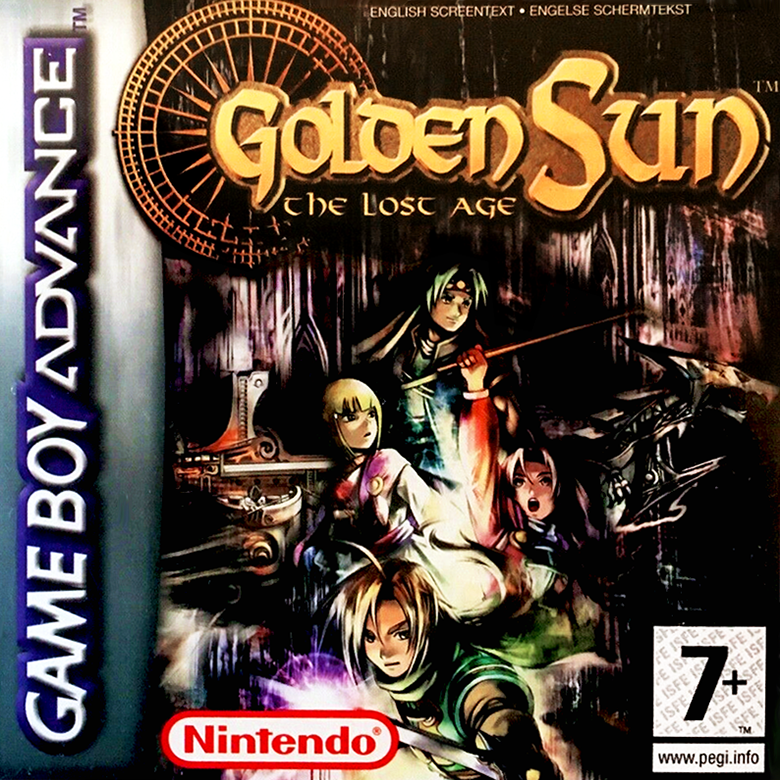
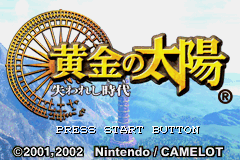
Golden Sun: The Lost Age for Game Boy Advance is a fantasy role-playing game developed by Camelot Software Planning and published by Nintendo. First released in Japan in 2002 and in North America in April 2003, it is the direct second half of the original Golden Sun story. Rather than immediately following Isaac’s party, the adventure begins from the perspective of Felix and the companions previously seen as their pursuers. Their journey across Weyard is driven by a dangerous question: can restoring the sealed power of Alchemy save a fading world without placing that power in the wrong hands?
Players guide Felix through towns, wilderness areas, caves, ruins, and towering Elemental Lighthouses, speaking with residents, collecting equipment, and uncovering a long-form fantasy narrative. The party’s early members include Felix’s sister Jenna, the Jupiter Adept Sheba, the scholar Kraden, and the seafaring Mercury Adept Piers. Their route eventually opens into a broad ocean voyage aboard Piers’s ship, giving this sequel a larger, more open-feeling world than its predecessor. Islands and distant continents become destinations as new abilities make previously inaccessible paths and secrets worth revisiting.
Exploration revolves around Psynergy, the series’ elemental magic. Some Psynergy is used in battle, while field abilities transform the environment into puzzles: moving objects, creating routes, crossing hazards, or revealing a way forward. These tools make dungeons more than a string of encounters, as progress often depends on noticing how a spell can change the layout. New utility Psynergy is gained through story progress, character development, and special items, continually expanding the party’s options around Weyard.
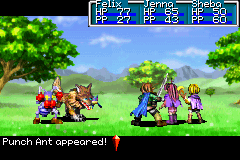
Combat uses turn-based commands, with weapons, offensive Psynergy, recovery abilities, and items forming the basic choices. Its distinctive layer is the Djinn system. Djinn are collectible elemental spirits that can be assigned among characters to alter their statistics, available Psynergy, and class. Setting a Djinni on standby allows it to be used directly or combined with other standby Djinn for a powerful Summon, but doing so temporarily removes the benefits it provided to its host. Choosing whether to keep a strong class setup or spend those resources on a dramatic attack gives battles a practical risk-and-reward rhythm.
The Lost Age deliberately recontextualizes the first game’s conflict. Felix’s group is trying to light the remaining lighthouses and restore Alchemy, while Isaac and his allies follow them with grave fears about the consequences. As the two groups learn more about Weyard, the story develops beyond a simple pursuit and brings questions of responsibility, survival, family, and inherited power to the foreground. Familiar faces and unresolved events from Golden Sun make the game especially rewarding as a continuation, while its opening still establishes Felix’s party and goals for players coming in fresh.
For owners of the first Game Boy Advance game, Golden Sun: The Lost Age supports transferring completed-game data by password or Game Link Cable. The transferred information can carry characters, equipment, Djinn, and other progress into the sequel, reinforcing how closely the two adventures were designed to connect. The game was later released on Wii U Virtual Console, though that version did not retain the original communication features, and it joined the Game Boy Advance library on Nintendo Switch Online + Expansion Pack in 2024. On its original handheld, however, The Lost Age remains the expansive conclusion to Camelot’s first Golden Sun duology.
Gallery

Details
- Developer
- Camelot Software
- Publisher
- Nintendo
- Genre
- JRPG
- Players
- 1-2
- Release Date
- April 14, 2003
- System
- GBA