About
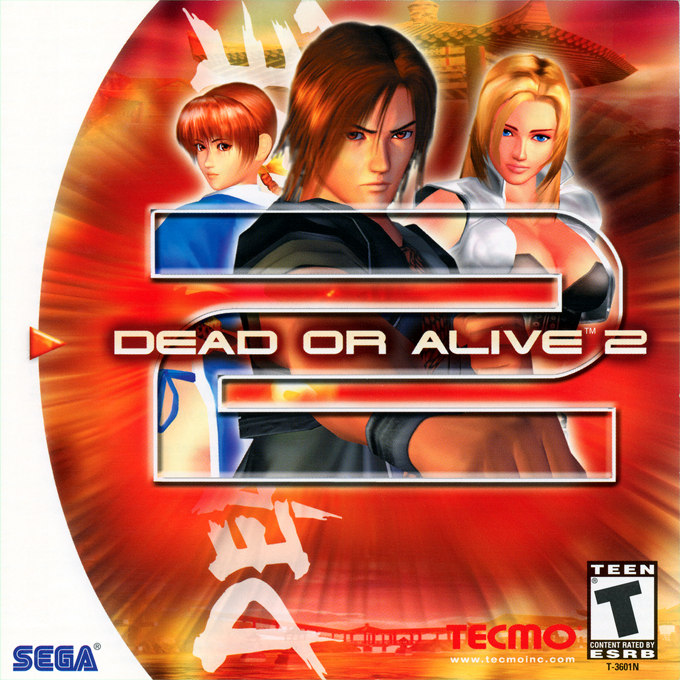
Dead or Alive 2 Dreamcast brings Tecmo and Team Ninja’s fast 3D fighting series to Sega’s console in 2000, following the 1999 arcade original. This entry continues the Dead or Alive World Combat Championship after the death of DOATEC founder Fame Douglas, while a destructive tengu has entered the human world. The Dreamcast release turns that premise into a one- or two-player fighter built around quick strikes, throws, holds, and stages that can change the course of a match.
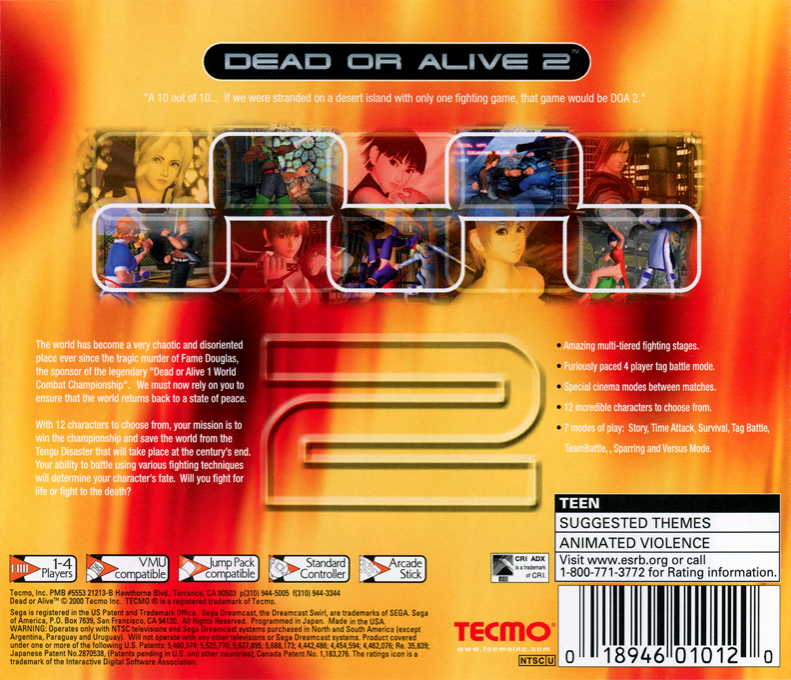
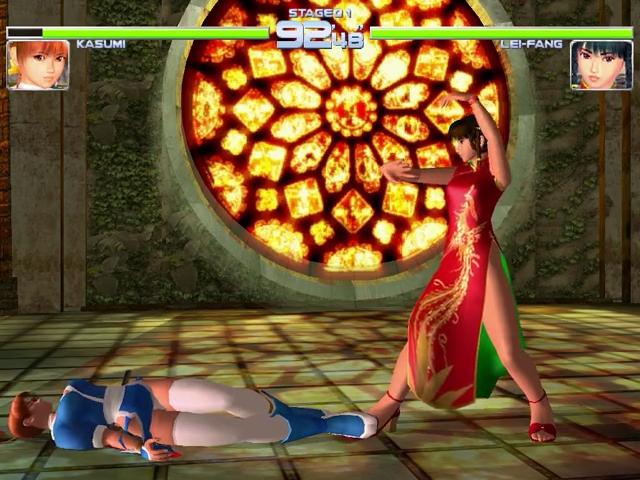
A bout uses punch, kick, throw, and guard inputs alongside directional movement. Straightforward attacks can start strings or launch an opponent, throws punish a defended rival, and the defensive hold lets a fighter intercept an anticipated high, middle, or low attack for a reversal. Timing and reading an opponent matter as much as memorising a long sequence: a missed hold is vulnerable, while a well-chosen counter can abruptly reverse momentum. The game’s rapid exchanges preserve the series’ focus on aggressive movement and reactive defense.
Its arenas are active parts of the contest rather than static backdrops. Fighters can be driven into walls, sent through windows, knocked from ledges, or thrown into hazards, with the action continuing on a lower section when a fall changes levels. Some locations use surfaces such as water or ice that alter the result of ordinary hits by producing a stun. These environmental opportunities give positioning a practical role, whether a player is trying to keep clear of an edge or set up a damaging throw near one.
The Dreamcast game includes Story and Time Attack for solo play, plus Survival, Versus, Sparring, Team Battle, and Tag Battle modes. Tag Battle has each side select two combatants and switch partners during a round; carefully timed changes can extend pressure, assist an attack, or bring in the other fighter before a dangerous situation develops. The mode sits alongside the regular one-on-one formats instead of replacing them, making the game suitable for practice sessions, arcade-style runs, and local competition.
The roster reunites series regulars including Kasumi, Ayane, Ryu Hayabusa, Jann Lee, Leifang, Gen Fu, Tina, Bass, and Zack, and introduces Ein, Helena, and Leon as playable newcomers. Their reasons for entering the tournament connect to the wider DOATEC conflict: Helena seeks answers after violence reaches her family, Ein enters while suffering from amnesia, and Leon pursues the strength promised to someone close to him. Ryu’s story also leads toward the escaped tengu Bankotsubo, the tournament’s supernatural threat. The standard Dreamcast release should not be confused with the later Japanese Limited Edition or PlayStation 2 Hard*Core editions, which changed the available extras and characters.
Dead or Alive 2 was developed for Sega NAOMI arcade hardware, a close relative of the Dreamcast platform, helping the console version retain the arcade game’s detailed character animation and multi-level locations. Tecmo published the game in Japan and North America, while Acclaim Entertainment handled the Dreamcast release in other territories, including the version represented here. As the second main Dead or Alive game, it established the series’ combination of counter-based combat, tag play, and interactive arenas before the franchise moved on to Dead or Alive 3.
Gallery
Details
- Developer
- Tecmo
- Publisher
- Acclaim Entertainment
- Genre
- Fighting
- Players
- 1-4
- Release Date
- July 28, 2000
- System
- Dreamcast