About
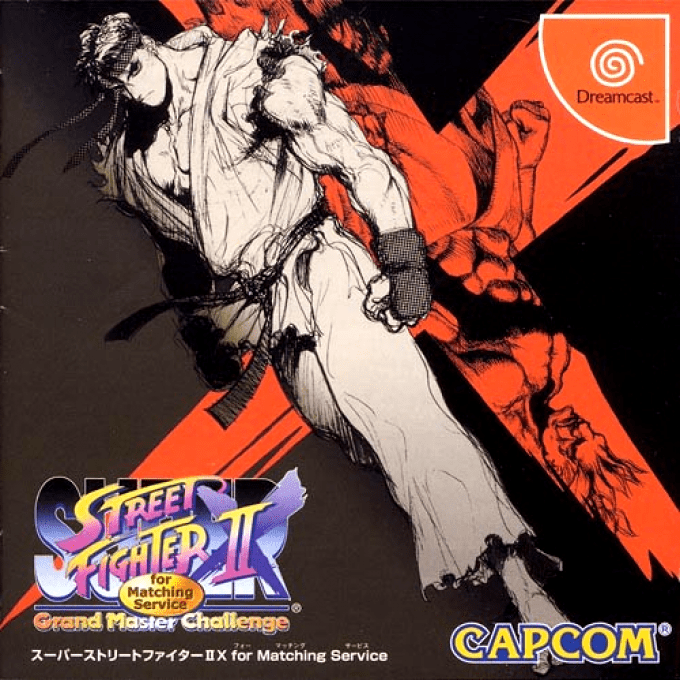
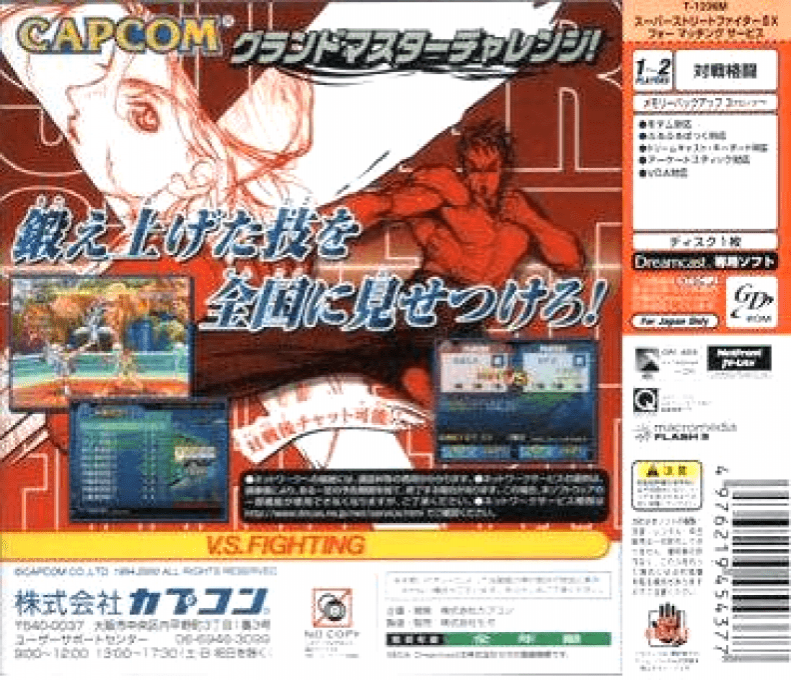
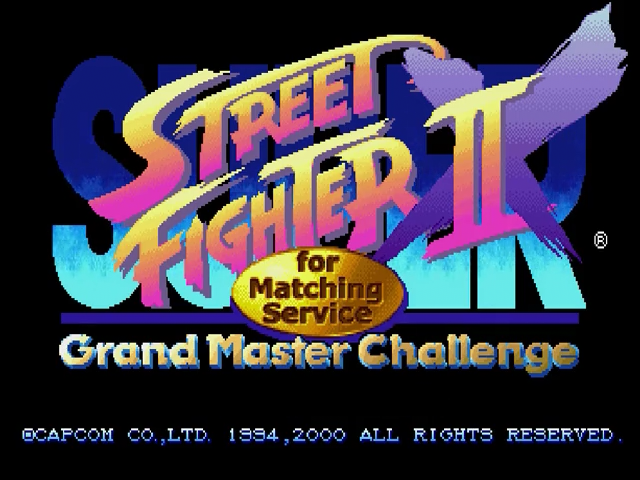
Super Street Fighter II X for Matching Service Dreamcast is Capcom’s Japan-only 2000 edition of its 1994 arcade fighter, Super Street Fighter II X: Grand Master Challenge, known outside Japan as Super Street Fighter II Turbo. Released on 22 December 2000 for Sega’s Dreamcast, it brings the fifth and final competitive revision of the Street Fighter II line to the console with the added purpose signaled by its title: support for Capcom’s Matching Service network. It is not a new Street Fighter II sequel or an ordinary compilation, but a dedicated home version of the CPS-2 game, built around head-to-head matches between the series’ international martial artists.
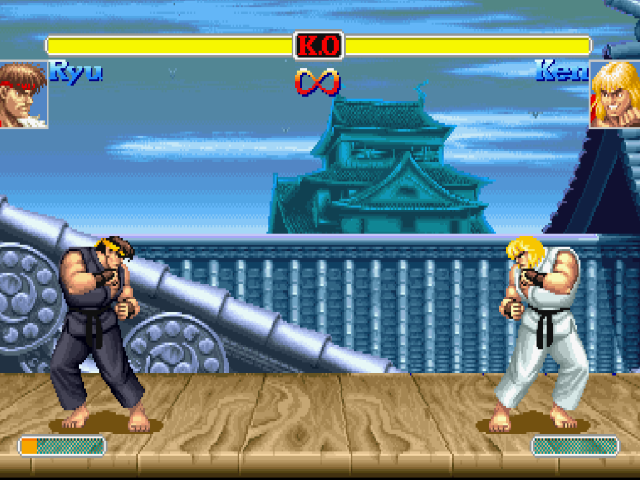
Each round is a one-on-one contest in which players deplete the opponent’s life bar before the timer expires. The familiar six-attack layout divides punches and kicks into light, medium, and heavy strengths, while directional inputs combined with those buttons produce character-specific special moves. Ryu’s Hadoken, Chun-Li’s lightning-fast kicks, Guile’s Sonic Boom, Zangief’s throws, and Dhalsim’s long-reaching limbs all ask players to manage distance differently. Blocking, jumping, anti-air responses, throws, and carefully timed normal attacks remain central, so the game rewards both immediate reactions and an understanding of individual matchups.
Super Street Fighter II X retains the 16-character roster introduced by Super Street Fighter II, including the four New Challengers—Cammy, Dee Jay, T. Hawk, and Fei Long—alongside returning World Warriors and the four boss characters. It also carries the signature addition of the X/Turbo arcade revision: the Super Combo system. Successful attacks and special moves build a gauge, and a full meter lets a fighter unleash a stronger multi-hit technique through the appropriate command. The game also includes the hidden boss Akuma, called Gouki in Japan, as a secret selectable character through a command at the character-select screen.
Speed is another defining part of this version’s rhythm. Rather than treating every match as a fixed-paced recreation, Super Street Fighter II X gives players several speed settings, letting the timing of movement, projectiles, pressure, and reactions change noticeably from one selection to another. The Dreamcast release adds choices beyond the original arcade range, including a very slow setting and faster settings. Its options also restore Street Fighter II bonus stages that had been omitted from the original arcade Super Street Fighter II X, while retaining the core arcade modes and local versus play expected from the series.
The “for Matching Service” label identifies the Dreamcast edition’s period-specific online component. Owners could use the console’s analog modem to arrange and play compatible versus matches through Capcom’s Japanese Matching Service, an unusual feature for a fighting game release of its time. That network service ended on 1 September 2003, so it is best understood as historical context rather than a currently available mode. Offline, the release still serves as a fully featured competitive fighter for Dreamcast players, with the essential rule set, roster, stages, and combat style of Super Street Fighter II X intact.
This edition also differs from the 1997 PlayStation and Sega Saturn appearances of Super Turbo in Street Fighter Collection. It was released separately for Dreamcast in Japan, published by Capcom, and was listed by Sega as a 4,800-yen Dreamcast action game. The game is closely tied to the long-running Street Fighter II legacy, but it precedes later reinterpretations such as Hyper Street Fighter II, Super Street Fighter II Turbo HD Remix, and Ultra Street Fighter II. For players exploring the Dreamcast library, Super Street Fighter II X for Matching Service captures an arcade-era ruleset while documenting an early attempt to connect console fighting-game opponents online.
Gallery
Details
- Developer
- Capcom
- Publisher
- Capcom
- Genre
- Fighting
- Players
- 1-2
- Release Date
- December 22, 2000
- System
- Dreamcast