About
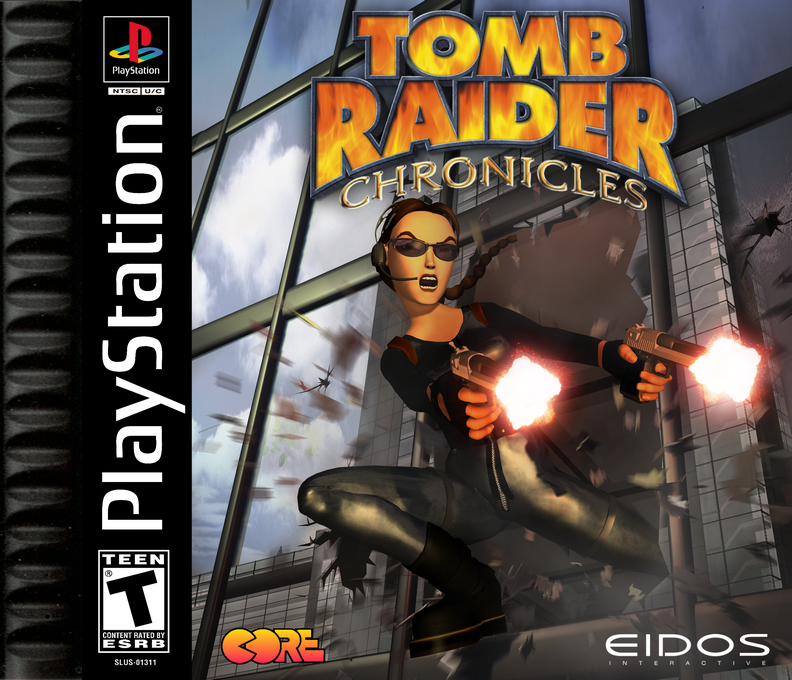
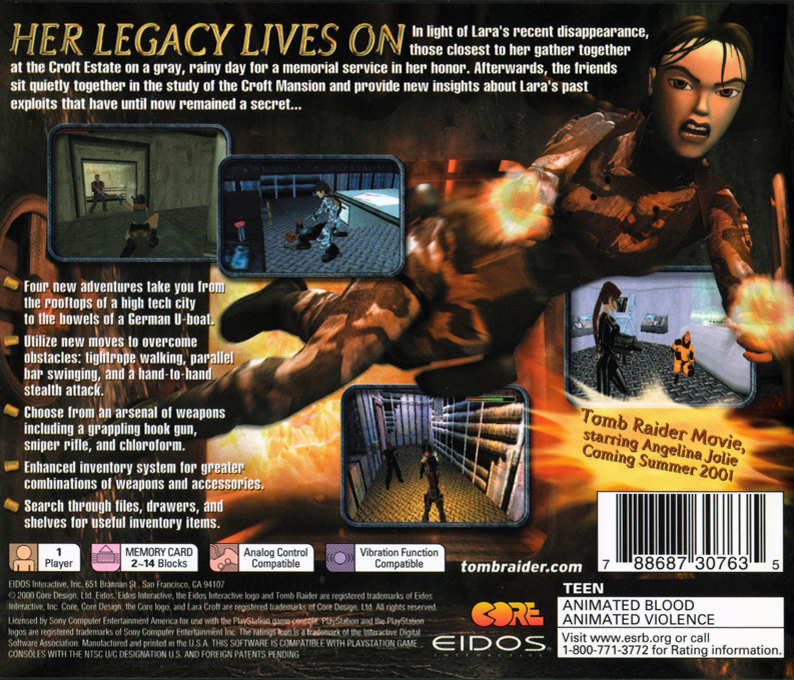
Tomb Raider Chronicles for PlayStation is a 2000 action-adventure game developed by Core Design and published by Eidos Interactive. It is the fifth main entry in the original Tomb Raider series and follows the events of Tomb Raider: The Last Revelation, whose ending leaves archaeologist-adventurer Lara Croft missing beneath the Great Pyramid of Giza. Rather than continuing from that point in a single journey, Chronicles frames its campaign as memories shared at Croft Manor by people who knew Lara. The PlayStation game consequently visits several earlier episodes from her career, tying a new release to familiar characters, artefacts, tombs and the acrobatic exploration that defined the series on Sony's first console.
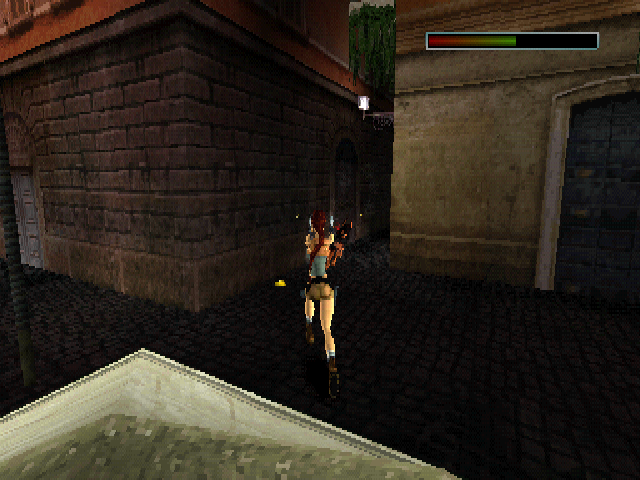
The basic structure retains the third-person action-adventure formula of the preceding games. Players guide Lara through interconnected rooms, ruins, corridors and outdoor spaces, reading the architecture for routes forward while collecting key items, operating mechanisms and avoiding environmental hazards. Her familiar twin pistols are a constant option, while other weapons and supplies are found during individual chapters. Movement is deliberate and precise: Lara can run, walk, jump, climb, swim, crawl, roll and negotiate ledges, ladders and monkey bars. Progress depends as much on judging distance and timing as on combat, since a missed leap, trap or overlooked switch can halt an expedition.
Chronicles adds a handful of moves and tools to that established PlayStation vocabulary. Lara can balance across tightropes, swing from horizontal bars, and flip forward from a crouched position to clear confined spaces. Context-sensitive equipment also broadens specific situations. Binoculars help inspect distant details, a crowbar can open or force certain obstacles, and a grapple gun creates opportunities to cross gaps. The campaign changes its emphasis from episode to episode instead of treating every level alike: some sections lean toward classic tomb exploration, others make room for firefights, underwater sequences or more cautious stealth. This variety gives the game’s separate stories different rhythms even though they share the same core controls and engine.
The first recollection sends Lara into the catacombs of Rome in pursuit of the Philosopher's Stone, with old rivals Larson Conway and Pierre DuPont also involved. Another chapter follows her search for the Spear of Destiny around a Russian naval installation and submarine. A third story turns back to Lara's teenage years on a remote Irish island, where the absence of firearms shifts attention toward evasion, puzzle-solving and supernatural danger. The final tale takes place in New York, where Lara infiltrates a corporate complex connected to her former mentor Werner Von Croy and the Iris artefact. Together, these four locations move the game from ancient architecture to industrial spaces and give the PlayStation adventure a deliberately anthology-like shape.
For its 2000 release, Tomb Raider Chronicles arrived as the original PlayStation generation was approaching its transition, alongside Windows and Dreamcast versions. It is also the last Tomb Raider game built by Core Design on the technology used across this early run of Lara Croft adventures. The console release is a self-contained single-player campaign, while the Windows edition additionally included a level editor that let players build stages with the game's architecture and mechanics. The chronological framing makes Chronicles especially connected to the first Tomb Raider era: it revisits Lara's past, brings back figures from earlier stories, and leaves the question of her fate after The Last Revelation hanging over every memory.
Tomb Raider Chronicles remains a period piece of late PlayStation action-adventure design, built around fixed camera angles, tank-style movement, environmental puzzles and compact chapters that demand patient observation. Its premise lets it explore several tones within one game, from Roman catacombs and naval danger to Irish folklore and a modern high-security facility. For players tracing the original Core Design series on PS1, it serves as both a continuation of The Last Revelation and a collection of flashbacks that look back across Lara Croft's formative expeditions before the franchise moved on to a new generation.
Gallery
Details
- Developer
- Core Design
- Publisher
- Eidos Interactive
- Genre
- Other Adventure
- Players
- 1
- Release Date
- November 24, 2000
- System
- PS1