About
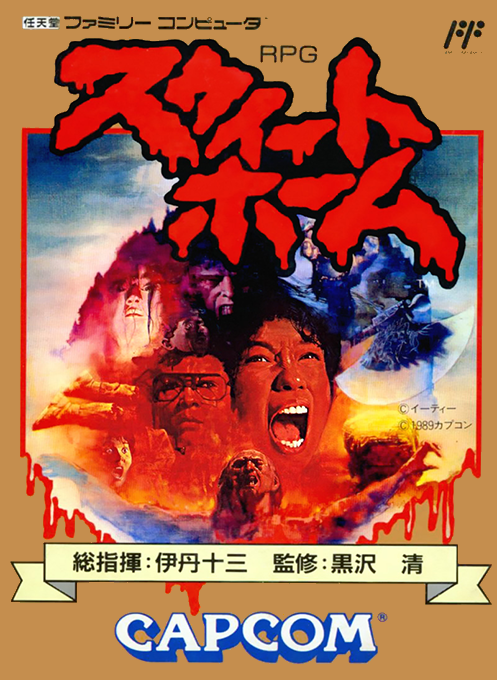
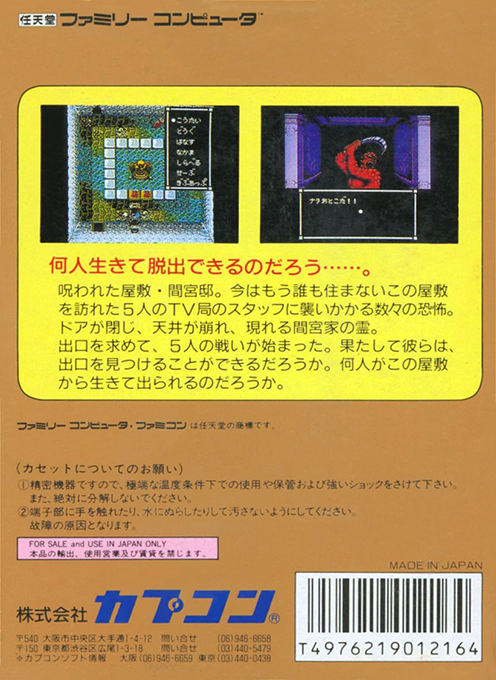
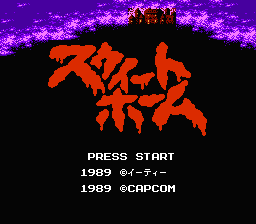
Sweet Home is a horror role-playing game developed and published by Capcom for the Family Computer. It arrived in Japan on December 15, 1989, as a Famicom-only release; it never received an official release outside Japan. Tokuro Fujiwara directed the game, bringing an unusually cinematic horror treatment to an 8-bit RPG.
Five documentary filmmakers enter the decaying mansion of vanished painter Ichiro Mamiya to photograph and recover his valuable frescoes. Kazuo, Akiko, Taro, Asuka, and Emi are soon sealed inside by a hostile apparition, and the search becomes an escape through a building crowded with ghosts, monsters, traps, messages, and traces of earlier visitors.
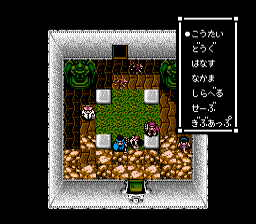
Exploration is built around a single interconnected mansion rather than a conventional overworld. The five characters can be divided into parties of up to three, with the player switching between groups to cover the estate. Notes, diary entries, and hidden messages supply story fragments as well as clues, so advancing depends on revisiting rooms after finding the needed item or solution.
Random encounters use menu-driven, first-person turn-based combat. The party can attack, employ equipped weapons, use restorative supplies, or try to flee, while experience gains improve the characters. Scarce weapons and healing items make both combat and inventory decisions consequential, especially when separated parties cannot immediately help one another.
Each investigator carries a personal tool that is central to solving the mansion's obstacles: Kazuo's lighter burns through rope, Taro's camera reveals writing in frescoes, Emi's lockpick opens locked doors, Asuka's vacuum clears glass and debris, and Akiko's medical kit treats ailments. With room for only a personal tool, weapon, and two ordinary items per character, moving and dropping supplies is part of the puzzle design.
Death is permanent. A character killed by a trap or enemy remains gone for the rest of the game, although comparable utility items can be found near a fallen companion to prevent the expedition from becoming impossible. The story continues with the survivors, and the final outcome changes according to how many of the five escape after the confrontation with Lady Mamiya.
The game was developed alongside Kiyoshi Kurosawa's 1989 horror film of the same name, sharing its premise and characters while expanding the story for interactive exploration. Its mansion setting, limited inventory, puzzle-led survival, brutal consequences, and door-transition presentation later made it a frequently noted precursor to Capcom's Resident Evil.
Gallery
Details
- Developer
- Capcom
- Publisher
- Capcom
- Genre
- JRPG
- Players
- 1
- Release Date
- December 15, 1989
- System
- NES
/Kaijuu_Monogatari.png)