About
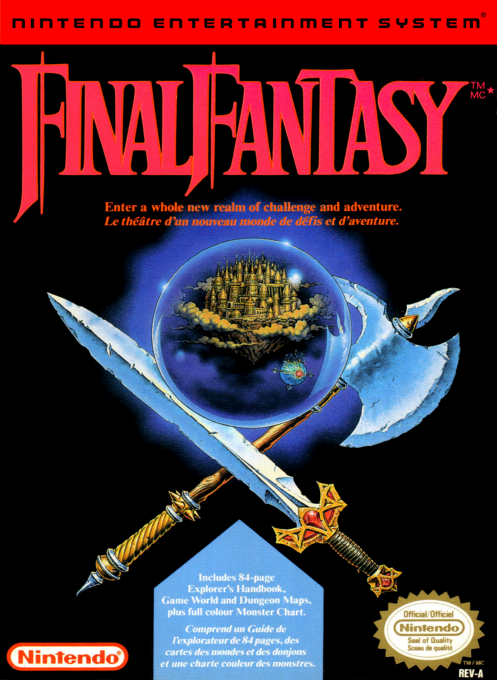
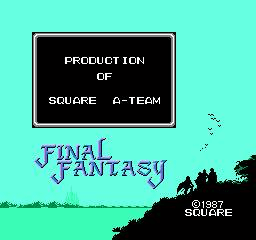
Final Fantasy is the original entry in Square's long-running role-playing series, released for Japan's Family Computer in 1987 and later brought to North America for the Nintendo Entertainment System. Created under director and designer Hironobu Sakaguchi, it pairs character art associated with Yoshitaka Amano and a score by Nobuo Uematsu with an ambitious console adventure. The NES version is a foundational 8-bit RPG: a single-player journey across a fantasy world, with Square as its original developer and publisher.
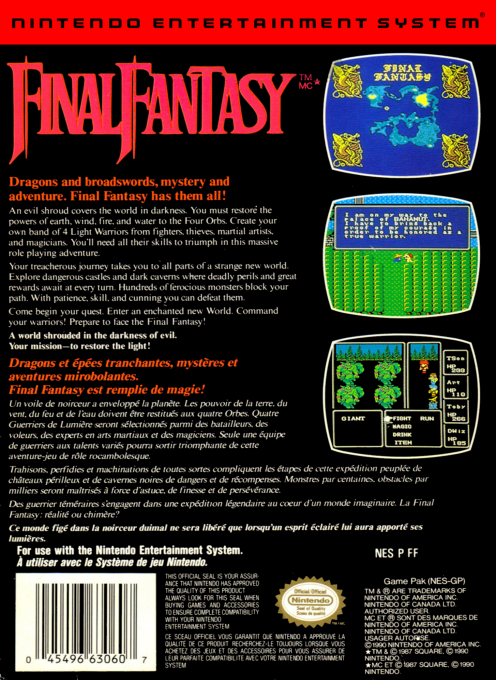
The quest begins when four young adventurers arrive in the kingdom of Cornelia, each carrying an elemental crystal. Named the Warriors of Light, they are sent to rescue the kidnapped Princess Sarah from the knight Garland, but that early mission opens into a larger effort to restore the world's fading elemental balance. The story moves from castles and towns to caves, ruins, and distant temples, gradually connecting four crystals, ancient prophecy, and a threat that reaches across time.
Before setting out, players assemble a party of four by choosing from six jobs: Fighter, Thief, Black Belt, Red Mage, White Mage, and Black Mage. This opening decision defines the group's strengths for the entire adventure. A hardy Fighter can anchor the front line, while the spellcasting jobs bring different magical specialties; mixing roles means weighing durability, healing, damage, equipment access, and the limited resources available during a dangerous expedition.
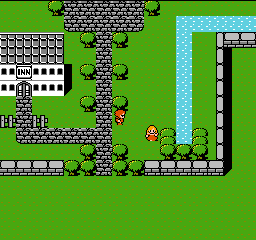
Exploration unfolds from an overhead world map filled with settlements, dungeons, forests, mountains, seas, and later new routes opened by key vehicles and items. Towns provide inns, shops, information, and places to prepare, while dungeon corridors conceal treasure, traps, and monsters. Progress is deliberately tied to discovery: solving local problems and recovering important objects expands the world, revealing new places to investigate and stronger challenges to overcome.
Battles use a menu-driven, turn-based system in which the party faces enemy groups and chooses attacks, spells, items, or escape attempts before the round plays out. Weapons and armor shape a character's combat role, and magic is purchased in towns rather than learned automatically. Spells are arranged in level-based charges, so healing, elemental attacks, protective effects, and status cures must be budgeted carefully between rests instead of being cast without limit.
Victories award experience and gil, allowing the party to gain levels and buy better equipment, supplies, and spells. The rhythm of exploration, combat, retreat, and preparation is central to the NES experience: a difficult new area may require a return to town, more training against nearby enemies, or a revised plan for conserving magic. Later in the game, the party can receive upgraded class forms, rewarding the initial job choices with stronger abilities and equipment options.
Final Fantasy stands at the beginning of a series that would become one of gaming's defining RPG franchises, yet this first game is its own compact adventure with a distinct 8-bit identity. Its original Famicom and NES editions established enduring ideas such as crystals, Chocobos appearing in the wider series context, named magic traditions, airships, and a party of heroes confronting a world-scale crisis. For players interested in the roots of console role-playing games, it remains a direct route to the systems and fantasy vocabulary that helped shape the genre.
Gallery
Details
- Developer
- Squaresoft
- Publisher
- Nintendo
- Genre
- JRPG
- Players
- 1
- Release Date
- July 12, 1990
- System
- NES