About
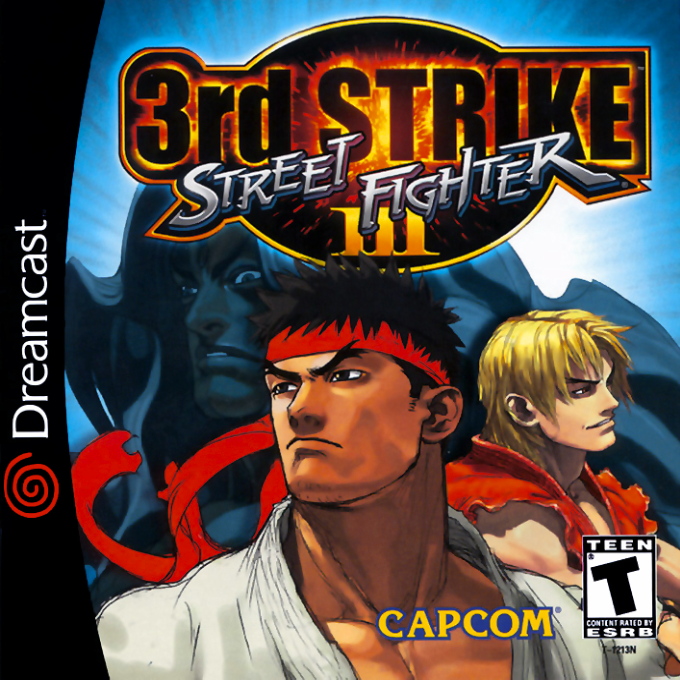
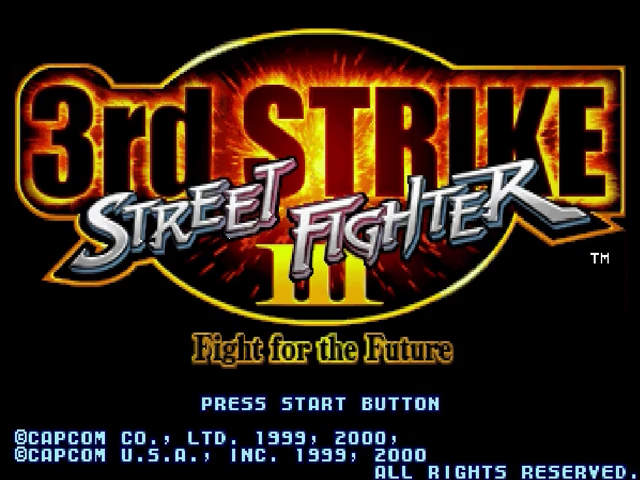
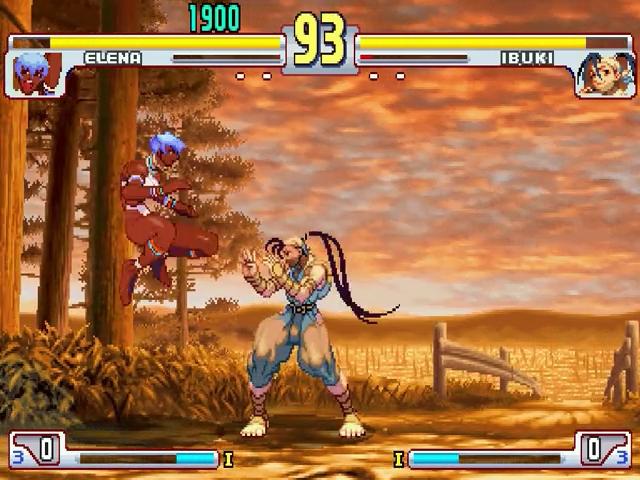
Street Fighter III: 3rd Strike – Fight for the Future brings Capcom’s final Street Fighter III update to Dreamcast, delivering a fast, demanding two-dimensional fighter built around split-second decisions. Originally released for arcades in 1999 and brought to Dreamcast in 2000, it follows New Generation and 2nd Impact as the series’ definitive third chapter. The presentation is unmistakably late-1990s Capcom: richly animated hand-drawn fighters, dramatic stages and a soundtrack that leans into hip-hop, house, jazz, drum and bass, and techno. Every round makes the game’s central promise clear: thoughtful offense matters, but calm defense can turn a seemingly lost fight around.
That tension comes from the parry system. By tapping forward at the instant a high or mid attack connects, or down against a low strike, a player can deflect the blow rather than block it and immediately look for a response. It is a high-risk answer rather than a safety net—mistime the input and the attack still lands—but it gives both players reasons to test habits, vary their timing, and stay alert. Air parries, throw techs, high jumps, EX special moves and powerful Super Arts give matches a deep set of options without losing the clear, direct feel of classic Street Fighter.
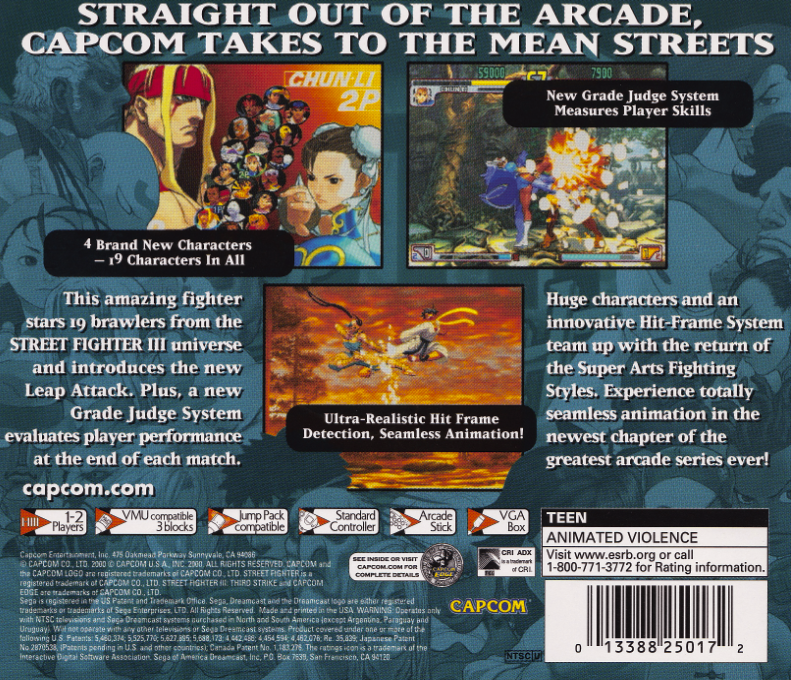
The Dreamcast edition carries the full fighting framework of 3rd Strike, including the post-match Judgement System, which evaluates the winner’s performance across categories such as offense, defense, technique and bonus actions. Its arcade mode sends each chosen fighter through a run of opponents toward Gill, the intimidating ruler of the Illuminati, while local versus play lets two people settle the score on one screen. The returning Parry the Ball bonus game and the new Crush the Car challenge provide short breaks from regular matches without straying from the game’s emphasis on timing and execution.
Its cast is one of the series’ most individual. Ryu, Ken and Chun-Li supply familiar foundations, while Alex, Dudley, Ibuki, Makoto, Elena, Yun, Yang, Remy, Q, Twelve and others ensure that no single approach defines the game. A boxer who pressures at close range, a swift ninja with unusual angles, a powerful karate specialist, capoeira movement, elastic limbs and strange experimental fighters all sit side by side. Each character chooses one of several Super Arts before a match, so character selection is only the first decision; the selected super meter can reshape how a familiar matchup plays.
Dreamcast makes room for practice that an arcade cabinet could not easily offer at home. Training mode lets players record a sequence for the opposing character and replay it, creating repeatable situations for working on parries, reversals, defensive escapes or combo routes. That practical tool is especially valuable in a game where many of the strongest answers depend on exact timing. Instead of hoping the computer produces a troublesome move again, players can build the scenario themselves and test a response until it becomes reliable.
The console version’s standout extra is System Direction, an unusually extensive rules-customization menu. It can be used to alter core settings such as high jumps, EX-move cost, parry behavior and input rules, then save a preferred configuration to the VMU. The standard settings preserve the game’s default design, while customized rules can turn a casual set into an experiment, a training exercise, or a gentler introduction for new players. It is a distinctly Dreamcast-era feature: the arcade game’s competitive foundation remains intact, but the home release invites players to explore how that foundation works.
Street Fighter III: 3rd Strike on Dreamcast is an offline home conversion, so its competitive play is face-to-face rather than online. Capcom’s 2011 Street Fighter III: 3rd Strike Online Edition later retained the arcade game’s fundamentals while adding HD presentation, online matches, replay sharing, trials and further training features. That makes the Dreamcast release a different proposition, not a substitute for a modern online service: it is a substantial local version whose recording practice and System Direction tools reward curiosity long after the first arcade clear.
For Dreamcast owners, 3rd Strike remains a demanding, expressive fighting game with enough depth for sustained one-on-one play. Beginners can appreciate the strong animation, varied personalities and immediate excitement of a well-timed special move; experienced players can spend years studying spacing, meter use, parry timing and matchups. Whether the goal is to learn a single character, challenge a friend on the couch, or revisit one of Capcom’s most technical fighters in its original console era, this edition gives the fight room to breathe.
Gallery
Details
- Developer
- Capcom
- Publisher
- Virgin Interactive
- Genre
- Fighting
- Players
- 1-2
- Release Date
- October 4, 2000
- System
- Dreamcast