About
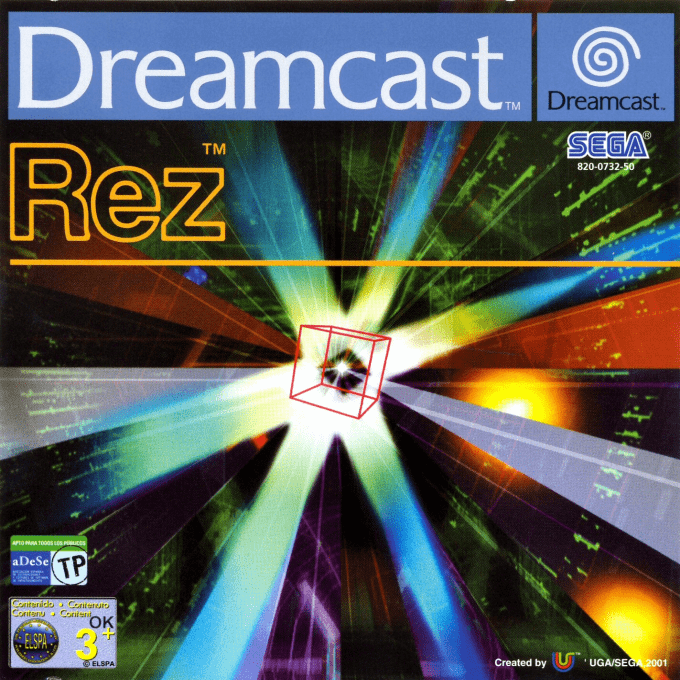
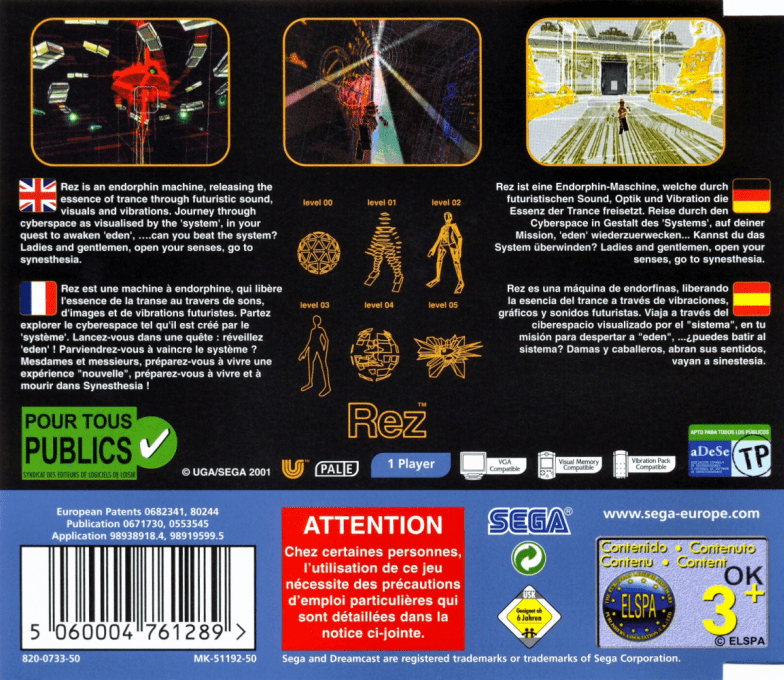
Rez for Dreamcast is a single-player music-driven rail shooter developed by Sega's United Game Artists and published by Sega. It arrived in Japan in November 2001 and reached Europe in early 2002; the Dreamcast edition was not released in North America. Directed by Jun Kobayashi and produced by Tetsuya Mizuguchi, it puts the player in a stylized computer network where electronic music, wireframe graphics, and shooting actions are designed to work as one experience. Rather than presenting a conventional battlefield, the game frames its action as a journey through a digital system in crisis.
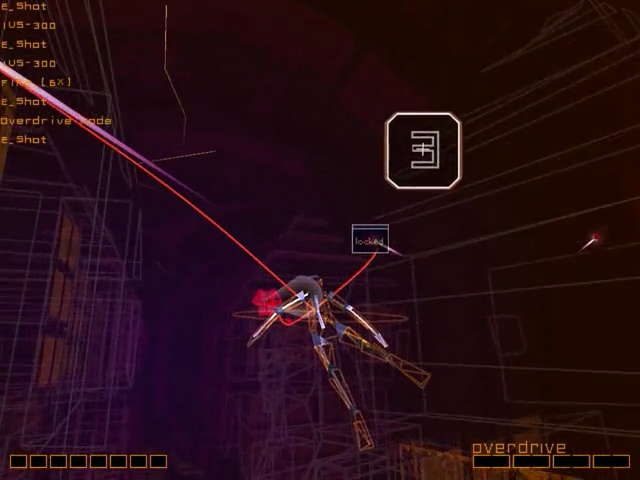
The player controls a hacker moving automatically through each Area while aiming a cursor at hostile programs. Holding the attack button locks on to several targets at once, then releasing it fires a volley of shots. Each successful hit adds a sound synchronized to the stage track, so enemy encounters build rhythmic patterns alongside the music instead of simply interrupting it. The Dreamcast controller's vibration accessory can also respond to the action, reinforcing the connection between the firing, sound, and visuals. It is a shooter built around targeting and timing, but it does not require the player to perform to a separate rhythm-game input sequence.
Progress comes from clearing enemies and data objects across the game's Areas. Collecting Progress Nodes raises the avatar through successive forms, improving its capability; taking damage reduces that level, and another hit at the lowest state ends the run. Players can also collect Overdrive Nodes for a powerful screen-clearing attack. The levels have layers that change as advancement continues, introducing different arrangements of enemies, scenery, and musical material. Bosses close out the Areas, while score-focused and challenge-oriented options reward repeat runs and more complete play.
Rez's story is conveyed chiefly through its imagery. In a future burdened by information overload, the Project K network relies on an artificial intelligence called Eden. Eden has withdrawn deep inside the system, and the hacker's mission is to pass through infected defenses and reach it. The sparse presentation leaves room for the visual progression to do much of the storytelling: abstract pathways, geometric enemies, and shifting colors replace lengthy dialogue and cutscenes. Its visual approach drew on the abstract art associated with Wassily Kandinsky, while its electronic score was assembled with contributions from artists including Ken Ishii, Joujouka, Coldcut, Adam Freeland, and Oval.
The Dreamcast release is an important part of Rez's original dual-platform launch alongside PlayStation 2. Japan received both versions on November 22, 2001, while the localized Dreamcast version later appeared in Europe; this regional split makes the Dreamcast edition distinct from the North American release history. Sega later revisited the game as the high-definition Xbox 360 release Rez HD and as Rez Infinite, an expanded edition with virtual-reality support and the new Area X. Those later versions broadened the game's reach, but the Dreamcast original remains the foundation: a compact arcade-style shooter whose lock-on system turns every encounter into part of its audiovisual design.
Gallery
Details
- Developer
- United Game Artists
- Publisher
- SEGA
- Genre
- Shoot 'em Up
- Players
- 1
- Release Date
- January 11, 2002
- System
- Dreamcast