About
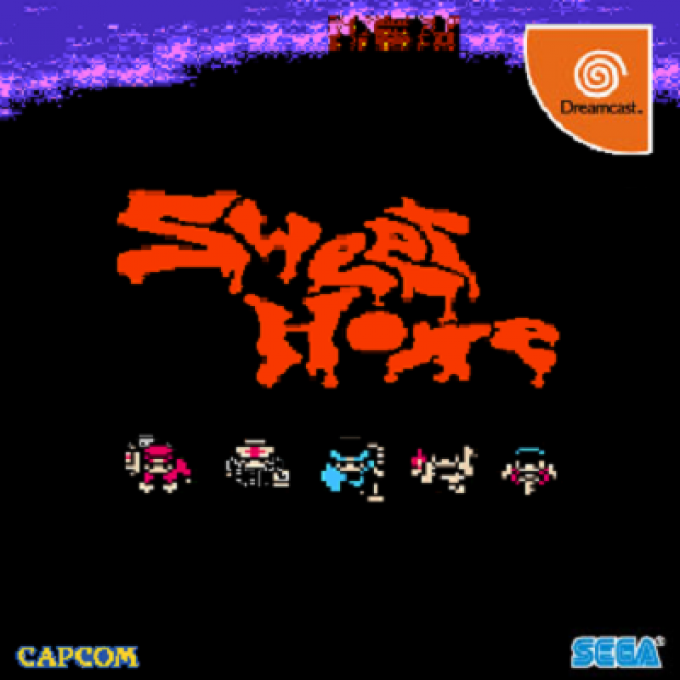
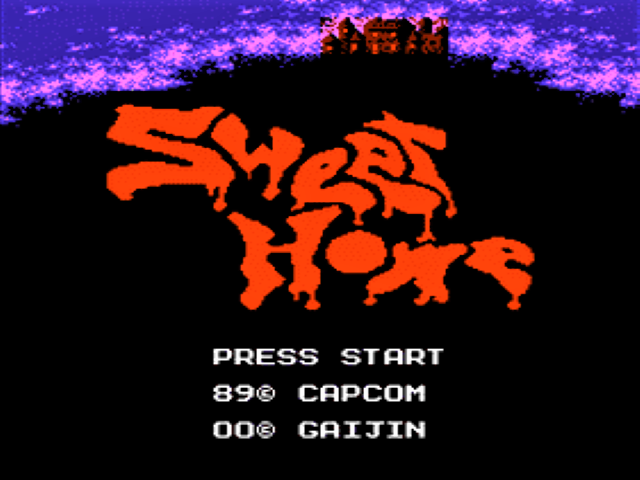
Sweet Home Dreamcast is a 2012 Dreamcast release credited to Divagante that presents Capcom’s 1989 Japanese Famicom horror role-playing game. The underlying game was developed and published by Capcom for one player and was never officially released outside Japan. Based on the Japanese film of the same name, it follows five documentary-makers who enter the abandoned mansion of painter Ichirō Mamiya to investigate its lost frescoes. A spectral warning turns their assignment into an escape from a sprawling, dangerous house.
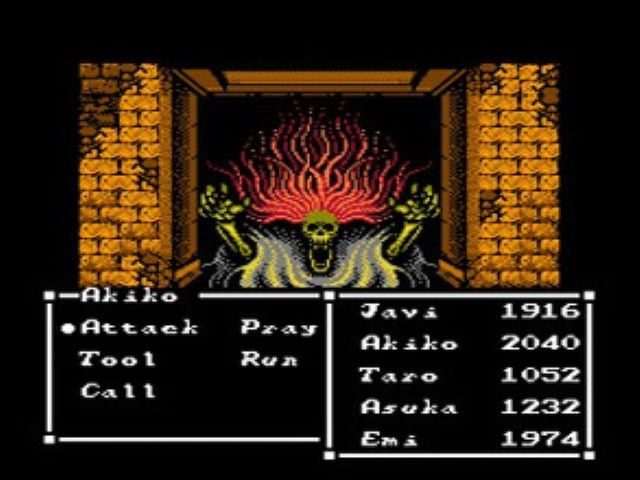
The adventure combines overhead exploration with menu-driven, turn-based encounters. Players move through the mansion’s connected rooms, search for supplies and clues, and face hostile supernatural creatures while managing a limited stock of weapons and restorative items. Progress depends on opening routes, revisiting earlier areas once new tools are available, and deciding when a fight is worth the cost. The Dreamcast release retains the deliberate role-playing pace and horror-focused structure of the Famicom game rather than changing it into an action game.
A key part of Sweet Home is its five-person cast: Kazuo, Akiko, Taro, Asuka, and Emi. The group can be divided into smaller parties, and the player can change between them while exploring different sections of the mansion. Each character brings a useful personal tool—such as a camera, lighter, medical kit, lockpick, or vacuum cleaner—that helps overcome specific obstacles. This makes party placement part of the puzzle design, since a route that one team cannot clear may be accessible to another.
The mansion is more than a backdrop for battles. Notes and messages left behind reveal fragments of its past and can point toward solutions, while environmental dangers create moments where a quick response matters. Character deaths are permanent for the remainder of a playthrough, so losing a member also changes the team’s available skills. Replacement items can sometimes be found, but the loss still alters the path forward. The number of survivors at the end affects which of the game’s multiple endings is seen.
Sweet Home was released for the Famicom in Japan in December 1989, with Capcom’s Tokuro Fujiwara associated with its direction and filmmaker Juzo Itami credited as producer. Its story shares a premise and characters with the film but develops the mansion investigation into a longer interactive scenario. The release’s mix of exploration, item management, puzzles, party switching, and unsettling imagery was unusual for an 8-bit console role-playing game and gives Sweet Home a distinct identity among late-1980s Japanese games.
The game is frequently discussed as an important early influence on survival-horror design. Its enclosed mansion, resource pressure, scattered narrative details, puzzle-led backtracking, and consequences for lost characters anticipated ideas that Capcom later revisited in Resident Evil. For Dreamcast players, Sweet Home offers a single-player route into that earlier Capcom design: a methodical haunted-house RPG built around planning, discovery, and the survival of an entire investigation team.
Gallery

Details
- Developer
- Divagante
- Publisher
- Capcom
- Genre
- Survival Horror, Other RPG
- Players
- 1
- Release Date
- July 18, 2012
- System
- Dreamcast