About
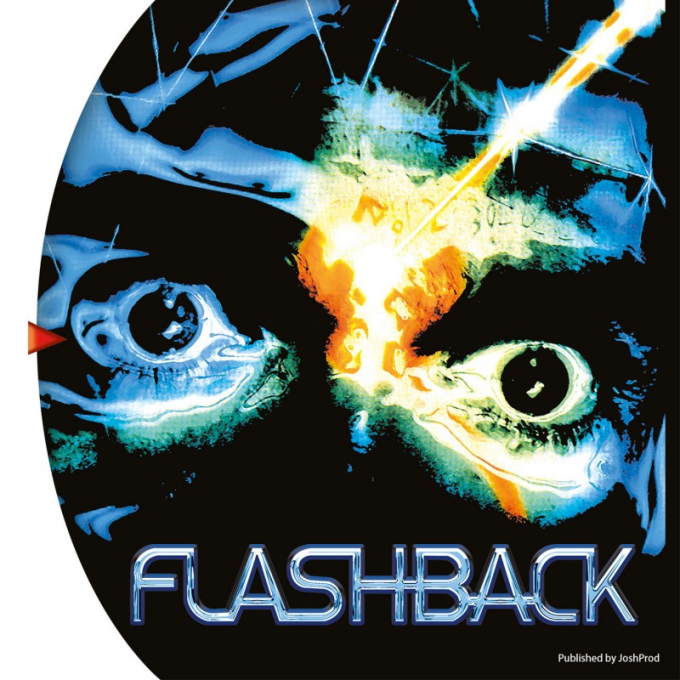
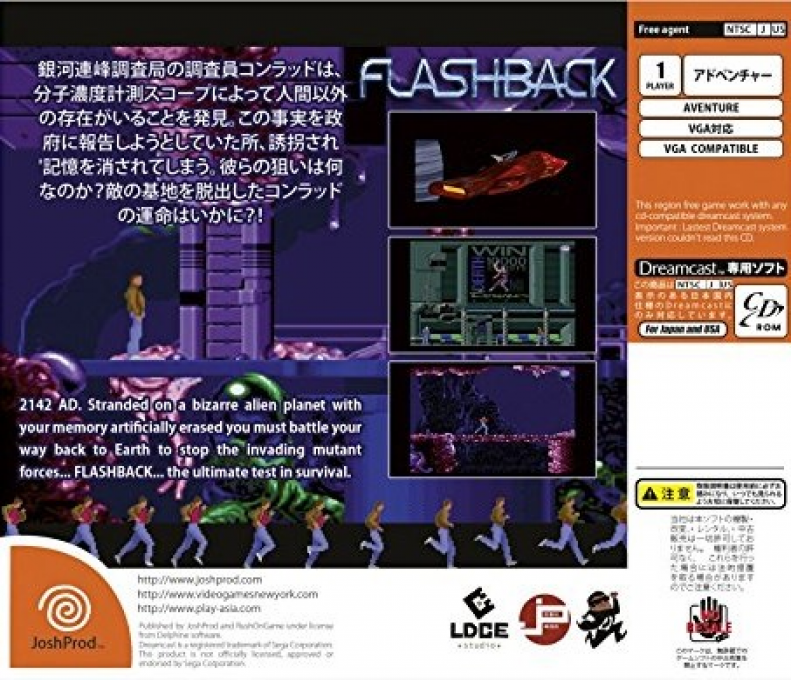
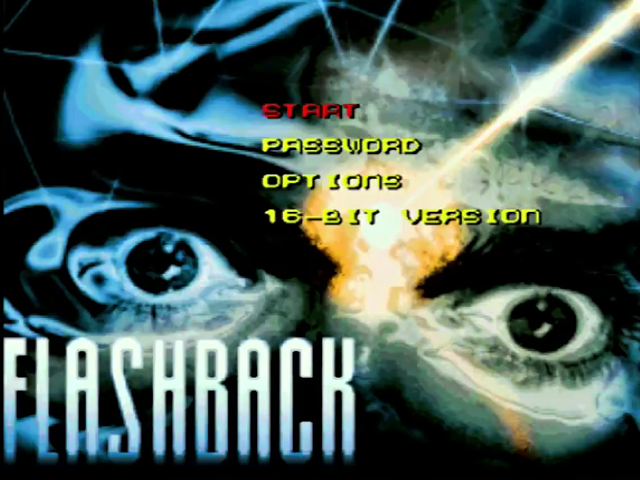
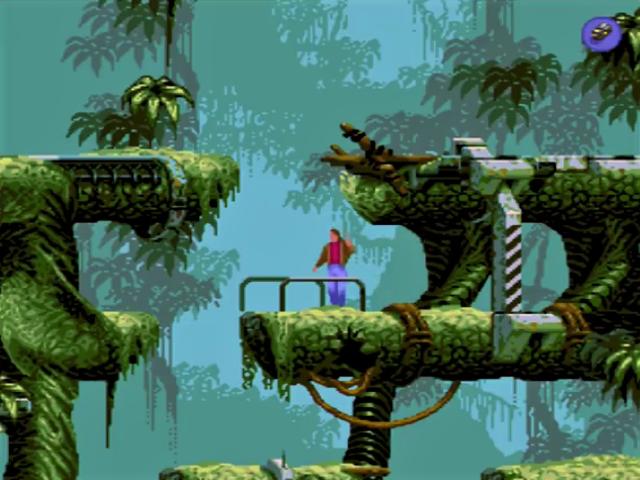
Flashback: The Quest for Identity for Dreamcast is a 2017 physical release of Delphine Software International’s landmark 1992 science-fiction cinematic platform adventure. Published for Sega’s discontinued console by JoshProd, it brings Conrad B. Hart’s far-future escape story to Dreamcast in an officially licensed edition. The game retains the deliberate, screen-by-screen exploration, hand-drawn science-fiction locations, and character animation that defined the original, while presenting a version assembled for a system that had not received the game during its original run.
The adventure begins in 2142 after Conrad, a young agent and researcher, awakens in the wilderness of Titan with his memories missing. A recording left by his earlier self gives him a direction, but recovering the truth becomes dangerous when he learns that hostile alien infiltrators are operating within human society. The journey moves from Titan to New Washington and beyond, using a mystery-driven premise to connect its hostile settlements, underground routes, alien installations, and other futuristic environments. Conrad’s attempt to reach safety steadily becomes an effort to expose a threat to Earth.
Play unfolds as a mix of precision platforming, exploration, action, and environmental problem solving. Conrad can run, jump, crouch, climb onto ledges, drop between levels, use elevators, and draw his weapon, but every action has a purposeful, animated feel that asks players to judge distance and timing carefully. Large falls are dangerous, enemy gunfire must be managed, and progress often depends on studying the layout of a location rather than simply moving right. Screens stack paths at different heights, so finding a switch, an access route, or a safe descent can be as important as surviving a firefight.
Conrad’s equipment supports that cautious approach. His pistol provides a way to confront guards and other threats, while his energy shield absorbs damage until it needs to recharge. A portable force field can temporarily block hostile shots and create breathing room in exposed areas. Later situations add tools that open new routes, including a teleportation device used to reach places that cannot be approached on foot. Passwords, items, terminals, dialogue, and specific objectives give the game an adventure-game texture without changing its direct character control. It is a single-player quest built around learning each area, completing the immediate task, and pushing toward the next stage of Conrad’s investigation.
The Dreamcast edition is notable because it is not a remake of Flashback. It uses the original game as its foundation and combines elements associated with earlier releases, including MS-DOS visual assets and cutscenes with music from the Amiga version. Its presentation includes character speech, and Dreamcast controls can be configured for the console’s controller. VMU support allows saves to be made during play, while optional display filters offer an alternate look. The release also includes emulation options for Western and Japanese Mega Drive versions, giving the disc both the tailored Dreamcast version and a way to examine two historical console editions.
Flashback: The Quest for Identity arrived originally under different regional naming, with the longer subtitle used in North America, and it has since appeared on numerous computers and consoles. Its Dreamcast release is therefore part of a long history of ports rather than a new sequel or the later remake. The game’s combination of rotoscoped-looking movement, cinematic framing, science-fiction storytelling, and demanding spatial challenges makes it a distinctive entry in Delphine’s catalogue. For Dreamcast players, this edition preserves Conrad Hart’s original mission while adding system-specific conveniences and archival extras to a classic 2D adventure.
Gallery
Details
- Developer
- Delphine Software International
- Publisher
- Josh Prod
- Genre
- Platformer
- Players
- 1
- Release Date
- December 6, 2017
- System
- Dreamcast