About
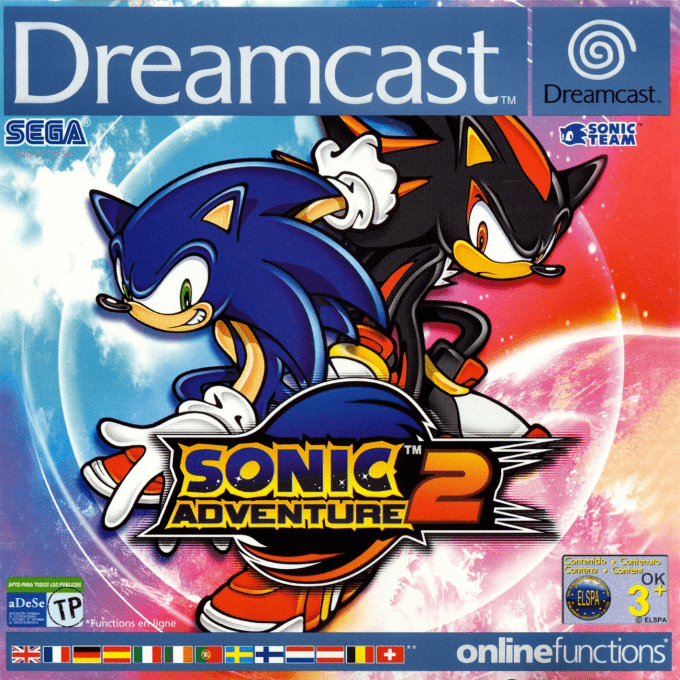
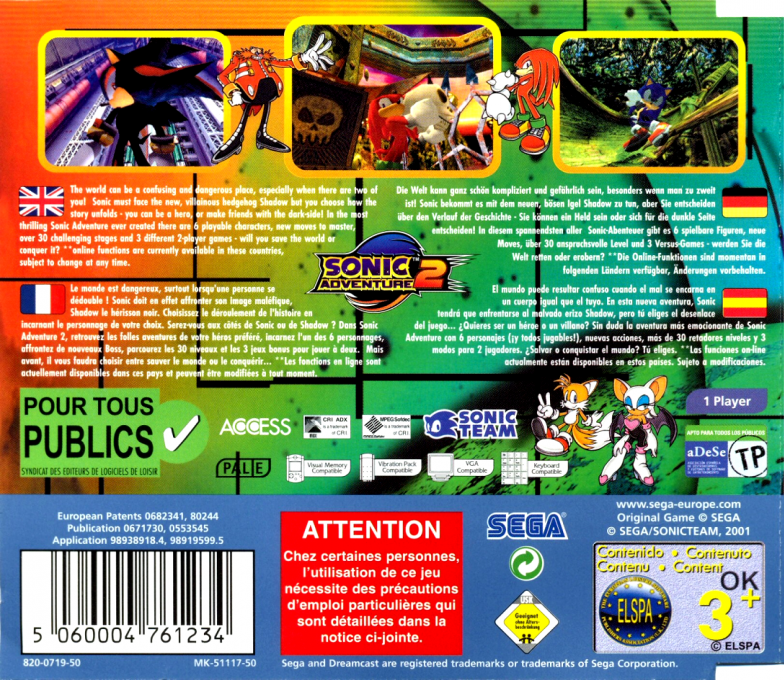
Sonic Adventure 2 on Dreamcast opens with Sonic fleeing from a military helicopter after G.U.N. mistakes him for Shadow, a black hedgehog who has just appeared with extraordinary Chaos Control powers. The ensuing conflict is told through two opposing campaigns. On the Hero side, Sonic, Tails and Knuckles work to clear Sonic’s name and stop a catastrophe; on the Dark side, Shadow, Dr. Eggman and Rouge pursue Eggman’s plan around the Chaos Emeralds and the long-buried Space Colony ARK. Playing both stories fills in the larger picture, and their converging events lead to a final chapter that changes the stakes from a rivalry into a threat to the planet.
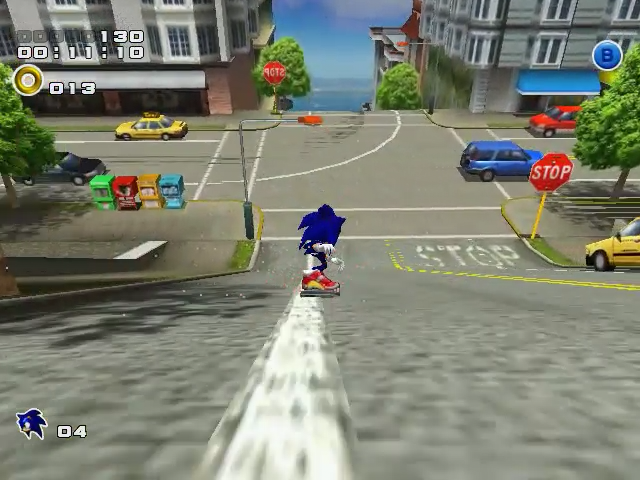
Sonic and Shadow supply the game’s high-speed action stages. Their routes are built around downhill momentum, rails, loops, springs and alternate paths, with homing attacks and movement upgrades opening different possibilities as the adventure progresses. Sonic is typically racing toward an objective while Shadow serves the Dark campaign with a parallel style of play, so the paired levels echo one another without making the two sides feel identical. The presentation frequently turns their pursuit into set pieces: a city escape, elaborate mechanical facilities, ancient ruins and the ARK all give the characters room to build and carry speed.
Tails and Eggman approach the same world from inside armed walkers. Rather than rushing through a course, they lock on to enemies, fire volleys of shots and use their machines’ strength to clear obstacles. Their stages mix platforming with enemy-filled rooms, switches and defensive combat, giving the campaigns a slower, more deliberate counterpoint to Sonic and Shadow. Knuckles and Rouge provide a third structure: each is sent into wide areas to locate three objects or Master Emerald fragments. Their radar, climbing and gliding turn those searches into navigation challenges, while enemies and traps make the hunt more than a simple scavenger task.
Every action stage can be revisited with mission goals and a performance rank, inviting a different kind of replay than merely finishing the story. Time, rings, score and other stage-specific demands encourage players to learn shortcuts, improve their routes and experiment with upgrades. Completing the campaigns also creates a reason to return across the full six-character roster, because the varied styles are distributed between the Hero and Dark paths rather than placed in separate, disconnected modes.
Away from the main adventure, the Chao Garden is a substantial side activity. Players can raise the small Chao with fruit, animals and Chaos Drives, influence whether they grow toward Hero or Dark alignments, teach them at the Chao Kindergarten and enter them in races. Dreamcast owners can also transfer a Chao to the Visual Memory Unit for Chao Adventure 2, then bring it back to the game; this version-specific connection supports additional care and progression beyond the television screen. The garden gives the game a calmer loop beside its urgent story, with Chao development reflecting the characters who spend time with them.
The original Dreamcast release also includes two-player play, letting competitors take selected character styles into head-to-head events. It should be distinguished from Sonic Adventure 2 Battle, the later GameCube conversion: Battle retained the central story and stages but expanded multiplayer and altered parts of the Chao feature set. Sonic Adventure 2 on Dreamcast is therefore the original release, with its own VMU-linked Chao Adventure 2, Dreamcast-era online Chao services when they were available, and the same six-character campaign structure at its core.
Gallery
Details
- Developer
- Sonic Team
- Publisher
- SEGA
- Genre
- Platformer
- Players
- 1-2
- Release Date
- June 23, 2001
- System
- Dreamcast