About
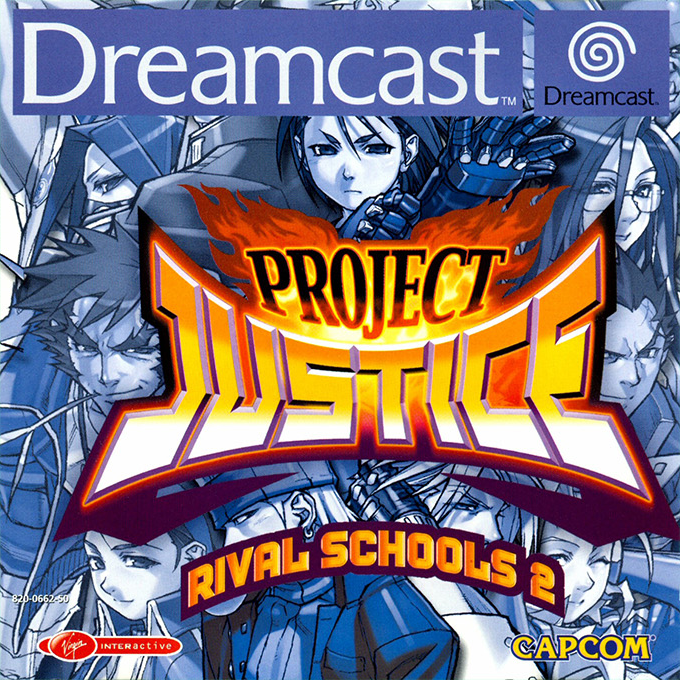
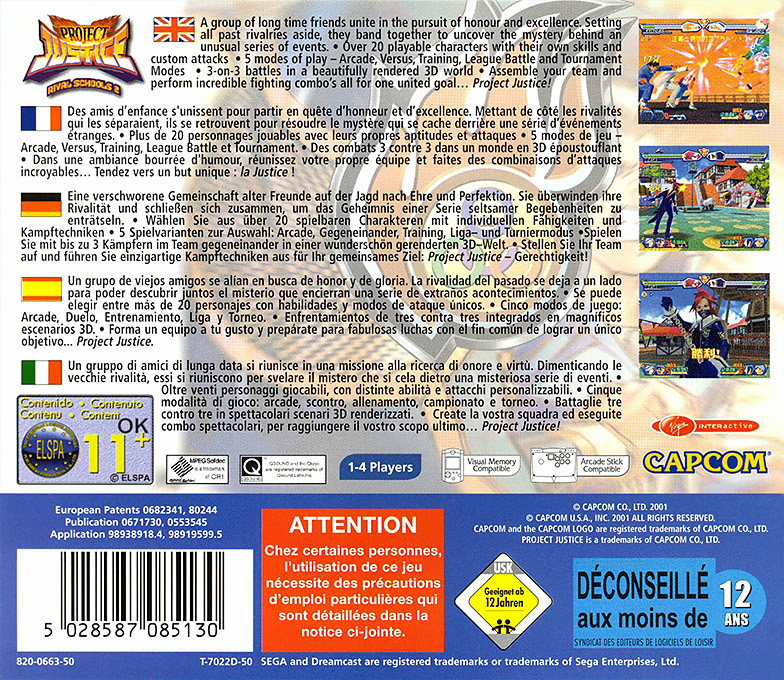
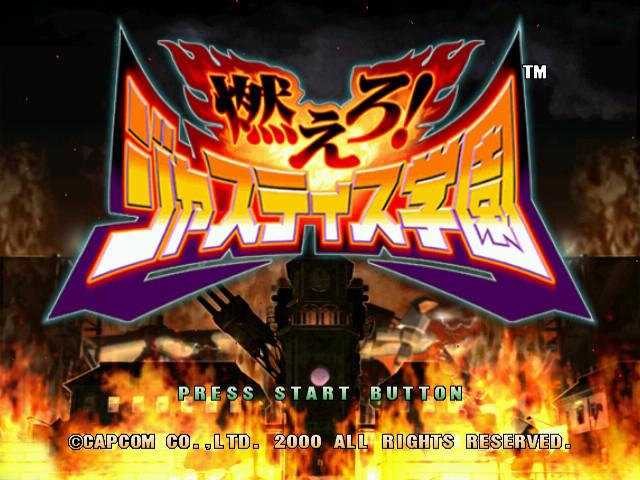
Project Justice: Rival Schools 2 is Capcom's Dreamcast fighting game, released outside Japan in 2001 after its Japanese arcade and Dreamcast debut in 2000. Known simply as Project Justice in North America and Moero! Justice Gakuen in Japan, it continues the school-based world of Rival Schools: United by Fate. Capcom developed the game for Sega NAOMI hardware and Dreamcast, whose closely related architecture helped bring the arcade fighter home; Virgin Interactive handled the European Dreamcast release. Its colorful cast, school rivalries, and dramatic special attacks give this 3D fighter a deliberately exaggerated anime-inspired identity.
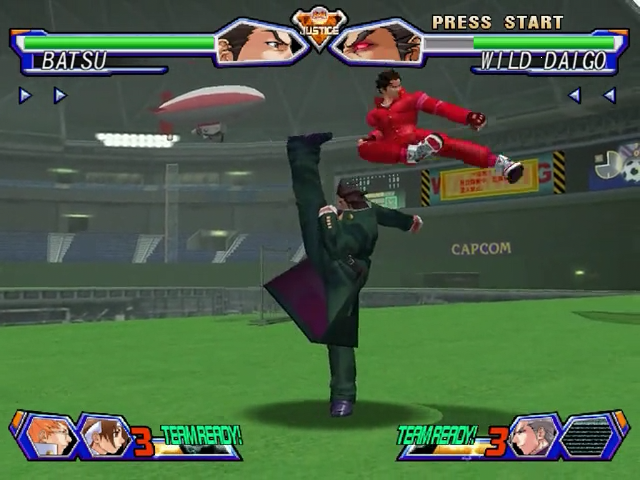
Matches are fought on a side-on plane with 3D character models, and each side chooses a team of three students. The basic combat revolves around punches, kicks, guarding, throws, launches, air attacks, and special techniques, with a Vigor gauge fueling stronger options. A well-timed launcher can send an opponent airborne for follow-up hits, while individual fighters bring their own move sets and fighting styles. The team format makes character selection important: players decide who will take the lead and which schoolmates will form the rest of the squad, then manage their resources through each round.
The sequel expands the partner mechanics that defined Rival Schools. Team-Up attacks let selected allies combine for large, character-specific assaults, and Project Justice adds the Party-Up, a move involving the full three-person team. Party-Ups use a full Vigor gauge and vary according to the school of the initiating fighter, making a squad's identity part of its combat presentation as well as the story. A defending team can also try to interrupt an incoming Team-Up through a brief counter sequence, so a stored meter does not guarantee that a coordinated attack will land uninterrupted.
Its story follows students from several schools in Aoharu City a year after the earlier game. A fresh chain of incidents creates suspicion and pushes former allies and rival schools into conflict, giving the fights a mystery-driven context. Story Mode is organized around school-based scenarios and uses illustrated 2D scenes between battles; some routes can change depending on match outcomes or player choices. Free Mode instead focuses on assembling a three-person team and advancing through computer-controlled opponents. The Dreamcast edition also offers arcade-style play for one or two players, providing a direct way to play competitive matches away from the narrative routes.
Returning fighters from Rival Schools appear alongside newcomers, and their roles as athletes, club members, journalists, and delinquent students shape the game's lively visual language and attacks. The roster includes familiar faces such as Batsu Ichimonji, Hinata Wakaba, and Kyosuke Kagami, while the various schools supply distinct group identities for their team techniques. Rather than treating the campus setting as a realistic simulation, Project Justice turns school activities and personalities into fighting-game spectacle, from the style of a character's moves to the presentation of the combined attacks.
Regional Dreamcast versions are notably different in one major extra mode. The Japanese release includes a board-game-style character-creation feature tied to an inter-school festival, allowing created fighters to be used in most modes. Capcom did not localize that mode for releases outside Japan; those versions instead include unlockable sub-characters assembled from the same creation parts. As the second main entry in the Rival Schools series, Project Justice preserves the original's team-fighting foundation while enlarging teams to three and building its most distinctive mechanics around the interaction between schoolmates.
Gallery
Details
- Developer
- Capcom
- Publisher
- Virgin Interactive
- Genre
- Fighting
- Players
- 1-4
- Release Date
- March 2, 2001
- System
- Dreamcast