About
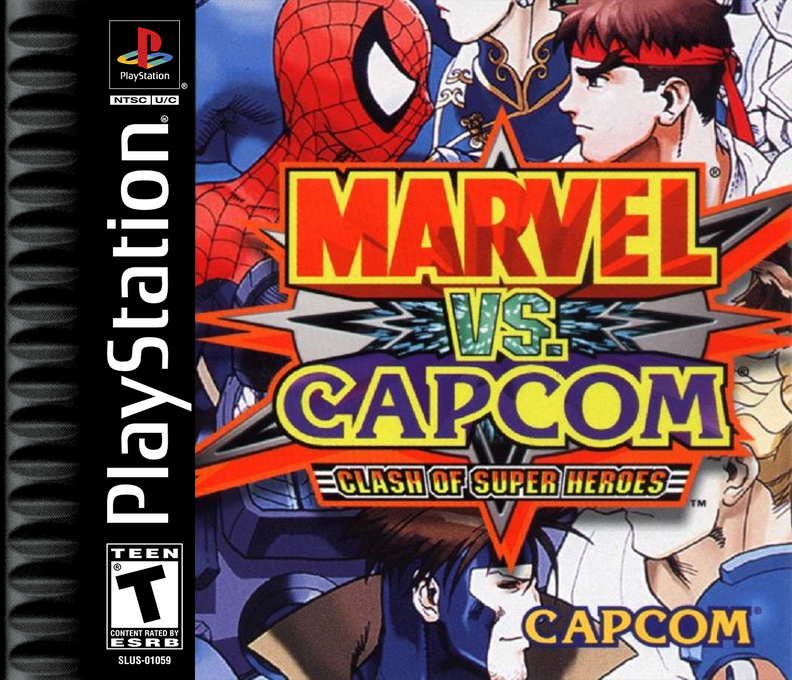
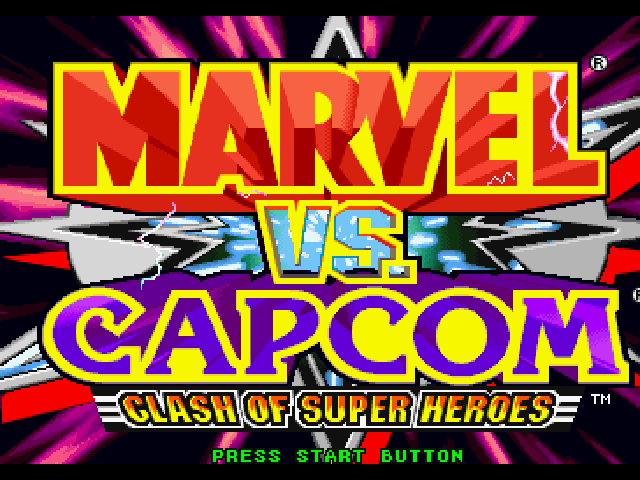
Marvel vs. Capcom: Clash of Super Heroes for PlayStation brings Capcom’s comic-book crossover fighting series to Sony’s 32-bit console. Developed by Capcom and released in Japan in late 1999 as Marvel vs. Capcom: Clash of Super Heroes EX Edition, it reached North America in January 2000; Virgin Interactive handled the European release. The game adapts Capcom’s 1998 arcade fighter, pairing Marvel heroes and villains with characters from Capcom series in fast, colorful one-on-one battles whose presentation and rules were adjusted for the PlayStation hardware.
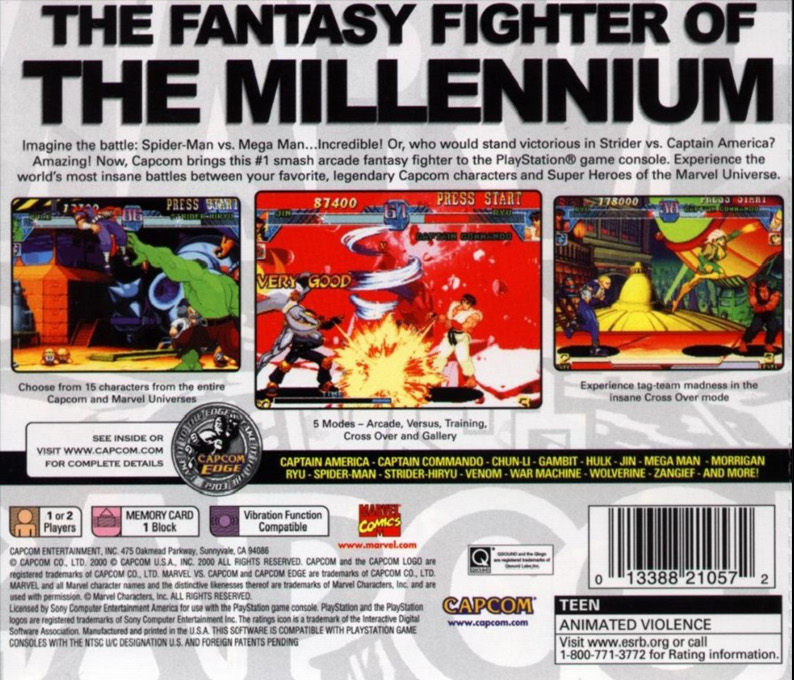
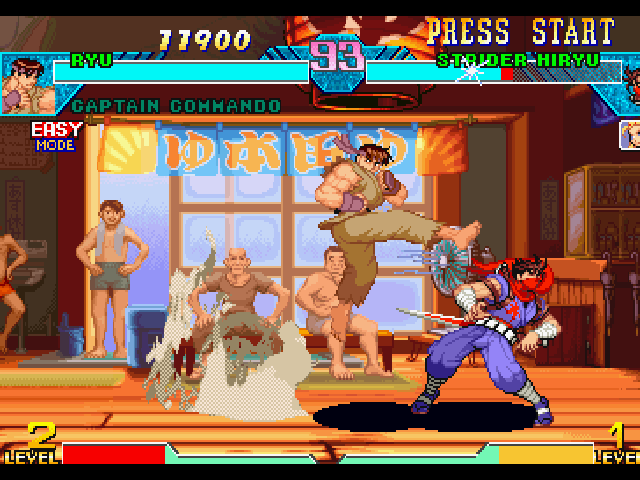
The central attraction is its collision of two character libraries. Marvel representatives include Spider-Man, Captain America, Hulk, Wolverine, Gambit, Venom and War Machine, while the Capcom side draws from Street Fighter, Mega Man, Darkstalkers, Strider and other series. Players choose fighters and take them through bouts built around directional movement, punches, kicks, throws, jumping attacks, special moves and dramatic Hyper Combos. A standard fight is won by emptying the opponent’s life bar before time expires, making spacing, defensive timing and the ability to turn a clean opening into a combo important parts of every round.
This installment followed Marvel Super Heroes vs. Street Fighter but widened Capcom’s half of the roster beyond Street Fighter alone. Its combat retains familiar versus-series ideas such as launching opponents for air combos, building a Hyper Combo Gauge and spending that gauge on stronger techniques. The original game’s roster also includes secret selections accessed at the character screen, with several altered versions of established combatants. The arcade-style journey leads toward Onslaught, the powerful adversary associated with Marvel’s Onslaught storyline, while individual character endings give the single-player ladder a different payoff depending on the fighter used.
Marvel vs. Capcom: Clash of Super Heroes PS1 is notably different from the arcade and Dreamcast editions in how it handles teams. PlayStation memory limits meant that ordinary modes do not preserve the full two-active-fighter tag structure. Instead, players can use Partner Heroes, based on playable characters, or select from Special Heroes, support characters who arrive briefly to attack or assist. These choices reshape the flow of a match: a partner or special helper can intervene through designated commands, while the game’s meter-based moves still reward saving gauge for a well-timed reversal or a powerful combination.
The port’s dedicated Cross Over mode is the exception that restores tag-team play. In that mode, the two sides are given matching pairs, allowing a player to bring in the reserve character while the inactive fighter recovers vitality. Other modes include Battle for a progression of computer-controlled opponents, local Versus play, Training for practicing commands and combinations, and Gallery material unlocked through play. The console edition also includes fighting-style choices that make control inputs more approachable for newcomers or leave more manual control in the player’s hands.
That balance of concessions and additions defines the PlayStation version. Animation frames and some arcade features were reduced so the game could operate within the system’s RAM, but Capcom preserved the brisk pace, large character sprites and explosive special-move emphasis that made the series distinctive. Its roster became a clear statement of the Marvel vs. Capcom concept: Spider-Man or Captain America could share a fighting game with Ryu, Chun-Li, Mega Man or Morrigan. Marvel vs. Capcom: Clash of Super Heroes was followed later in 2000 by Marvel vs. Capcom 2: New Age of Heroes, whose larger three-on-three format took the crossover series in a new direction.
Gallery
Details
- Developer
- Capcom
- Publisher
- Virgin
- Genre
- Fighting
- Players
- 1-2
- Release Date
- January 27, 2000
- System
- PS1