About
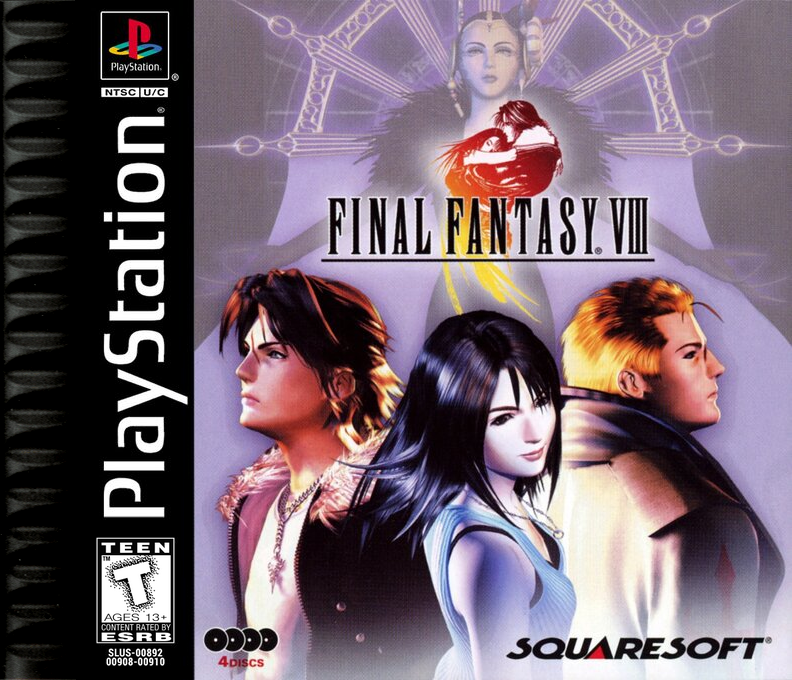
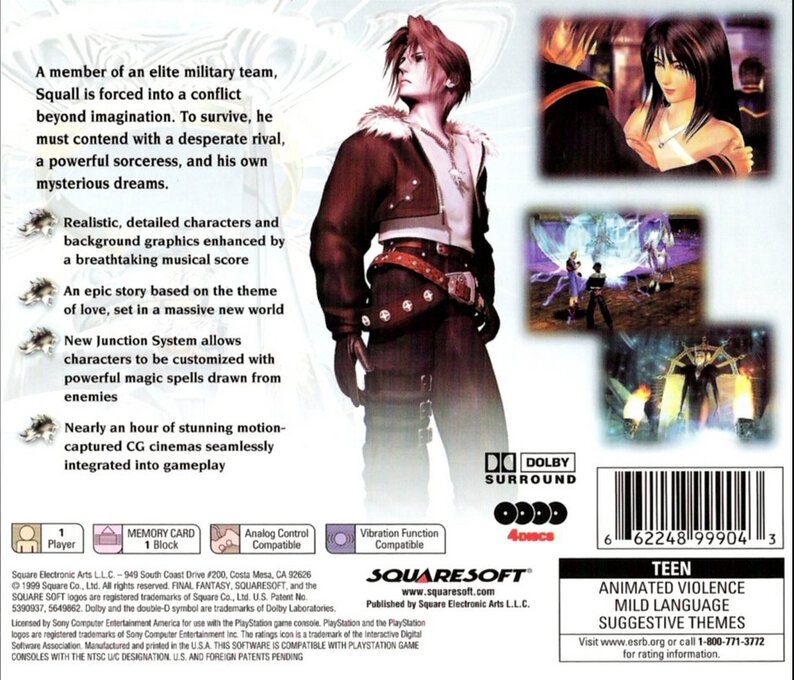
Final Fantasy VIII is a PlayStation role-playing adventure centered on Squall Leonhart, a reserved cadet training at Balamb Garden to become a SeeD mercenary. What begins with an examination and a contract mission grows into an international crisis involving Galbadia, the sorceress Edea, and a group of young people forced to decide what they mean to one another. The original 1999 game gives its story room to breathe across four discs, balancing military assignments, school life, sudden reversals, and a romance that changes the way Squall sees both leadership and connection.
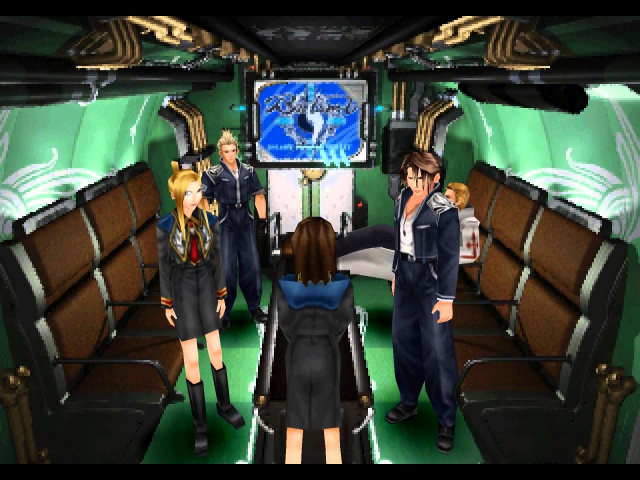
This is a globe-spanning Final Fantasy built around places that feel distinctly different in purpose and mood. Balamb Garden serves as a living academy and early hub, while towns, deserts, futuristic cities, rail routes, and remote facilities open into a world map that invites long journeys. On foot, by car, train, Chocobo, and eventually airship, the party moves between pre-rendered locations and broad 3D travel spaces. Its cinematic direction, detailed backgrounds, and full-motion video sequences made the PlayStation hardware part of the game’s identity rather than simply a delivery platform.
Combat uses an active time-based command system, but Final Fantasy VIII makes character building its own strategic puzzle through Guardian Forces and the Junction system. Guardian Forces can be assigned to party members to open commands and abilities, while magic is gathered with Draw from enemies and draw points or refined from other resources. Instead of treating spells only as attacks, the game lets players junction stocked magic to attributes such as strength, vitality, magic, or elemental defense. A well-considered setup can change a character’s role dramatically, rewarding experimentation before a difficult battle.
That flexibility makes every decision in battle feel connected to preparation. Casting a junctioned spell reduces its stock, so powerful magic can be useful both for what it does immediately and for the statistics it supports when held in reserve. Guardian Forces also earn Ability Points after victories and can learn commands, stat junctions, and refinement skills that extend the party’s options. The system takes time to understand, yet it gives Final Fantasy VIII an unusually hands-on approach to progression: success comes not only from levels, but from how carefully the player develops each character’s capabilities.
Squall, Rinoa, Zell, Selphie, Quistis, Irvine, and the rest of the party each bring their own personality to the journey, and their unique weapons lead to distinctive Limit Breaks when danger is high. These special attacks often add small interactive touches, from timed inputs to rapid selections, so spectacular moments retain a sense of player involvement. Weapon upgrades also depend on finding the right items and learning from weapon magazines, making exploration valuable even away from the main route. The result is a party system that encourages players to shape a preferred team instead of treating every battle as a fixed routine.
Outside combat, Triple Triad provides one of the PlayStation era’s most memorable optional diversions. The compact card game is easy to start—place cards on a three-by-three board and capture opposing cards by comparing their numbered sides—but regional rules can make later matches far more demanding. Winning cards builds a collection of characters, monsters, and Guardian Forces, and certain Guardian Force abilities can turn cards into useful items. It is a self-contained strategy game with real consequences for the larger adventure, ideal for a quick contest in a town or a long pursuit of rare cards.
Final Fantasy VIII also takes advantage of quiet moments: checking the school’s study panel, reading tutorials, talking to classmates, and returning to familiar spaces can make its world feel inhabited between major missions. The game’s soundtrack, including the vocal theme “Eyes on Me,” supports the contrast between intimate character scenes and huge cinematic set pieces. That focus on atmosphere is central to the original PlayStation experience, where the transition from exploration to event scenes gives even familiar locations a strong sense of anticipation.
This description is for the original PlayStation release of Final Fantasy VIII, not the later Windows editions or Final Fantasy VIII Remastered. The remaster arrived on modern platforms with newly rendered character visuals and additional convenience functions, while PC releases have their own platform-specific changes. The 1999 PS1 game remains the four-disc version built around its original presentation, controller layout, Guardian Force junctioning, active-time battles, world exploration, and Triple Triad. For players looking for a classic PlayStation RPG with a bold battle system and an emotionally driven story, it remains a distinctive entry in the series.
Gallery
Details
- Developer
- Squaresoft
- Publisher
- Sony Computer Entertainment
- Genre
- JRPG
- Players
- 1
- Release Date
- September 7, 1999
- System
- PS1