About
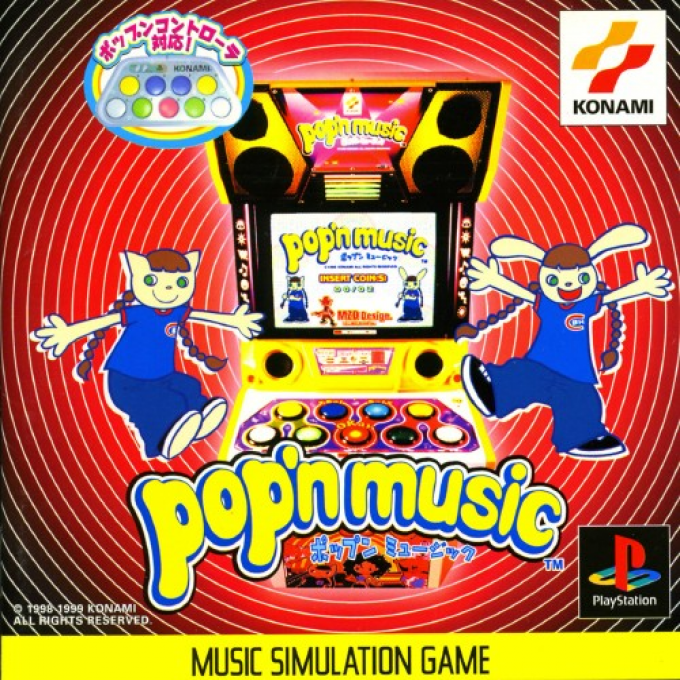
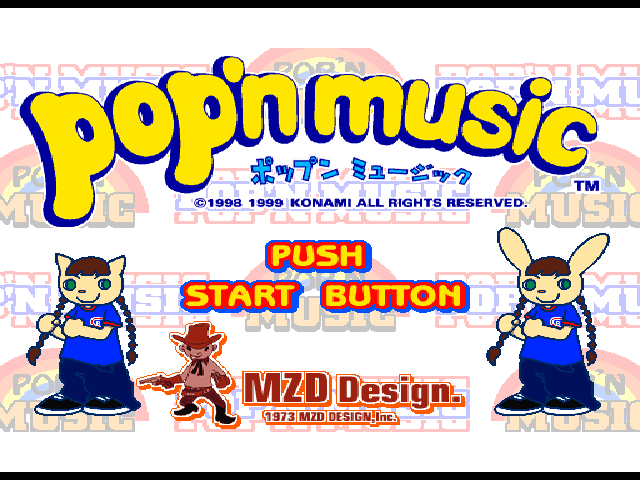
Pop'n Music for PlayStation brings Konami's colorful BEMANI rhythm game home in a Japanese release dated February 25, 1999. Developed by KCE Yokohama and published by Konami, it adapts the arcade Pop'n Music that debuted in Japan in 1998. Rather than simulate a guitar, keyboard, or DJ deck, this music game is built around a distinctive array of nine large, color-coded buttons. Its cheerful cartoon presentation, broad assortment of musical styles, and approachable visual language give the PlayStation game an identity all its own within Konami's early rhythm-game lineup.
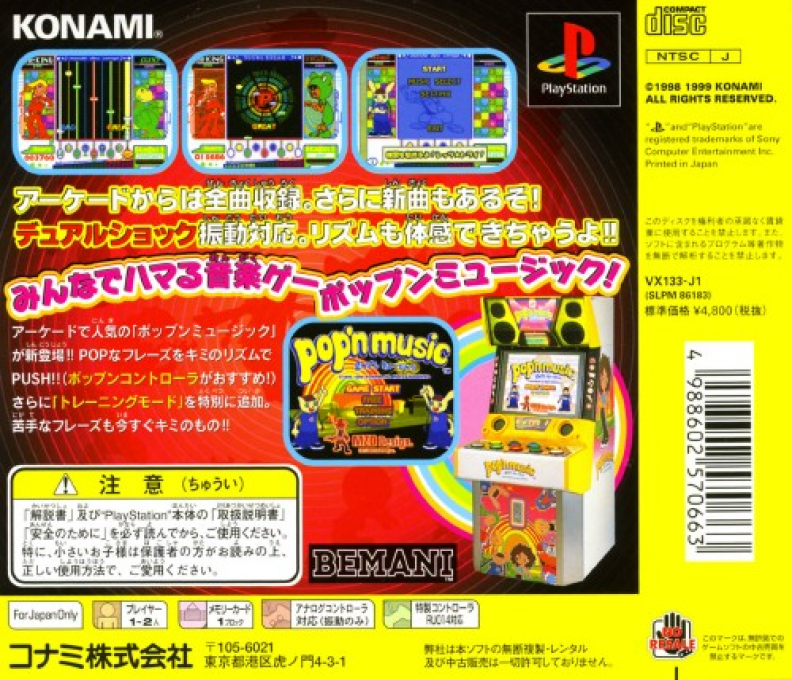
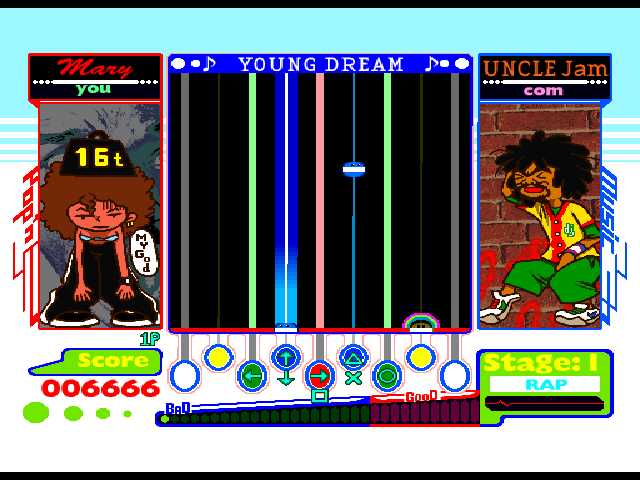
Each song plays out across nine vertical lanes. Small colored markers, known as Pop-kun, descend toward a timing line, and the player presses the matching colored button as each marker reaches it. Accurate timing earns better judgments and raises the rhythm meter, while misses drain it; finishing a stage with the meter high enough allows play to continue. The screen and controller arrangement mirror one another, so reading the pattern is as important as listening to the beat. Fast sequences, simultaneous presses, and increasingly busy arrangements turn the simple rule of matching color and timing into a coordination challenge.
The PlayStation edition supports several control approaches. It can be played with a standard PlayStation pad using configurable button assignments, or with Konami's dedicated Pop'n Music controller, whose nine buttons reproduce the two-row arcade layout. Players can choose five-, seven-, or nine-button configurations, allowing newcomers to reduce the number of active lanes before taking on the full layout. The home conversion also includes a Training Mode, a console-specific feature intended to introduce the fundamentals before players move into regular play.
Arcade Mode is structured around a sequence of song stages, with music organized under genre labels and represented by the game's lively cast of cartoon characters. Beginner Mode offers a lesson and easier arrangements, while the standard game escalates through three stages. An Excite variation adds unpredictability by shuffling descending Pop-kun during a song, and tougher expert variations demand more precise execution. Scores, results, and records reward repeated attempts at the same material, while unlockable songs and gameplay options extend the selection beyond the initial choices.
Pop'n Music makes its songs feel participatory: successful button presses trigger parts of the arrangement as the track continues, so timing patterns are tied directly to audible musical events. The original arcade game was Konami's second major BEMANI release after beatmania, but Pop'n Music deliberately takes a different route. Its button-only interface avoids a turntable, its visual style is playful and character-led, and its music reaches across pop, rap, dance, reggae, techno, and other styles. The PlayStation release preserves that contrast while translating the cabinet format to a living-room system.
This first PlayStation installment also established the home-console foundation for the series. Pop'n Music and its sequel appeared on both PlayStation and Dreamcast, while later entries expanded the PlayStation line and introduced append discs that relied on a compatible key disc. As an early home rhythm game, Pop'n Music for PlayStation is notable not just for following an arcade original, but for bringing its unusual nine-button format, adjustable difficulty, two-player support, and recognizable character-driven presentation to a console audience. It remains a snapshot of the formative period of Konami's long-running Pop'n Music series.
Gallery
Details
- Developer
- KCE Yokohama
- Publisher
- Konami
- Genre
- Rhythm Game
- Players
- 1-2
- Release Date
- February 25, 1999
- System
- PS1