About
Final Fantasy VII is the landmark 1997 PlayStation role-playing game from Square, built around the collision of fantasy adventure, industrial science fiction, and a planet in peril. It begins in the towering city of Midgar, where mercenary Cloud Strife takes a job with AVALANCHE, a resistance group fighting the Shinra Electric Power Company. Shinra’s Mako reactors draw on the Planet’s life energy, giving the opening conflict an immediate sense of urgency while setting up a journey that soon reaches far beyond the city’s steel plates and neon glow.
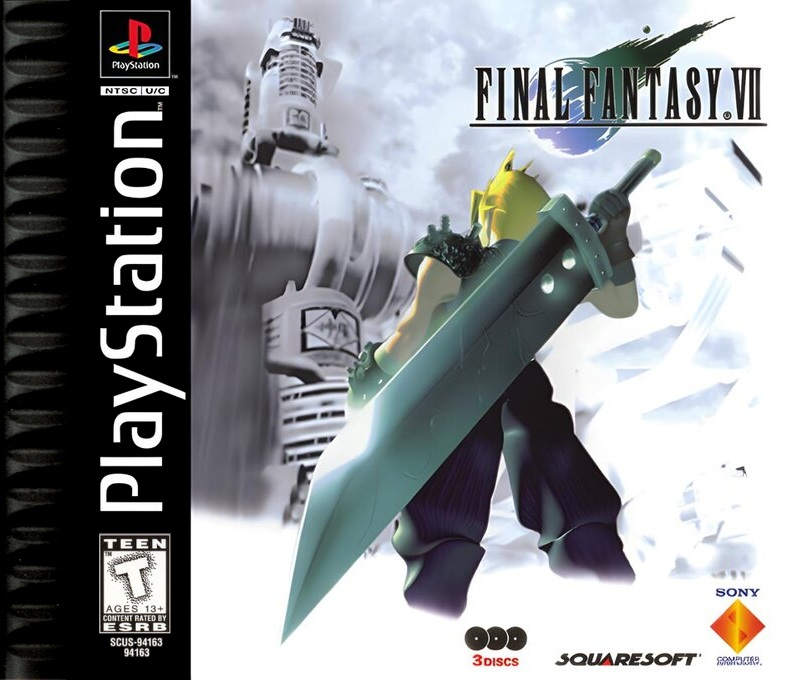
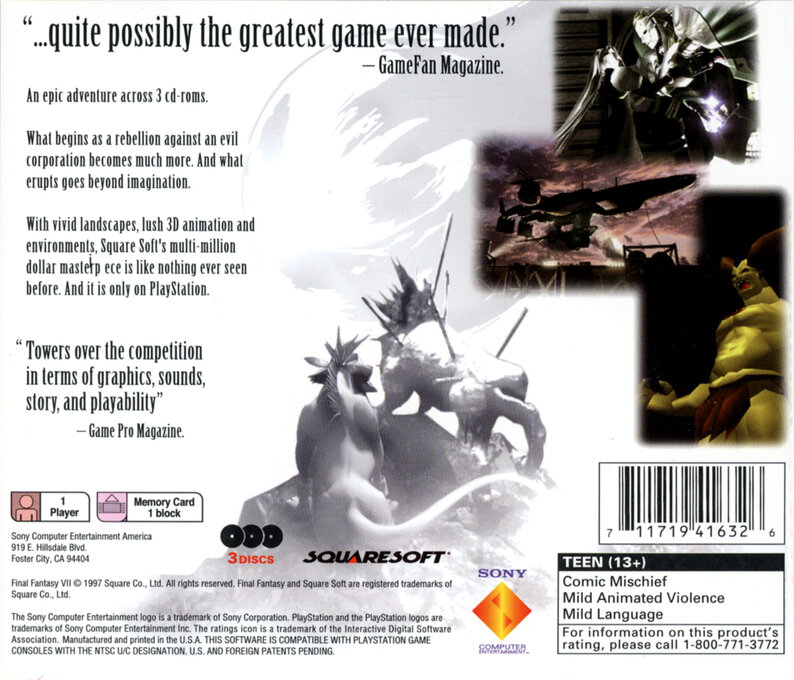
This is the original PlayStation release: developed by Square, first released in Japan in 1997, and brought to North America and PAL territories by Sony Computer Entertainment. Its three-disc scope was a defining event for the console, pairing large-scale storytelling with cinematic full-motion video, polygonal characters, and richly painted pre-rendered locations. The result still feels distinctly of its era in the best way: a game unafraid to move from a rain-soaked slum to a sunlit coastline, a strange laboratory, or a quiet inn without losing its strong visual identity.
Cloud’s party gradually becomes the heart of the experience. Barret, Tifa, Aerith, Red XIII, and the other companions each bring a different perspective to the struggle against Shinra and the threat represented by Sephiroth, a former SOLDIER whose name carries a long shadow. The story balances enormous stakes with travel, friendship, humor, and small character moments, making the world feel inhabited rather than merely a route between dramatic scenes. Its early mysteries are worth discovering in play, so the adventure is best approached without knowing where every turn will lead.
Exploration unfolds across several memorable layers. In towns and story areas, the party moves through detailed environments, speaks with locals, searches for clues, shops for equipment, and finds diversions tucked away from the main path. Outside, a 3D world map opens up as the story advances, connecting cities, ruins, wilderness, and secret places. Vehicles and chocobos broaden the sense of possibility, turning the journey into more than a sequence of destinations and rewarding players who pause to explore.
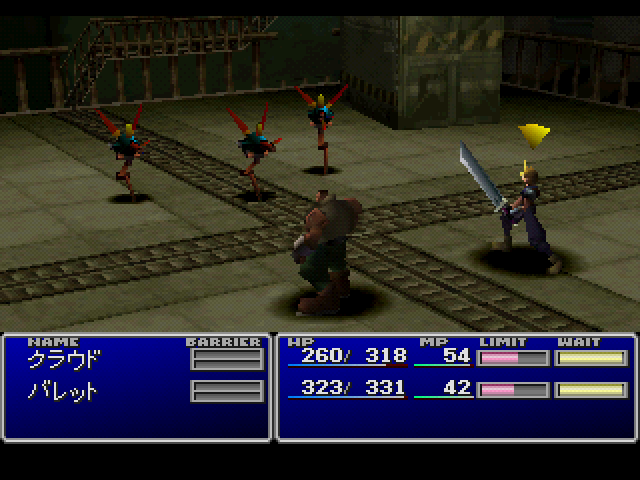
Battles use the series’ Active Time Battle system, where each combatant’s gauge fills in real time before an action is chosen. The pace gives turn-based commands a welcome tension: timing matters, but there is still room to consider attacks, items, magic, and defense. Random encounters can be demanding, especially when resources are low, yet the systems are approachable because the game steadily introduces new options. Character-specific Limit Breaks add a dramatic burst of power when a fighter has taken enough punishment, giving every party member a memorable way to turn the momentum.
Materia is Final Fantasy VII’s signature customization system. These glowing orbs are slotted into weapons and armor to grant spells, summon creatures, unlock commands, improve attributes, or create useful combinations. A party member is not locked into one permanent class; shifting Materia between equipment can turn Cloud into a healer, make Barret a spellcaster, or prepare a favorite character for a particular challenge. Materia also grows through battle, which makes experimentation feel rewarding instead of wasteful and gives the game remarkable flexibility for a 1990s console RPG.
The PlayStation presentation remains one of the game’s great attractions. Nobuo Uematsu’s score gives locations and battles their own emotional texture, from ominous industrial themes to gentle melodies and grand, theatrical set pieces. Camera angles, environmental details, and the contrast between tiny character models and elaborate backdrops sell a world of enormous scale. The original English script has a few famously rough edges, but its directness and unusual phrasing have become part of the game’s enduring personality rather than a barrier to its strongest scenes.
For fans of classic JRPGs, Final Fantasy VII offers a substantial, story-led adventure with a deep combat toolkit, a large world to roam, and an atmosphere that has remained instantly recognizable for decades. New players can enjoy it as a self-contained PlayStation classic, while returning players can revisit its optional discoveries, Materia strategies, side activities, and unforgettable sense of place. This description concerns the 1997 original game, whose design and narrative should be experienced on their own terms rather than confused with the later ports or remake project.
Gallery
Details
- Developer
- Squaresoft
- Publisher
- Sony Computer Entertainment
- Genre
- JRPG
- Players
- 1
- Release Date
- August 15, 1997
- System
- PS1