About
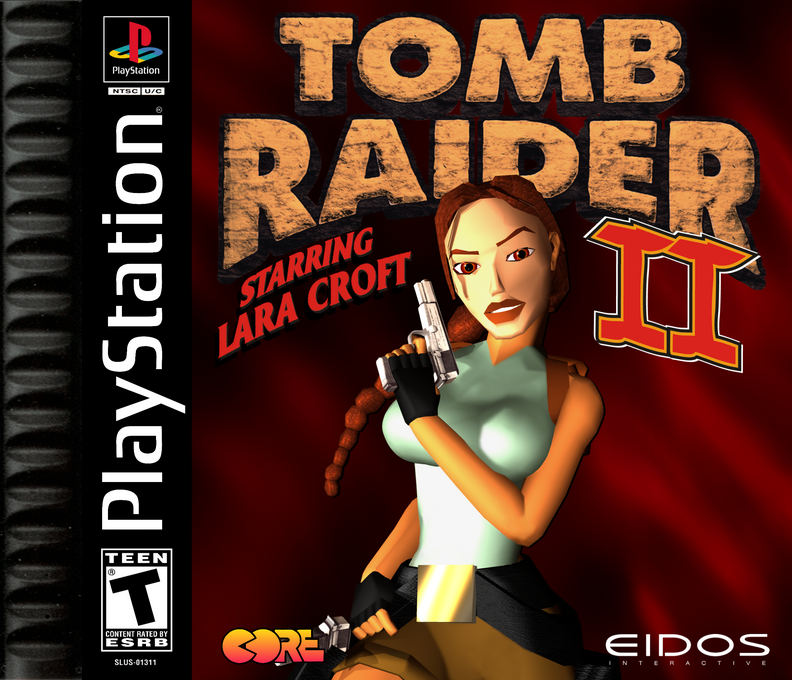
Tomb Raider II: Starring Lara Croft for PlayStation is Core Design's 1997 action-adventure sequel, published by Eidos Interactive. Returning as archaeologist-adventurer Lara Croft, players pursue the mythical Dagger of Xian, an artefact said to transform the person who drives it into their heart into a dragon. The search begins at the Great Wall of China and turns into a globe-spanning race against Marco Bartoli and the Fiamma Nera, an Italian cult that wants the dagger's power. The PlayStation release arrived in North America and Europe on November 21, 1997, continuing the series' blend of ancient mysteries, elaborate ruins, and cinematic danger.
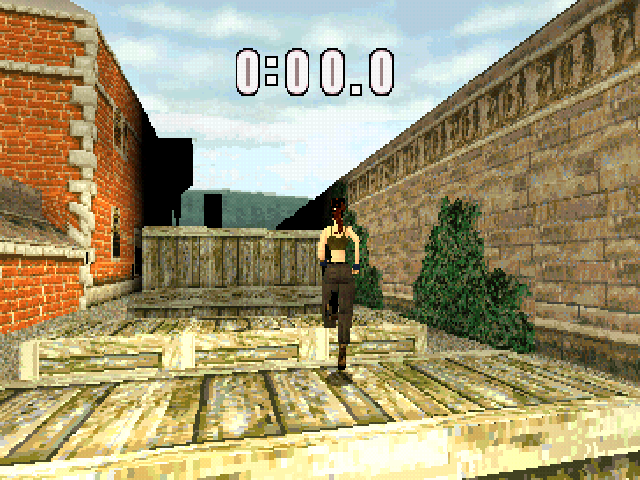
Tomb Raider II PlayStation uses a third-person camera and the deliberately measured, grid-based movement associated with Lara's earliest adventures. Players guide her through large connected spaces by running, carefully walking at ledges, leaping, climbing ladders, swimming, grabbing edges, moving blocks, and lining up jumps. Progress usually depends on reading a location, locating keys or mechanisms, solving environmental puzzles, and surviving traps before moving to the next area. Flares illuminate dark rooms, medipacks restore health, and the ability to save during play lets players tackle demanding obstacle courses one discovery at a time.
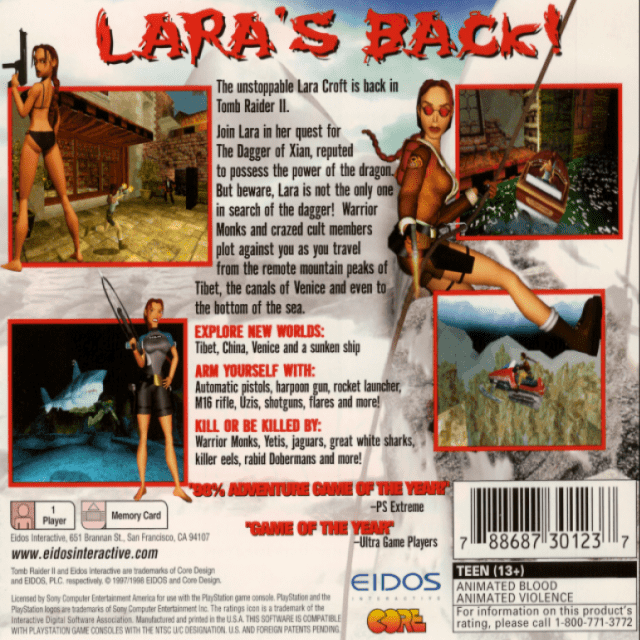
Combat is a larger part of the sequel, though exploration remains central. Lara begins with her signature twin pistols and can uncover limited ammunition for tools including a shotgun, automatic pistols, Uzis, an M16, grenade launcher, and underwater harpoon gun. Encounters range from armed human opponents to animals and supernatural threats, and some urban windows can be shattered to expose alternate routes. Every main level also hides three dragon-shaped secrets in silver, jade, and gold; finding the complete set rewards extra supplies. The result is a single-player campaign that alternates between methodical platforming, tense navigation, puzzle solving, and sudden firefights.
The journey gives the game a notably varied PlayStation setting list. Lara investigates Venice and its abandoned opera house, escapes from an offshore oil rig, explores the wreck of the Maria Doria, then heads through the Tibetan foothills and the besieged Barkhang Monastery toward the Temple of Xian. These places are not simply backdrops: canals make room for a speedboat, snowy terrain introduces a snowmobile, and water-filled passages make underwater movement and the harpoon gun relevant. Zip lines, shallow-water traversal, climbable surfaces, and larger outdoor scenes extend the first game's toolset while keeping the focus on navigating hand-built spaces.
The story follows Lara's effort to reach the Dagger before Bartoli can use it. The quest connects the weapon to an ancient Chinese emperor, Tibetan monks who once contained its threat, and the Seraph needed to open the way forward. Cutscenes and in-engine scenes carry the plot between the major locations, while Croft Manor is available from the menu as a training area. Its familiar rooms are a useful place to learn Lara's movement before the campaign's more exacting jumps and hazards. The game also adds changing outfits for Lara to suit the locations, from Venice to the ocean and Tibet, reinforcing the sense of an expedition that continually changes terrain and stakes.
As the second main Tomb Raider game, Tomb Raider II built directly on the format established by the 1996 original rather than replacing it. Core Design enhanced the existing technology with more detailed environments, additional actions, more combat encounters, and vehicle sequences for the PlayStation and Windows releases. A Mac version followed in 1998. The original PC and Mac game later received the separate 1999 expansion Tomb Raider II: The Golden Mask, which is not part of the original PlayStation campaign. In 2024, Tomb Raider II and The Golden Mask were included in Tomb Raider I-III Remastered, bringing this early Lara Croft adventure and its expansion to modern systems with updated presentation options.
Gallery
Details
- Developer
- Core
- Publisher
- Eidos Interactive
- Genre
- Action-Adventure
- Players
- 1
- Release Date
- October 31, 1997
- System
- PS1