About
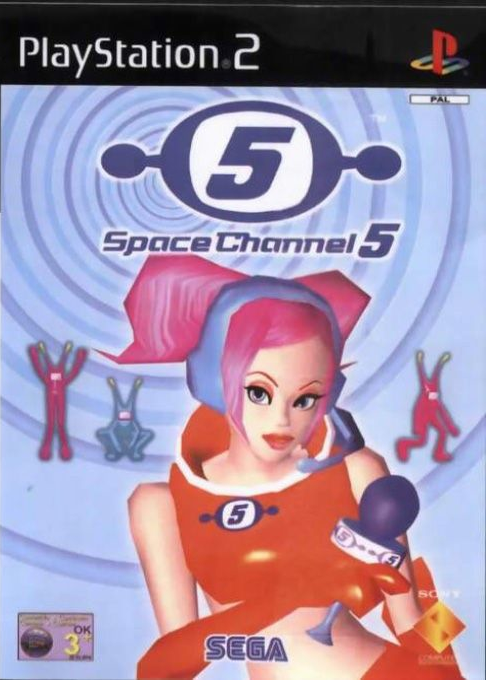
Space Channel 5 for PlayStation 2 brings Sega and United Game Artists’ 1999 Dreamcast rhythm adventure to PS2. Released in Europe in March 2002, this version follows Ulala, the orange-clad reporter for the titular television station, as a bizarre extraterrestrial crisis turns breaking news into a sequence of choreographed showdowns. Its retro-futurist setting, bright art direction and big-band-influenced soundtrack give the game a character far removed from a conventional action title.
The story begins when the Morolians seize people across the solar system and force them to dance. Ulala is sent out to report from the scene, but covering the event means taking part in it: she must match the calls and movements issued by enemies, rescue captives, and keep Space Channel 5’s ratings high. Rival reporters and increasingly strange broadcasts broaden the comic science-fiction drama, while the campaign treats its musical confrontations as live television reports rather than detached rhythm-game stages.
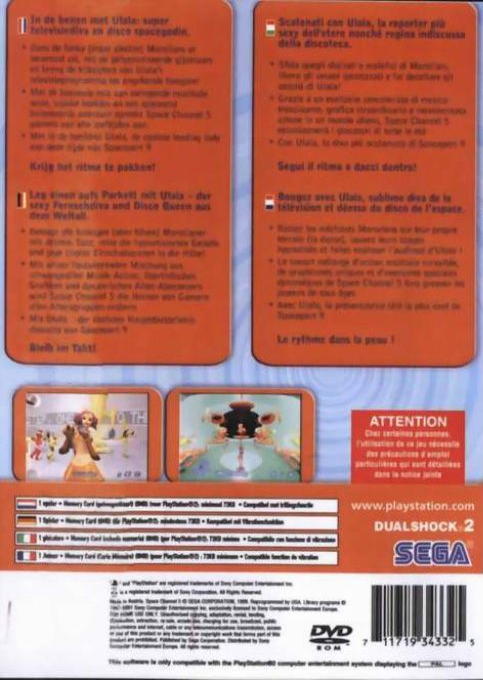
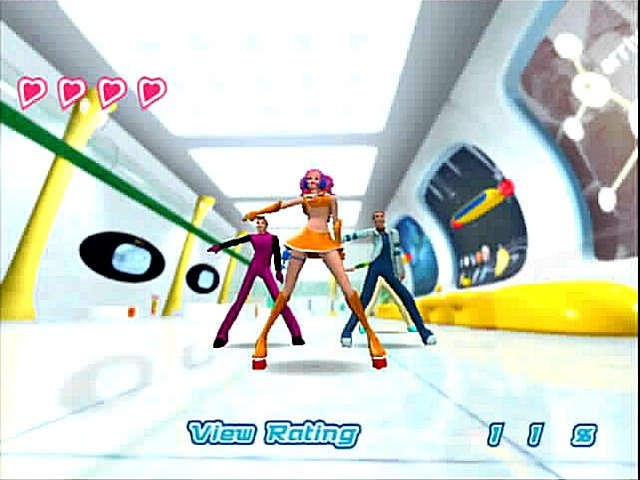
Play proceeds through a call-and-response system. Opponents demonstrate a short sequence of directional inputs and the two face-button actions, punctuated by spoken cues such as “chu”; the player repeats the pattern in time with the music. Dance exchanges demand accurate imitation, while other encounters use the two action buttons to fire at hostile targets or save bystanders. Successful rescues add allies to Ulala’s on-screen entourage, and a ratings display reflects how well the performance is going. Missed cues can reduce that rating, and major encounters also put Ulala’s hearts at risk.
This structure makes Space Channel 5 PS2 easy to understand but exacting about rhythm and memory. Sequences grow longer and mix movement with shooting and rescue commands, so recognising the pattern matters as much as reacting to the beat. The game’s four main reports combine polygonal characters with streamed movie backdrops, preserving the staging of the Dreamcast original while using the PlayStation 2 format. Completing the game also opens a replay option with alternate routes and tougher patterns tied to the player’s performance.
United Game Artists, Sega’s AM9 team, developed the game under producer Tetsuya Mizuguchi and director Takashi Yuda. The team built its audiovisual identity around 1950s and 1960s pop culture, science-fiction imagery and big-band music; Ken Woodman’s “Mexican Flyer” became the defining musical theme. Ulala’s English voice was performed by television personality Apollo Smile, and the original adventure includes a guest appearance by Space Michael, a character based on Michael Jackson.
The PS2 edition represented an early step in Sega’s move to publish its games on other console hardware after the Dreamcast era. In Europe it was issued as Space Channel 5, the standalone first adventure. That distinction matters because North America later received Space Channel 5: Special Edition from Agetec, a separate two-disc package containing both this game and the sequel, Space Channel 5: Part 2. The PS2 Space Channel 5 catalog entry therefore centers on Ulala’s original report: a single-player rhythm journey where remembering a command, finding the beat and keeping the broadcast alive are all part of the same performance.
Gallery
Details
- Developer
- United Game Artists
- Publisher
- SEGA
- Genre
- Rhythm Game
- Players
- 1
- Release Date
- March 13, 2002
- System
- PS2