About
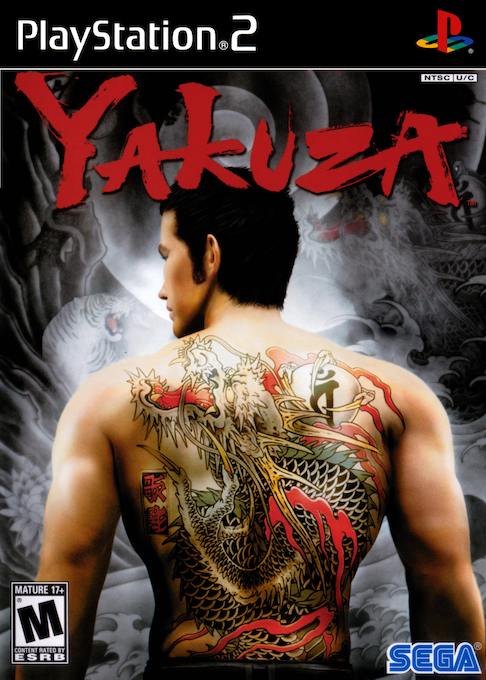
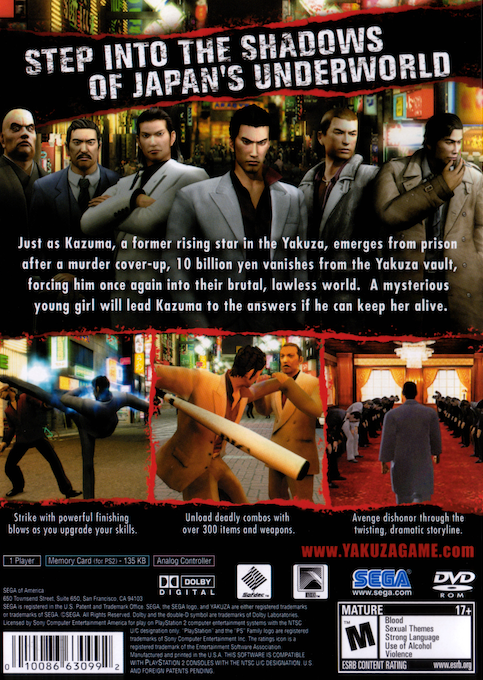
Yakuza for PlayStation 2 is Sega’s 2005 action-adventure game, first released in Japan as Ryū ga Gotoku on December 8 before reaching North America and Europe in 2006. Developed by Amusement Vision and published by Sega, it introduces Kazuma Kiryu, a former Tojo Clan yakuza known as the Dragon of Dojima. After taking responsibility for a murder committed by his closest friend, Kiryu spends ten years in prison. His return brings him to Kamurocho, a fictional Tokyo entertainment district, where the disappearance of 10 billion yen draws rival criminals, old allies, and a young girl named Haruka into his path.
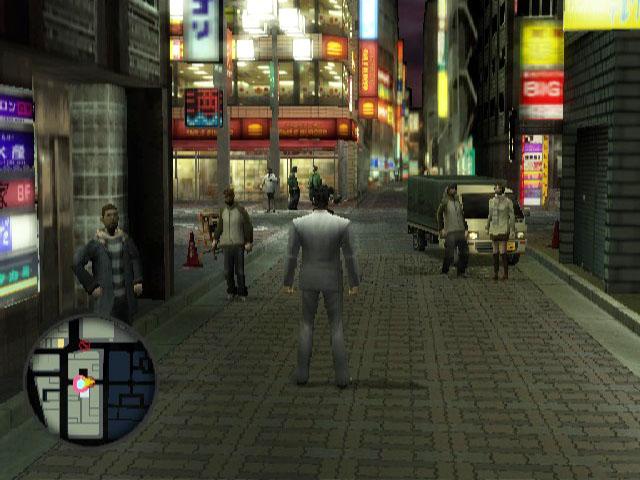
The PlayStation 2 game combines a chapter-driven crime drama with free-roaming exploration. Players guide Kiryu through Kamurocho on foot, following the main investigation while stopping at shops, restaurants, and city attractions. The streets are compact rather than sprawling, but they are packed with people to meet and diversions to discover. Conversations can lead into substories: self-contained encounters that reveal more of the district’s residents and may reward Kiryu with money, items, or useful information. The result is a game that continually shifts between its central underworld conflict and the smaller dramas unfolding around it.
Combat is built around close-quarters brawling. Kiryu can strike, guard, evade, grab opponents, and use objects from the surrounding area as improvised weapons. Street confrontations and story battles award experience, while completing substories can contribute as well. Experience is spent to improve Kiryu’s health and expand his move set, giving the campaign a role-playing progression layer alongside the action. As the adventure continues, the fighting system adds more powerful attacks and lets Kiryu handle larger groups of enemies, keeping the player’s abilities tied to both exploration and battle.
Kamurocho is central to Yakuza’s identity. Sega based the setting’s atmosphere on Tokyo’s Kabukicho entertainment district, presenting glowing signs, alleys, restaurants, nightlife venues, and arcades as a single interconnected neighborhood. Kiryu can restore health by eating, buy equipment and recovery items, visit a batting center, and take part in activities such as gambling games and arcade diversions. Real businesses and products appeared in the Japanese game, reinforcing its attempt to make the fictional district feel like a working place rather than only a sequence of combat arenas.
The story follows Kiryu’s search for the truth behind the stolen money and the fate of people from his past, especially his childhood friend Yumi and former captain Shintaro Kazama. Haruka, who is searching for her mother, becomes an essential companion in the investigation. The main plot is presented through lengthy scenes and a cast of yakuza figures, detectives, gang rivals, and other Kamurocho residents, while the optional content supplies a contrasting view of ordinary life in the same district. That blend of serious criminal intrigue, character relationships, and side activities established the format that later Yakuza games would continue to build on.
For its original overseas PlayStation 2 release, Yakuza used an English voice cast, while its Japanese release retained the original Japanese performances. The game was followed by Yakuza 2 on PlayStation 2, and the first two games later received a Japanese HD collection for PlayStation 3 and Wii U. Yakuza: Kiwami, released years later for newer systems, is a remake rather than the same PlayStation 2 game. The 2005 original remains the starting point for Sega’s long-running series, now generally known internationally as Like a Dragon.
Gallery
Details
- Developer
- Amusement Vision
- Publisher
- SEGA
- Genre
- Other Adventure
- Players
- 1
- Release Date
- December 8, 2005
- System
- PS2