About
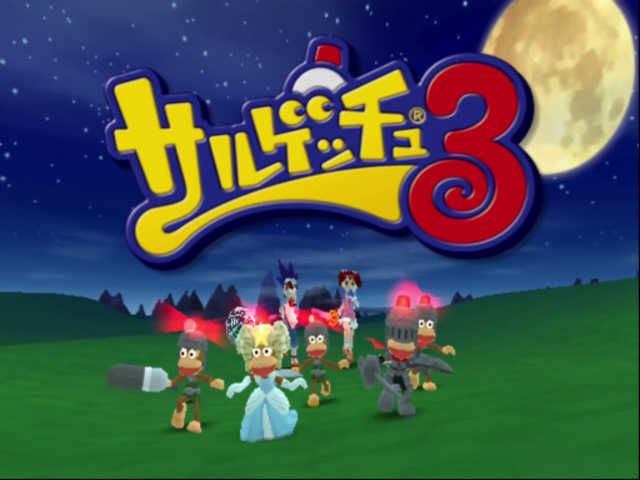
Ape Escape 3 for PlayStation 2 is a 3D platform game developed by SCE Japan Studio and published by Sony Computer Entertainment. It is the third main entry in the Ape Escape series, arriving in Japan in July 2005 as Saru Get You 3 before its North American release in January 2006. Specter returns as the leader of the helmeted Pipo Monkeys, this time using bizarre television programming in a bid to control humanity. With earlier series heroes caught in the broadcasts, new protagonists Kei and Yumi set out to disrupt the scheme, close down its TV-studio operations, and round up the runaway apes.
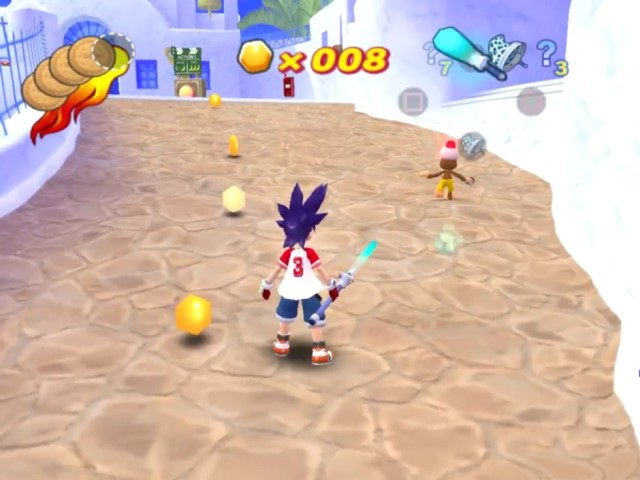
The central challenge is capture rather than combat alone. Players choose Kei or Yumi and move through colorful, TV-show-themed stages hunting the monkeys assigned to each location. A stunned or distracted monkey can be collected with the Time Net, while completing a stage’s required captures opens the way to the next mission. The larger collection task encourages revisiting areas for apes that were left behind, including ones reached only after new equipment or abilities become available. The game’s Monkeypedia records the individual monkeys found along the way, turning the rescue mission into a catalogue of characters as well as a platforming adventure.
Ape Escape 3 uses the series’ distinctive DualShock control setup: the left analog stick handles movement while the right analog stick operates the gadget currently equipped. The Time Net can be swung in different directions for a direct or sweeping catch, and the Stun Club can create the opening needed to use it. Other tools include the Monkey Radar for locating targets, the Sky Flyer for crossing gaps, the Super Hoop for high-speed movement, and an RC car for narrow routes and hidden spaces. Only a limited selection of gadgets can be assigned at once, so choosing the right tool for a stage remains part of the action.
The PlayStation 2 game adds a Morph system that temporarily changes Kei or Yumi into themed forms with specialized skills. The ninja form can move along walls, the knight emphasizes defense and stronger attacks, and the Western form uses a paint gun; other forms are built around the obstacles and monkeys in their stages. These transformations consume energy from a meter, so their advantages cannot be used without limit. They sit alongside vehicle and set-piece sequences, bosses, jumping challenges, and the series’ comic reversal of fortunes: some monkeys can evade the player, knock a gadget away, or even turn a stolen net back on the hunter.
Its episodes draw their settings from the television premise rather than one continuous realistic world, sending the pair through genre-flavored productions such as Western, Arabian, martial-arts, Arctic, and resort scenarios. This structure lets costumes, props, hazards, and monkey behavior change from stage to stage while the main goal stays clear. Between missions, a hub and shops provide access to unlockable material earned with collected coins, including music, movies, and additional diversions. The presentation keeps the series’ cartoon styling intact, pairing brightly themed environments with monkeys whose outfits and attacks often match the fictional program in which they appear.
Ape Escape 3 also contains notable extra modes that reflect the playful crossover culture of the PlayStation 2 era. Mesal Gear Solid: Snake Escape is a Metal Gear Solid parody in which a monkey takes on a stealth-oriented mission, complementing the Snake vs. Monkey collaboration found in Metal Gear Solid 3: Snake Eater. Other unlockable minigames and Simian Cinema clips expand the collection beyond the story. As a later mainline Ape Escape adventure, the game retains the gadget-driven monkey-catching format that defined the series while using morphing, themed stages, and a large cast of capturable apes to give its PlayStation 2 campaign its own identity.
Gallery


Details
- Developer
- Sony Computer Entertainment
- Publisher
- Sony Computer Entertainment
- Genre
- Platformer
- Players
- 1
- Release Date
- January 17, 2006
- System
- PS2