About
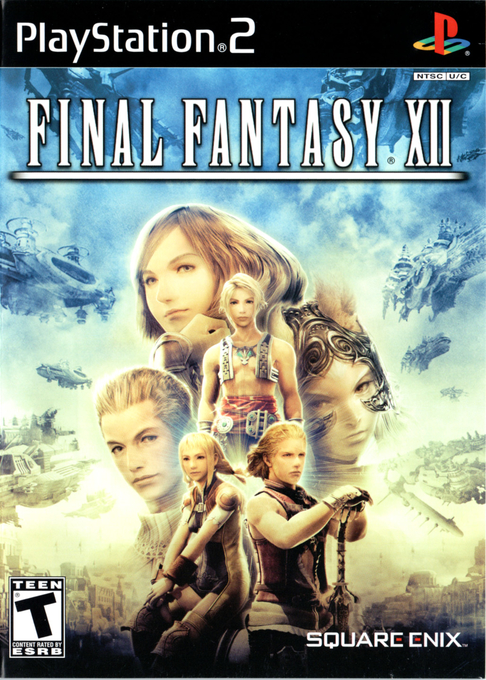
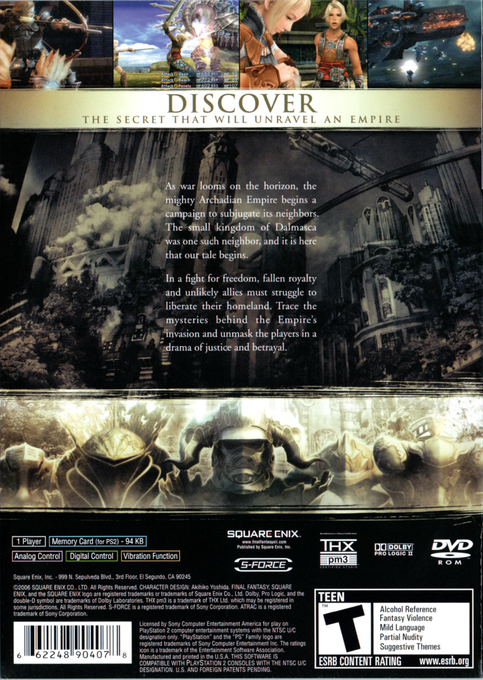
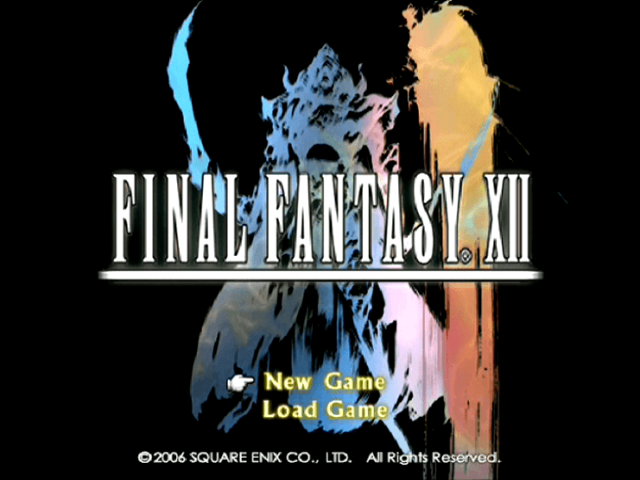
Final Fantasy XII is a single-player role-playing game from Square Enix, first released for PlayStation 2 in Japan in March 2006, North America in October 2006, and Europe in February 2007. It transports the series to Ivalice, a vast realm of kingdoms, empires, magic, ancient technology, and airships. The adventure begins in Rabanastre, the royal city of Dalmasca, where everyday life continues beneath the shadow of Archadian occupation and the threat of wider war.
Vaan, a young Rabanastre resident with dreams of becoming a sky pirate, is drawn into events far larger than himself. His path brings him together with his friend Penelo, the self-styled leading man Balthier, his Viera partner Fran, and Princess Ashe, the surviving heir to Dalmasca’s throne. Their journey crosses desert settlements, imperial cities, sacred ruins, and dangerous wild country as the group pursues freedom and a future for their homeland. The story balances palace intrigue and international conflict with the personal goals that lead this unlikely party to travel together.
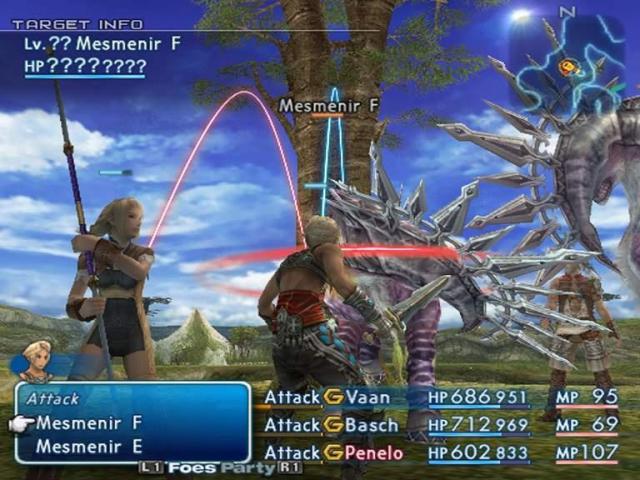
Rather than sending the player from isolated battle screens to exploration, Final Fantasy XII lets enemies appear directly in the field. A party can move through crowded streets, open plains, mines, forests, and labyrinthine ruins without a hard break between travelling and combat. Encounters use the Active Dimension Battle system: commands take time to resolve, enemies act in real time, and positioning, enemy range, and nearby threats all matter. The result is an RPG that feels especially comfortable when exploring a hostile region and deciding whether to fight, flee, or prepare before pressing onward.
The original PlayStation 2 version is built around a flexible License Board. Characters earn License Points in battle and spend them to learn the right to use equipment, magic, techniques, and other upgrades. Combined with the game’s wide selection of weapons, armor, spells, and accessories, this system encourages players to shape a party around their own approach rather than locking every character into a single predetermined role. A carefully prepared group can favor heavy weapons and direct attacks, healing and defensive magic, status effects, or a mix that changes with the situation.
Its Gambit system is one of Final Fantasy XII’s defining ideas. Gambits are customizable conditional instructions that let party members respond automatically to priorities chosen by the player, such as healing an ally in danger, targeting a weakened enemy, removing a status ailment, or attacking the closest foe. They are not a substitute for playing the game; instead, they turn party planning into part of the strategy. New gambits and better equipment make revisiting the setup worthwhile, while difficult battles still reward a player who steps in with a timely spell, item, or change of tactics.
Ivalice is designed to invite detours. Beyond the main route, players can take on hunts for formidable marks, build a reputation through Clan Centurio, seek rare loot, hunt for treasures, and explore optional areas that test a growing party. Shops, loot drops, and the bazaar system give value to the spoils collected on the road, while airships and the wider travel network help make the world feel connected. The game is generous with reasons to leave the direct path, whether the goal is a new weapon, a stronger spell, a hard-to-find monster, or simply another corner of Ivalice to see.
Final Fantasy XII also gives its world a distinctive sense of scale. Rabanastre is busy with merchants, guards, citizens, and travelers; the surrounding regions change from sun-blasted sand and rocky canyons to lush wetlands and misty highlands. Its art direction combines grand fantasy architecture with mechanical airships and imperial machinery, creating a setting that feels both ancient and lived in. Hitoshi Sakimoto’s score supports that atmosphere with regal themes, tense battle music, and sweeping arrangements that suit long journeys across the world.
This original PS2 release should not be confused with Final Fantasy XII: International Zodiac Job System, the later Japan-only 2007 revision with a different job-based progression system, or Final Fantasy XII: The Zodiac Age, the later high-definition version based on that revision. The PlayStation 2 original uses its own License Board progression and remains the foundation of the experience: an expansive Ivalice adventure built around exploration, party customization, practical strategy, and the pleasure of gradually mastering a world that keeps opening outward.
Gallery
Details
- Developer
- Square Enix
- Publisher
- Square Enix
- Genre
- JRPG
- Players
- 1
- Release Date
- October 31, 2006
- System
- PS2