About
Amagami for PlayStation 2 is a Japanese romance simulation game developed and published by Enterbrain, released in Japan on March 19, 2009. A spiritual successor to Enterbrain's KimiKiss, it places the player in the role of second-year high-school student Junichi Tachibana and builds its story around the weeks leading to Christmas. Junichi has spent two years guarded after being stood up on Christmas Eve, but a new season at Kibitou High School gives him opportunities to meet classmates, deepen friendships, and decide whether he is ready to pursue romance again.
Rather than telling one fixed love story, Amagami is designed around player-directed conversations and event choices. Its calendar-based structure moves through school days in a series of time slots, with the player selecting where to go and whom to approach. Conversations use a topic-and-response system: choosing an appropriate subject, reading a character's mood, and responding well can open later scenes. The game records progress through its event map, making relationships feel like branching courses rather than a single linear route.
Six principal heroines anchor the original game's major stories: popular senior Haruka Morishima, Junichi's longtime friend Kaoru Tanamachi, shy underclassman Sae Nakata, swimming-club member Ai Nanasaki, childhood friend Rihoko Sakurai, and diligent class representative Tsukasa Ayatsuji. Each has her own circumstances, personality, and set of events, so the same school setting takes on a different focus depending on the player's choices. Junichi's younger sister Miya, his friend Masayoshi, teachers, club members, and other students help make the school routine feel connected across the separate storylines.
The central objective is to guide Junichi toward a meaningful Christmas outcome. Players can concentrate on one relationship or manage more than one developing connection, but the timing of invitations and choices affects which epilogue becomes available. The possible conclusions include romance and friendship outcomes, giving repeat play a purpose beyond simply seeing another heroine's scenes. Unlockable content also rewards broader completion, encouraging players to revisit the school calendar, try alternative conversation paths, and learn how different choices change the lead-up to Christmas.
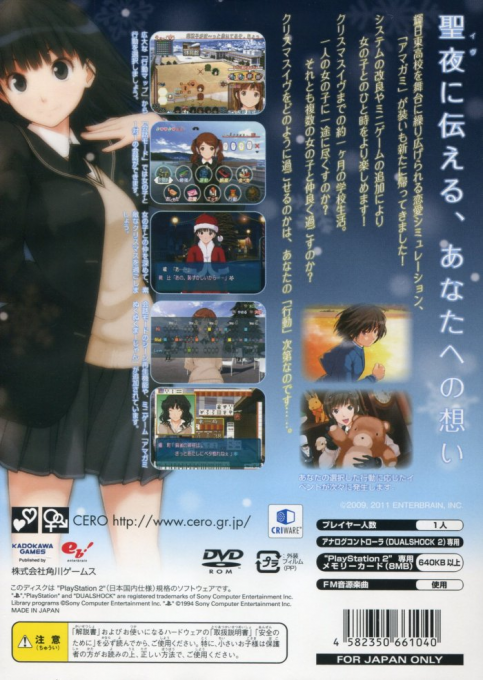
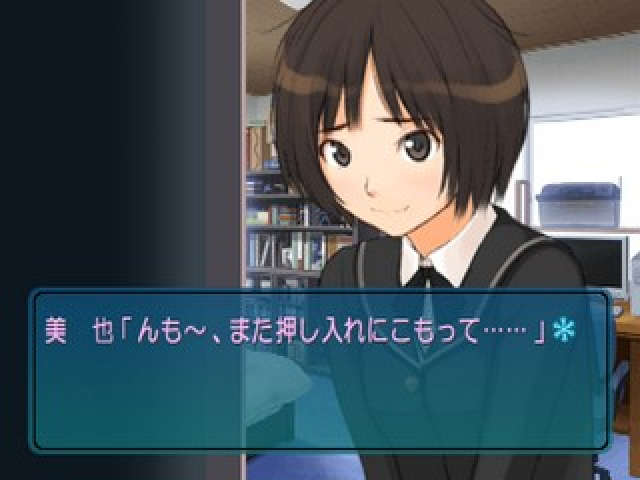
Amagami's presentation combines character portraits, voiced dialogue, illustrated event scenes, and an interface built for the PlayStation 2 controller. Producer Toshihiro Sakamoto, character designer and graphic artist Kisai Takayama, and composer Yoshitaka Hirota are credited on the official game site. The original retail release shipped on one DVD-ROM for PS2 and carried a CERO C rating in Japan. Its emphasis on scheduling, conversation choices, and multiple relationship routes distinguishes it from a purely passive visual novel while keeping the attention on the characters and their everyday school lives.
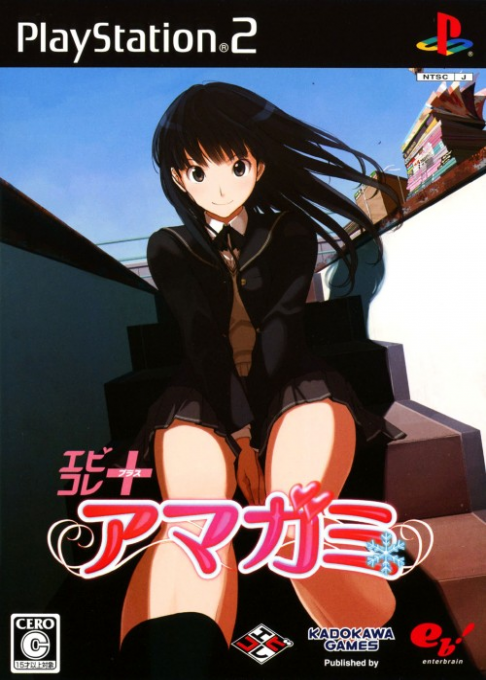
The game later returned as EbiKore+ Amagami, an updated budget edition released for PlayStation 2 and PlayStation Portable on March 31, 2011. That release was published by Kadokawa Games while retaining Enterbrain's production credit, and the PSP edition added a playable mahjong minigame. A PlayStation Vita version followed in January 2014. Amagami also expanded beyond the console through manga and the Amagami SS television anime, whose alternate heroine-focused arcs reflect the game's route-based premise. For players exploring Japanese PS2 romance games, Amagami remains a substantial, choice-driven school-life story with six distinct paths to discover.
Gallery
Details
- Developer
- Enterbrain
- Publisher
- Enterbrain
- Genre
- Visual Novel
- Players
- 1
- Release Date
- March 19, 2009
- System
- PS2