About
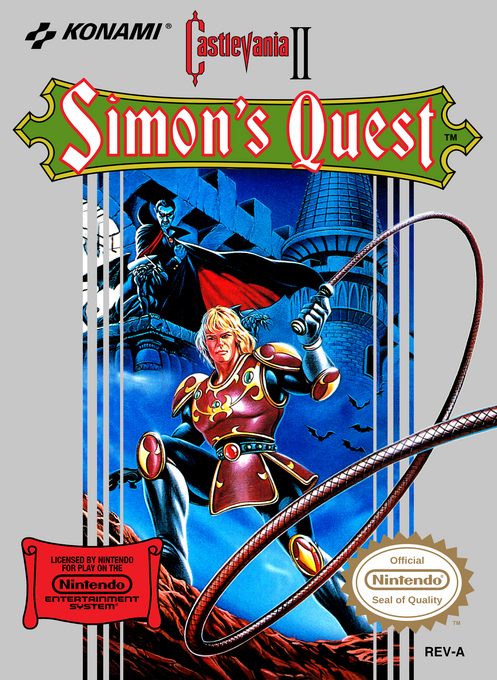
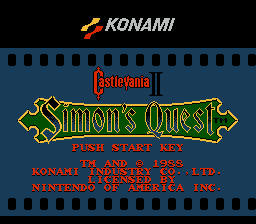
Castlevania II: Simon’s Quest for the Nintendo Entertainment System is Konami’s 1988 action-adventure sequel to the original Castlevania. The NES cartridge followed Konami’s 1987 Japanese Famicom Disk System release, Dracula II: Noroi no Fūin, and returns vampire hunter Simon Belmont to a shadowed version of Transylvania. Seven years after Simon’s battle with Count Dracula, a curse is destroying him. To survive, he must recover Dracula’s scattered remains and take them to the ruined castle for one last confrontation.
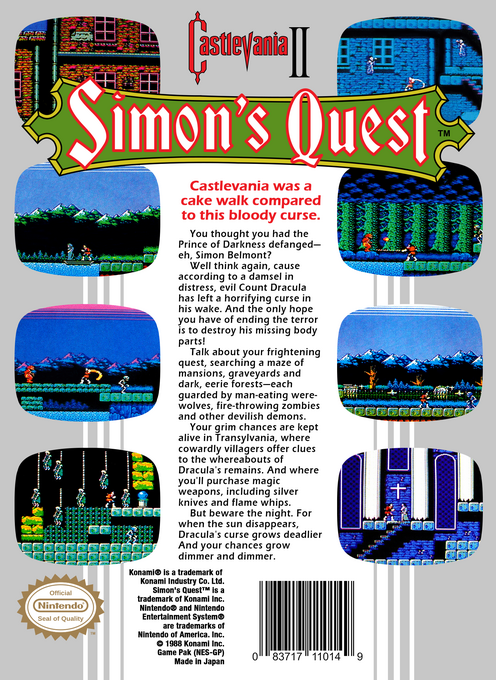
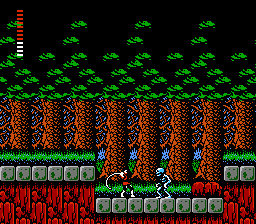
Rather than advancing through a fixed run of stages, Simon’s Quest sends Simon across an interconnected countryside of roads, forests, marshes, towns, mansions, caves, and other hostile landmarks. The player moves Simon left and right, jumps with the NES controller, and attacks with his trademark whip. Progress comes from learning how places connect, entering dangerous mansions, finding key items, and revisiting earlier routes when new equipment opens a way forward.
Combat supports that exploration loop. Defeated monsters leave hearts, and these serve as the currency for purchases as well as contributing to Simon’s growth. Merchants in towns sell useful supplies and stronger whips, while the inventory holds tools, relics, and secondary magic weapons for fighting or overcoming obstacles. Simon can equip upgrades that change what he can reach or withstand, giving the journey a markedly different rhythm from the first game’s more direct platforming challenge.
The five mansions are the game’s major destinations. Each contains hazards, enemies, and a piece of Dracula’s body that Simon needs for the final objective. The remains are not just story trophies: some confer practical benefits when obtained. Townspeople offer clues about the world and its secrets, so conversations, collected items, and experimentation all help direct the quest. This mixture of side-scrolling action, dungeon searching, and item-based progression is central to the NES game’s identity.
A changing day-and-night cycle alters the feel of the trip through Transylvania. Daylight makes travel outside towns comparatively safer, while night brings tougher opponents that inflict greater damage but yield more hearts. Villagers and shopkeepers also withdraw after dark, leaving towns less useful until morning. The system makes time another consideration when deciding whether to press ahead, hunt for resources, or return to a settlement.
Simon’s Quest is a distinct early Castlevania experiment because it combines gothic action with a broader, revisit-able map and role-playing-style systems. Its secretive progression and village clue-gathering set it apart from the original Castlevania and Castlevania III: Dracula’s Curse on NES. The Famicom Disk System edition could save progress to disk, whereas the North American NES release uses a password system, reflecting the different storage media behind the two versions.
As the second chapter in Simon Belmont’s story, Castlevania II: Simon’s Quest established ideas that remained important to the wider Castlevania series: exploration beyond a single linear route, equipment that changes access to the world, and the recurring struggle between the Belmont family and Dracula. Its combination of whip combat, night travel, mansion expeditions, and an ominous quest to end a curse makes it a memorable NES entry for players looking for a more exploratory take on Konami’s classic vampire-hunting series.
Gallery
Details
- Developer
- Konami
- Publisher
- Konami
- Genre
- Other Adventure
- Players
- 1
- Release Date
- December 1, 1988
- System
- NES